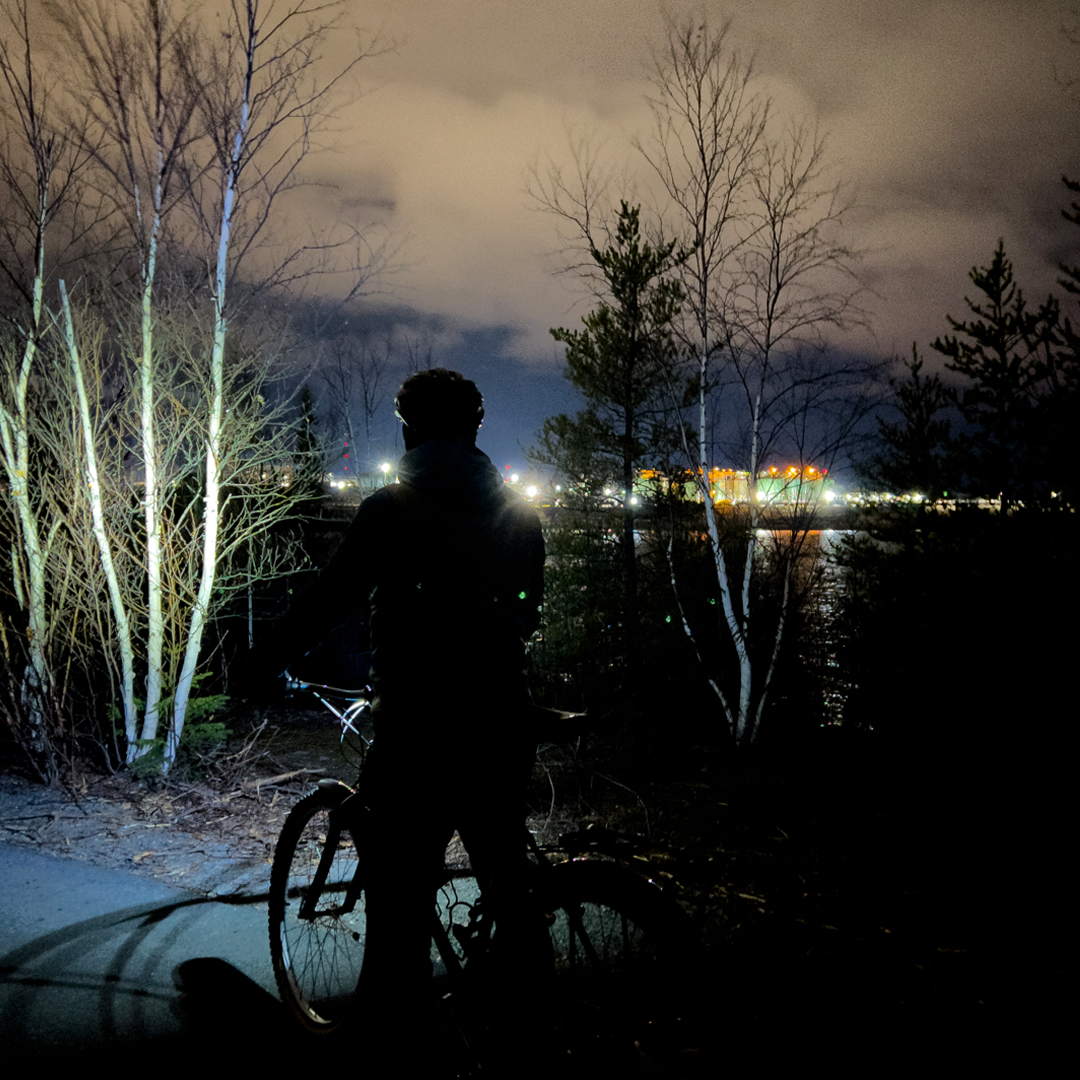
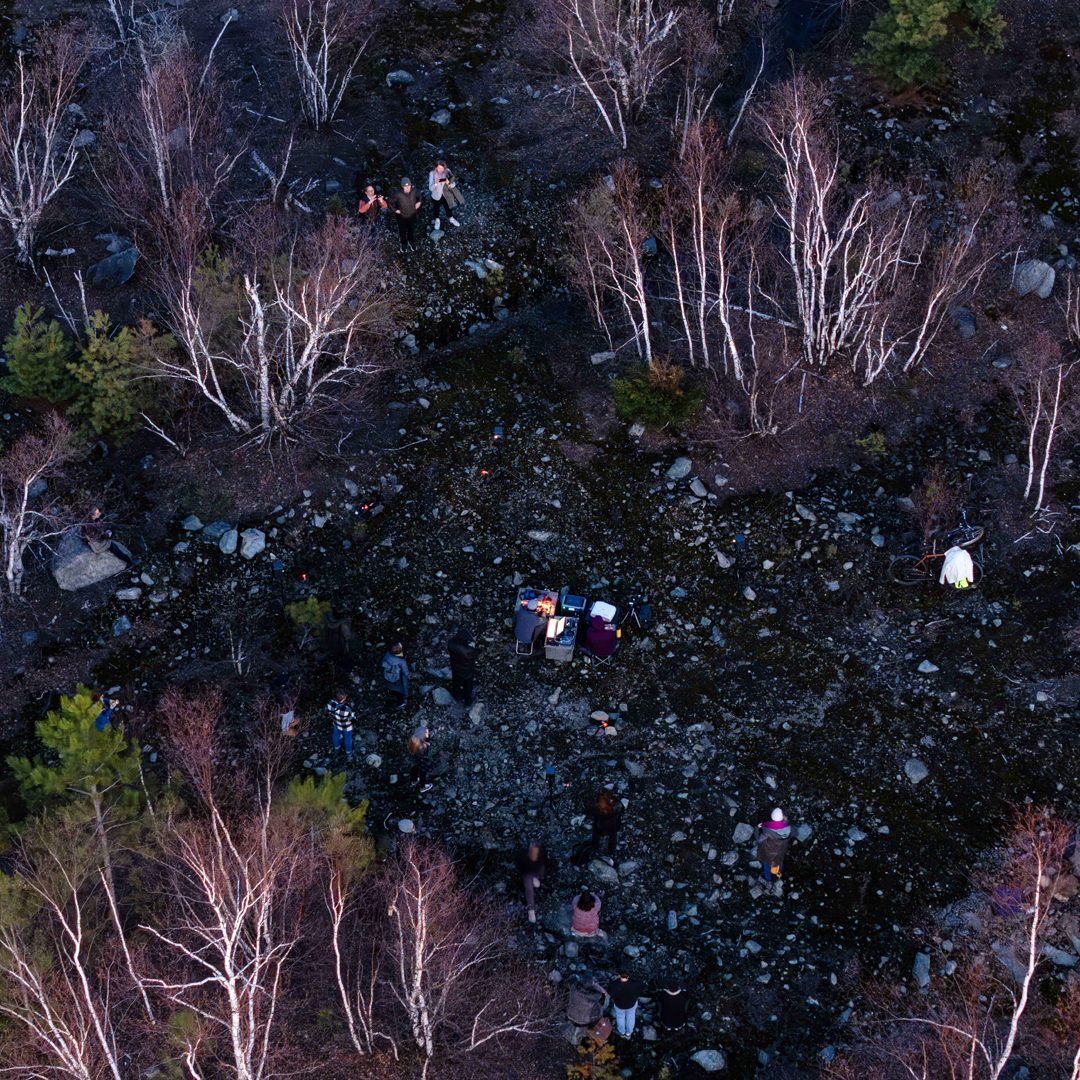
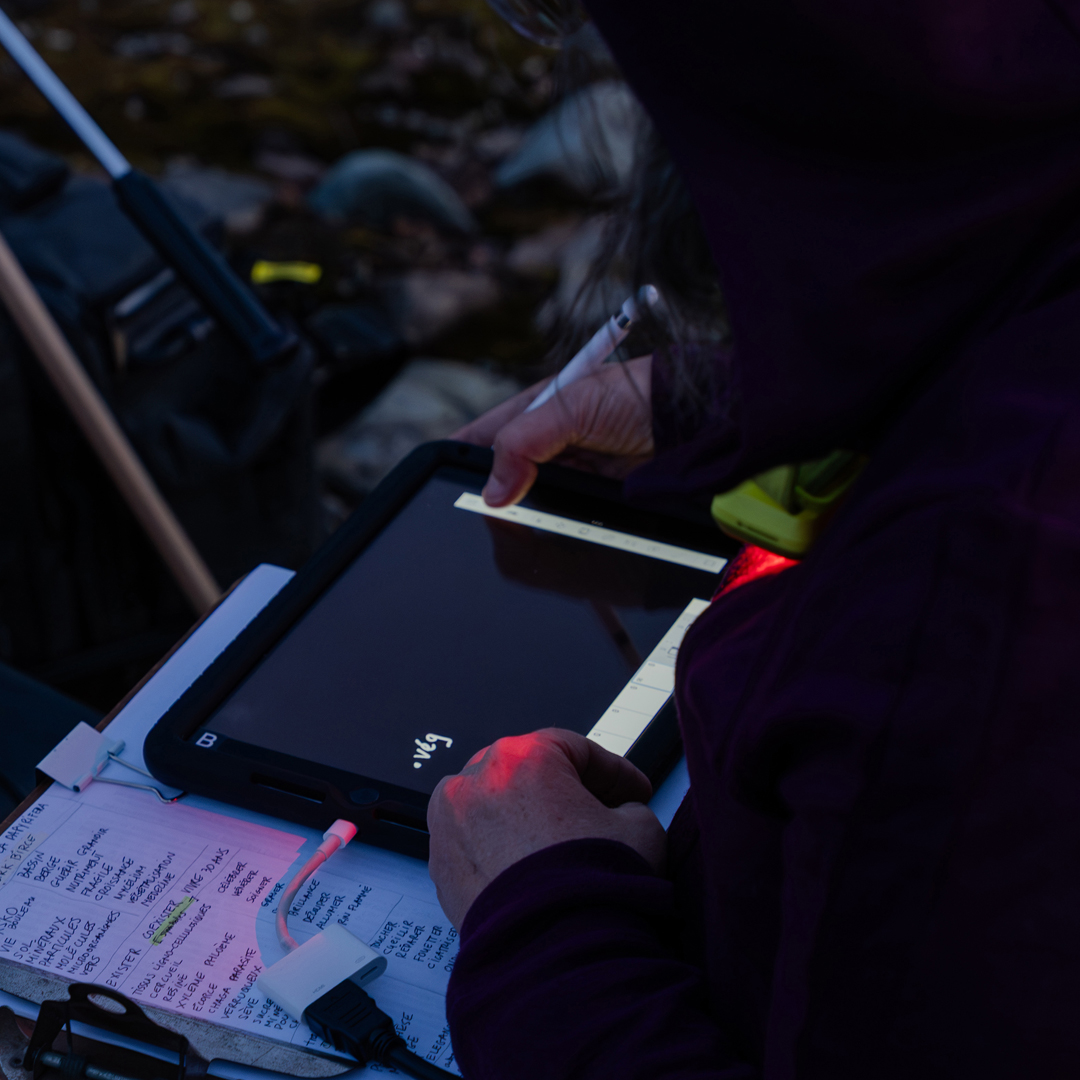
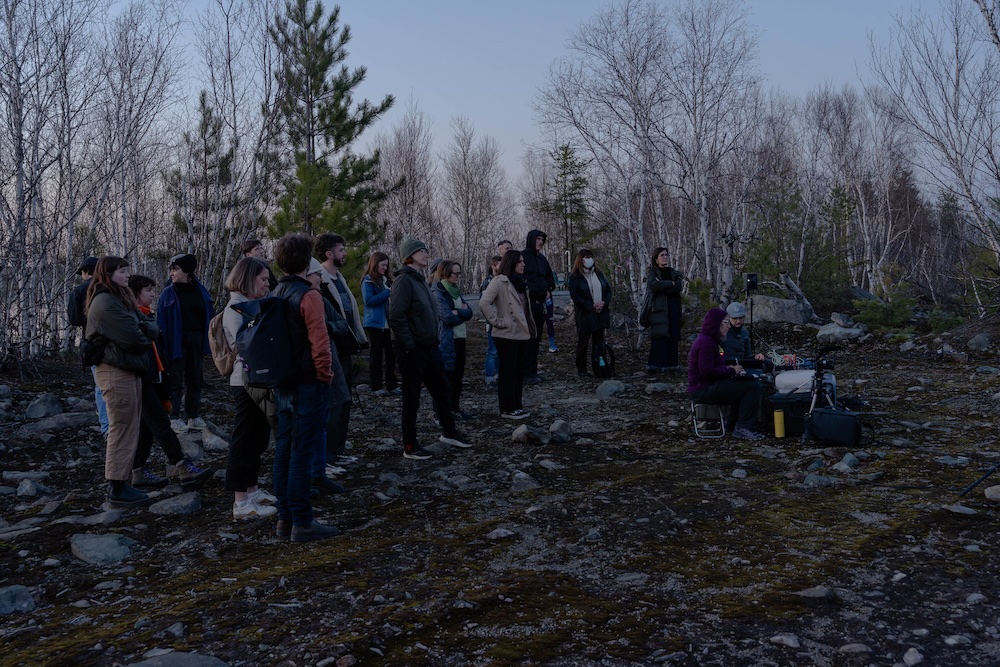
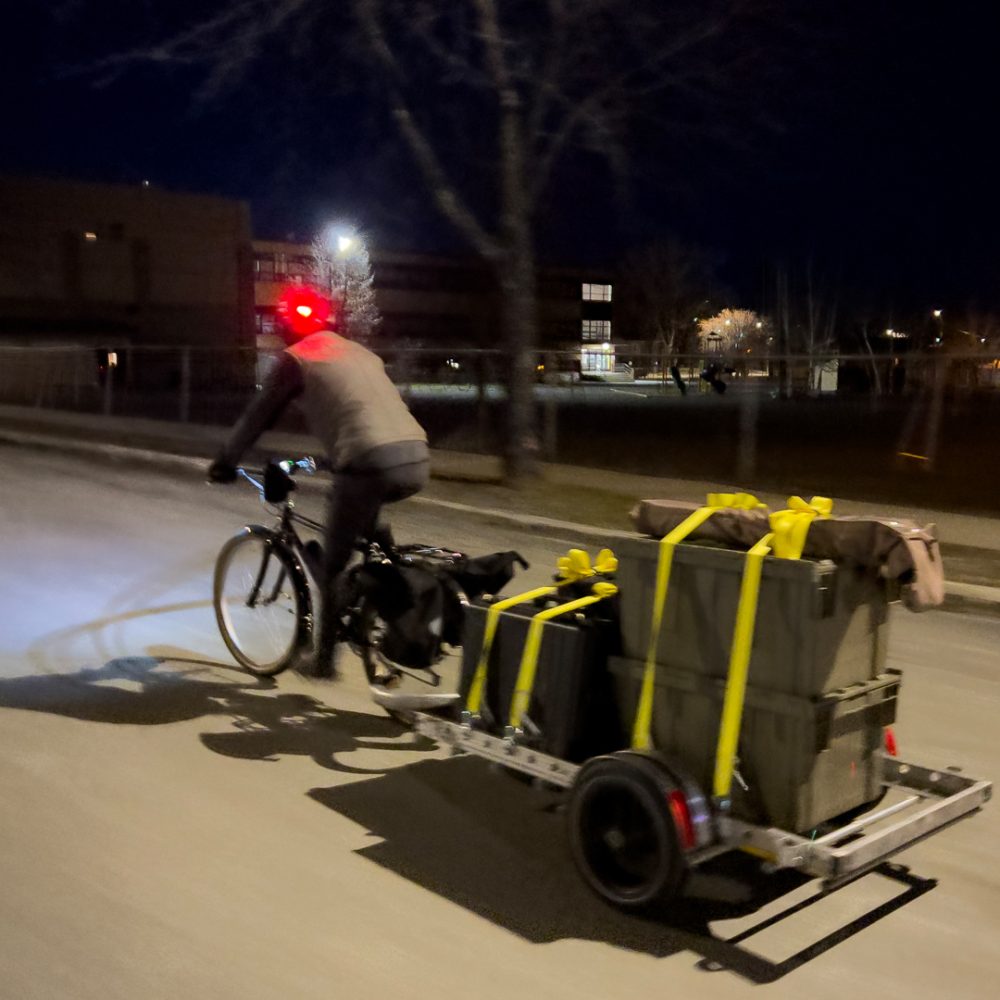
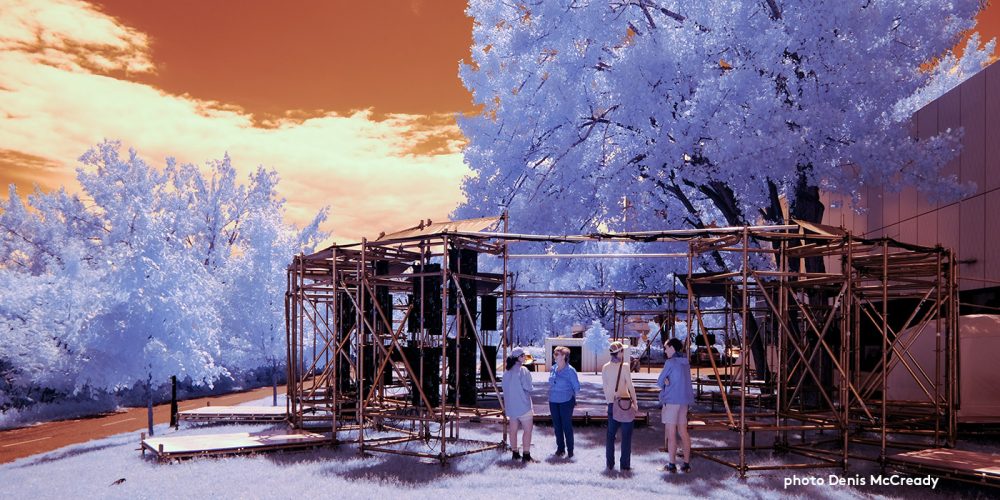
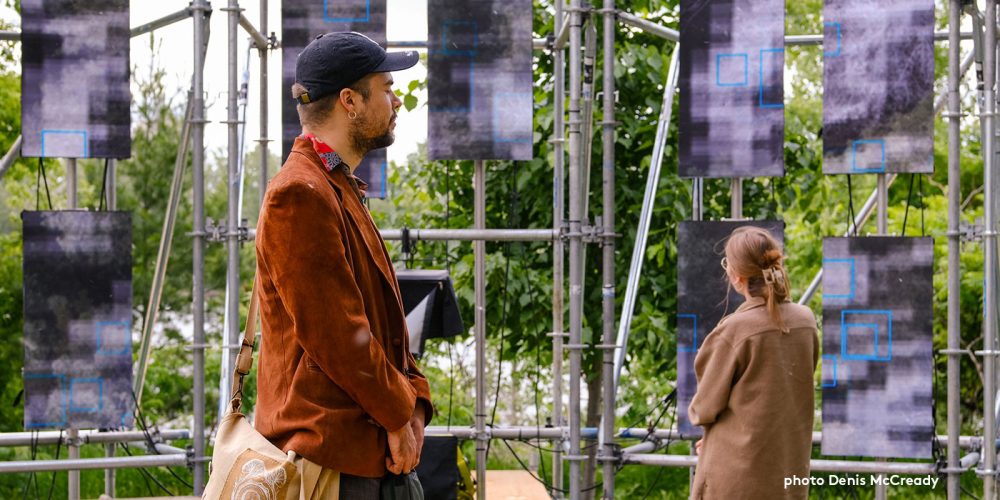
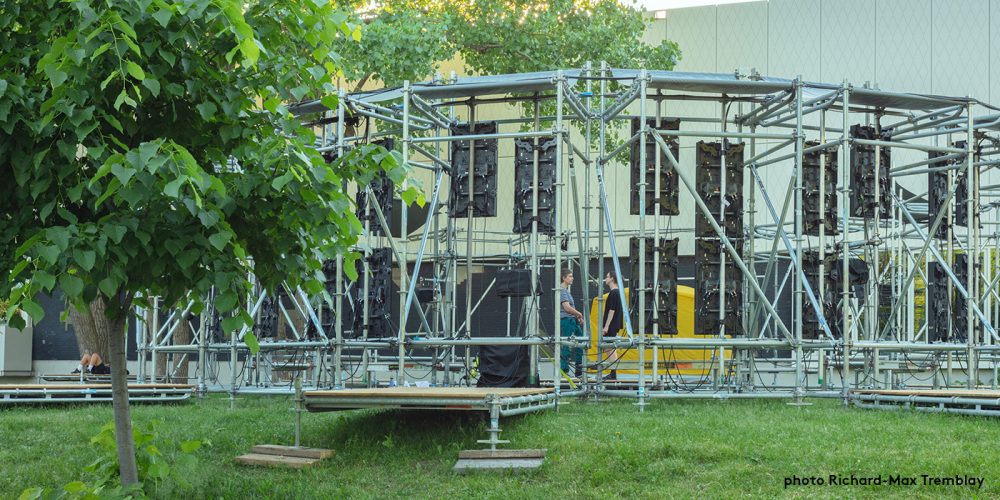
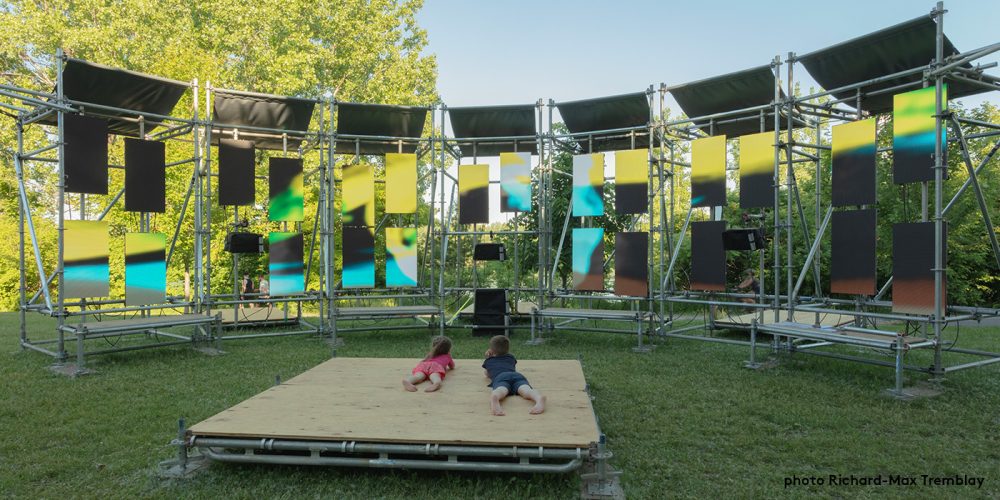
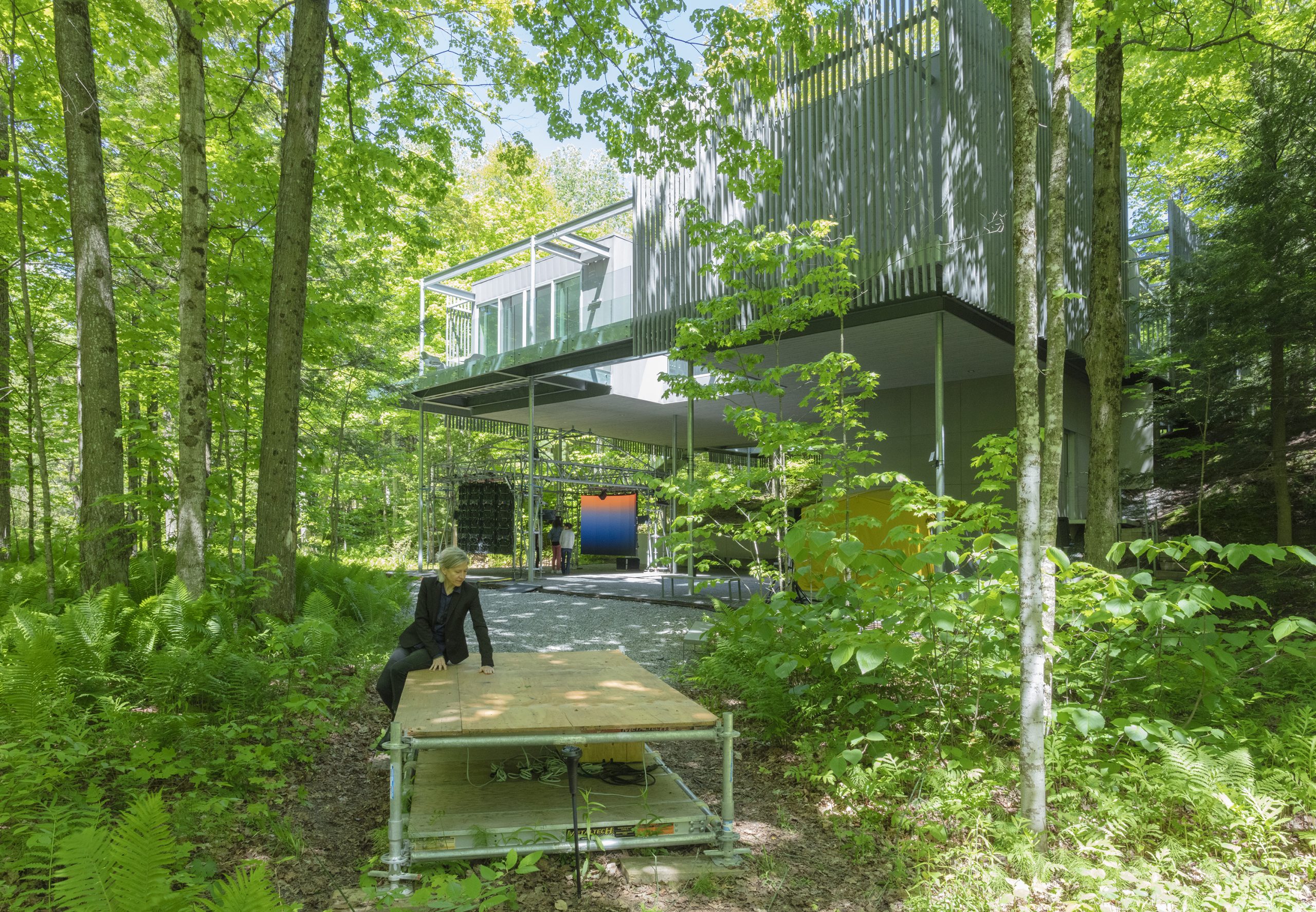
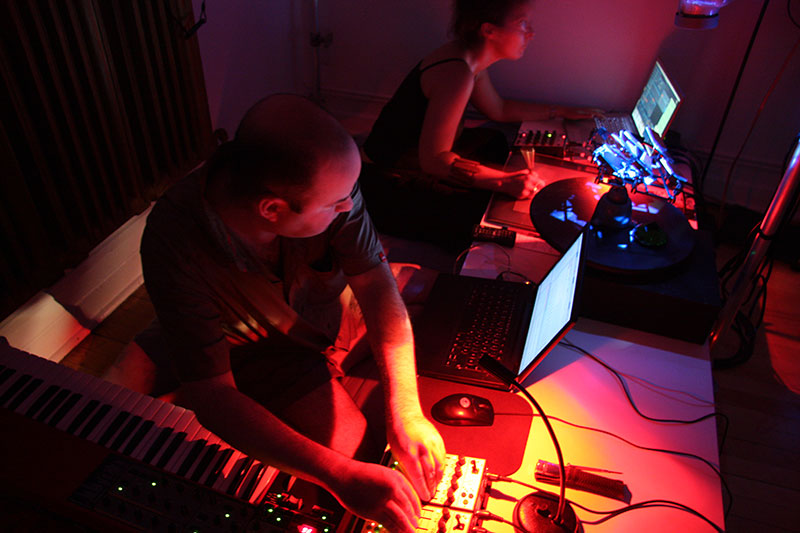
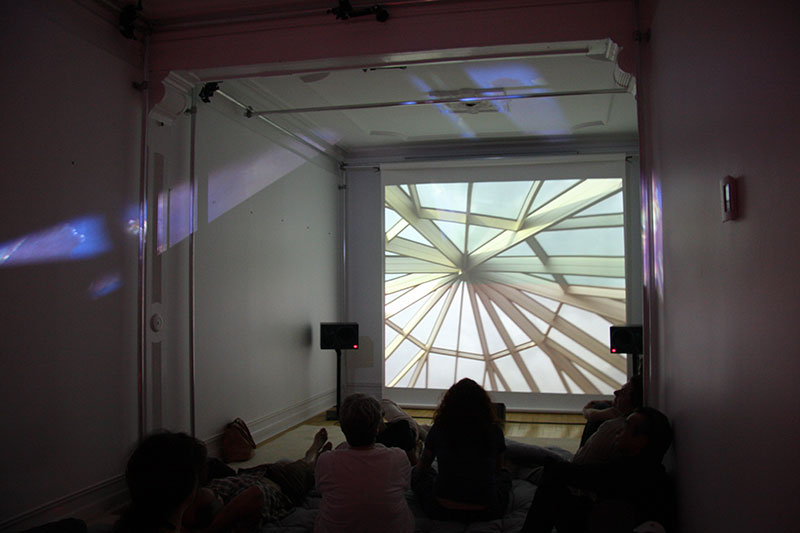
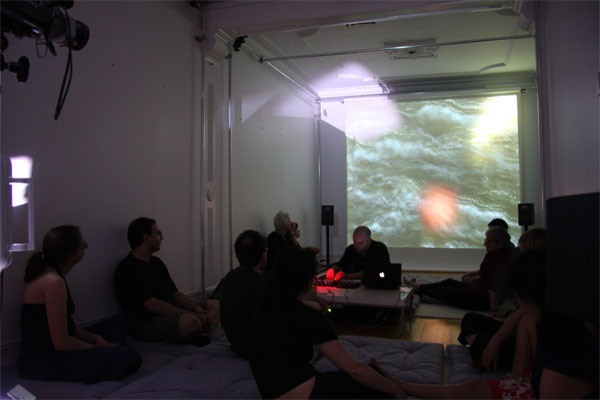
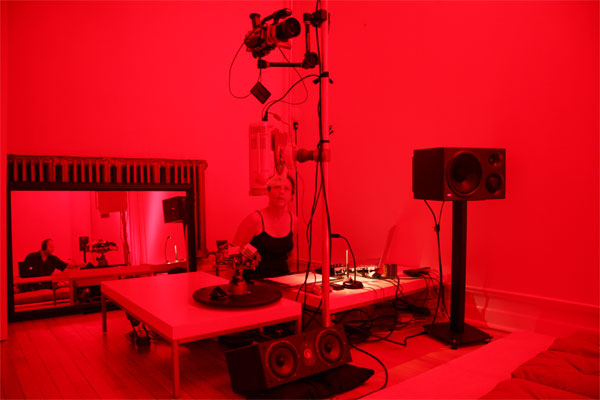
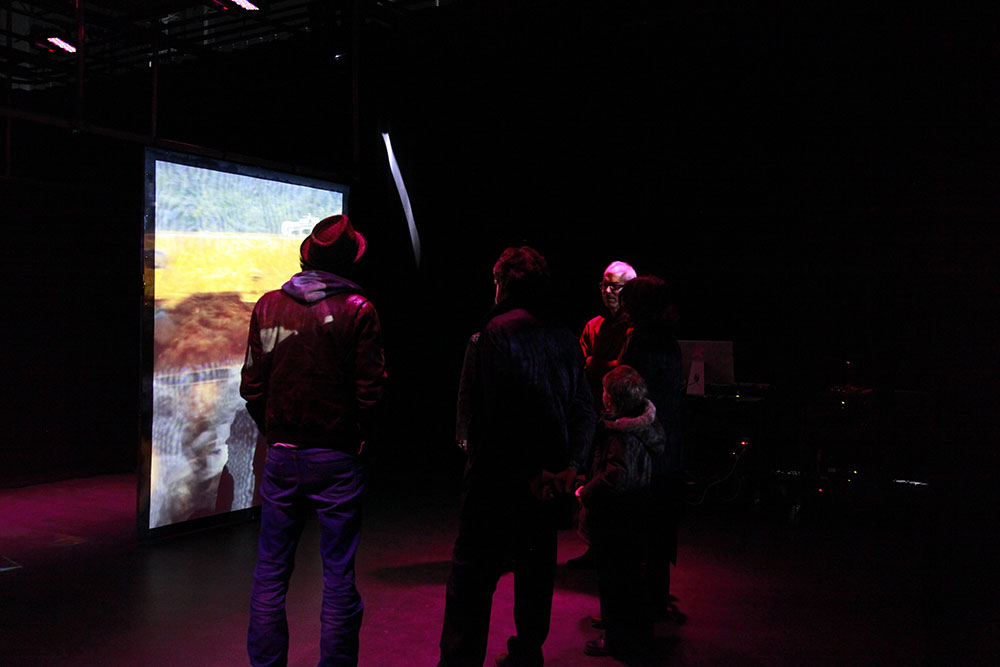
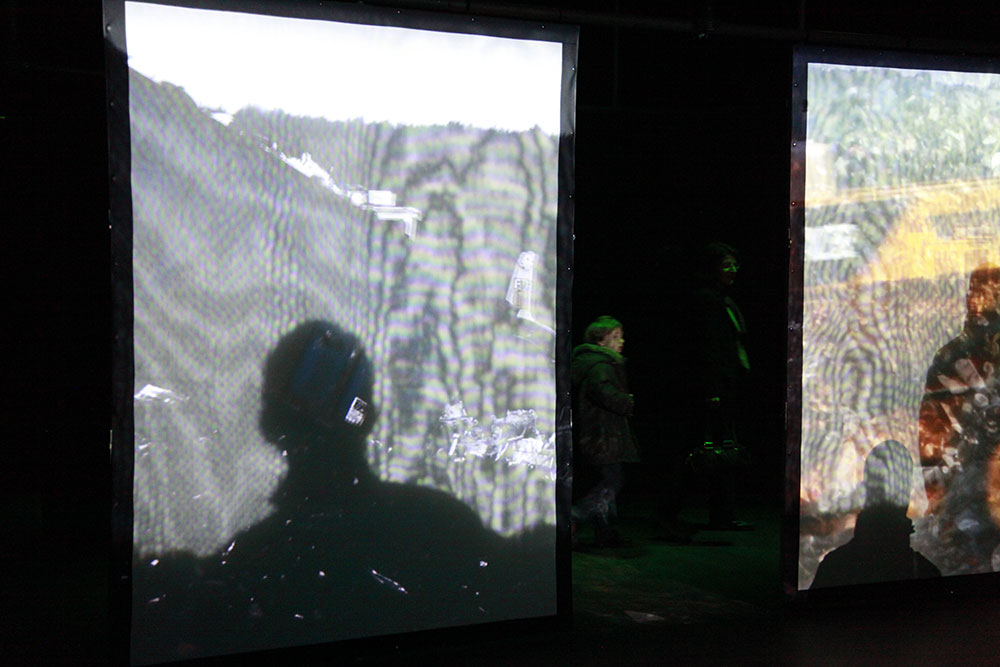
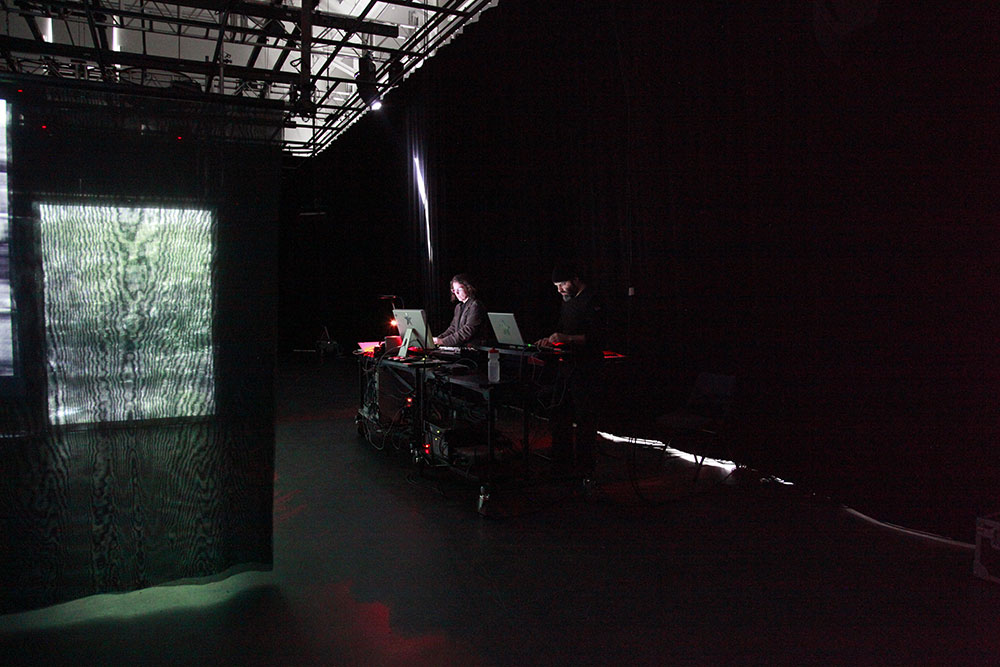
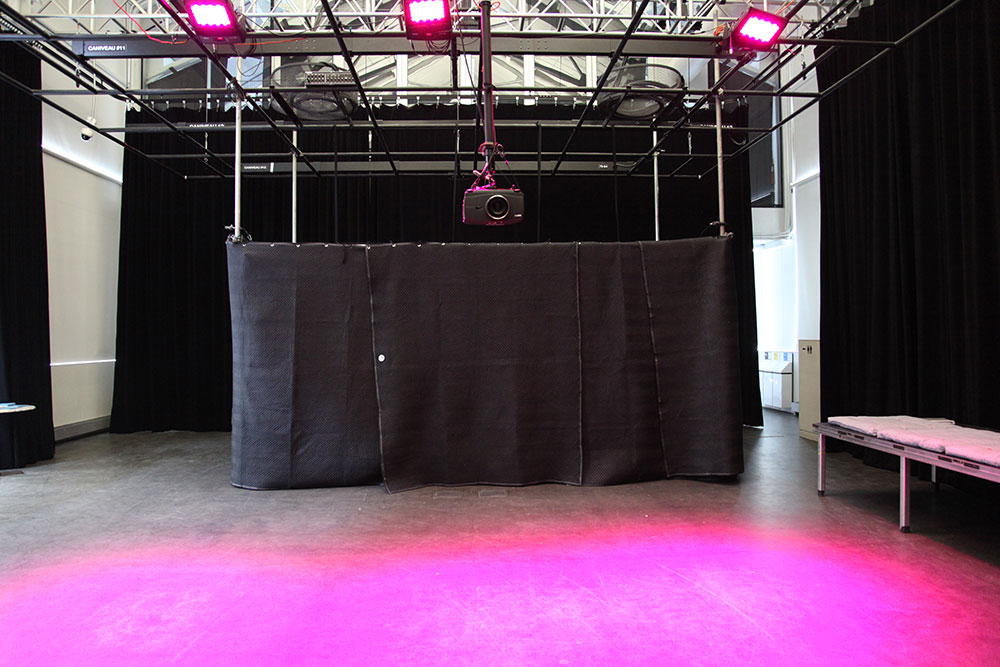
La Station mobile constitue un volet principal de la recherche-création d’Ælab qui porte sur la force combinée du végétal et de la mobilité. Il s’agit d’une micro-installation artistique de fabrication modulaire et de structure tubulaire, placée sur une remorque à vélo et déplacée par le duo. Ici, nous explorons le devenir d’une relation avec les arbres et les cours d’eau, l’air et la circulation sève-sang comme milieux internes et externes, mutualisés. Le mouvement à vélo renforce la relation d’échange entre arbres et humain·es par l’oxygène et le CO2, alors que l’écoute active située permet d’induire une altérité et une connexion dans un fairecorps autrement.
Maximum de 12 participants par date d’activité. Optez pour une seule des dates proposées. Hyperlien vers le formulaire d’inscription:
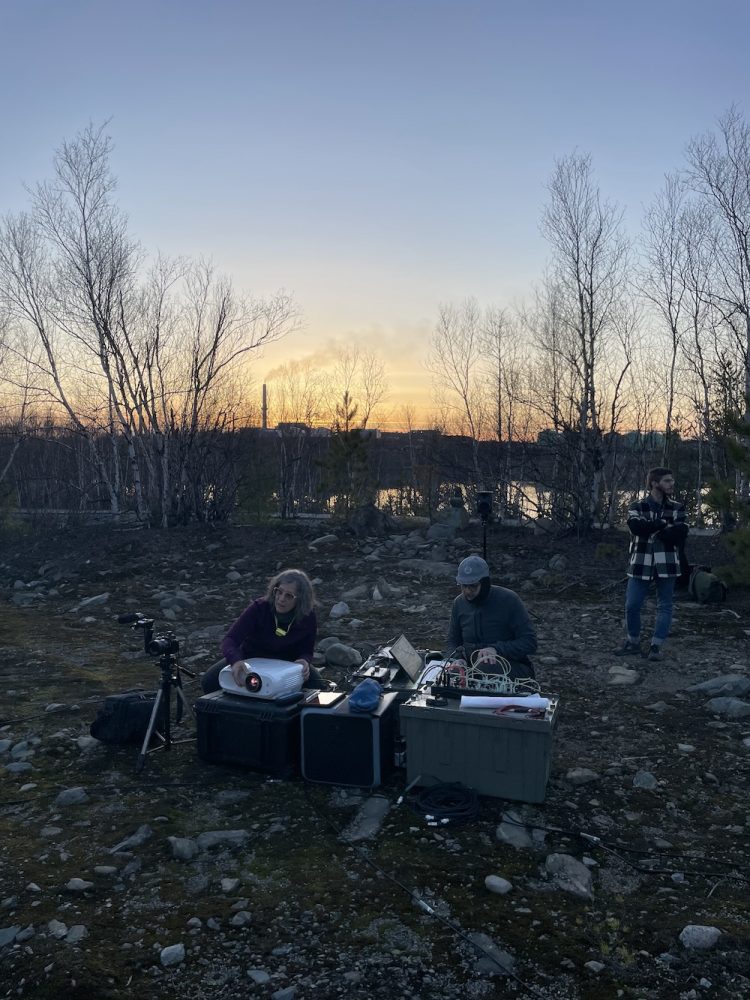
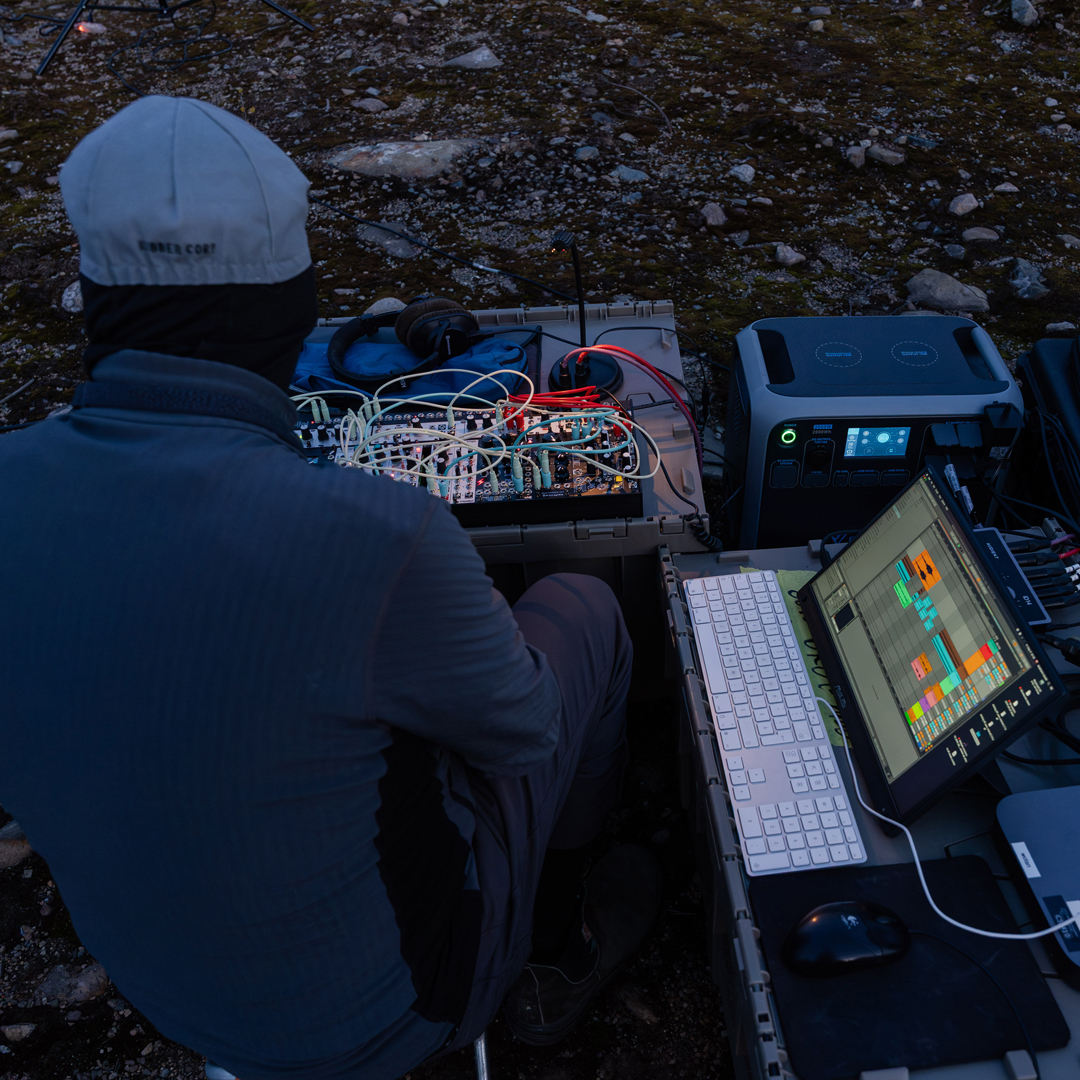
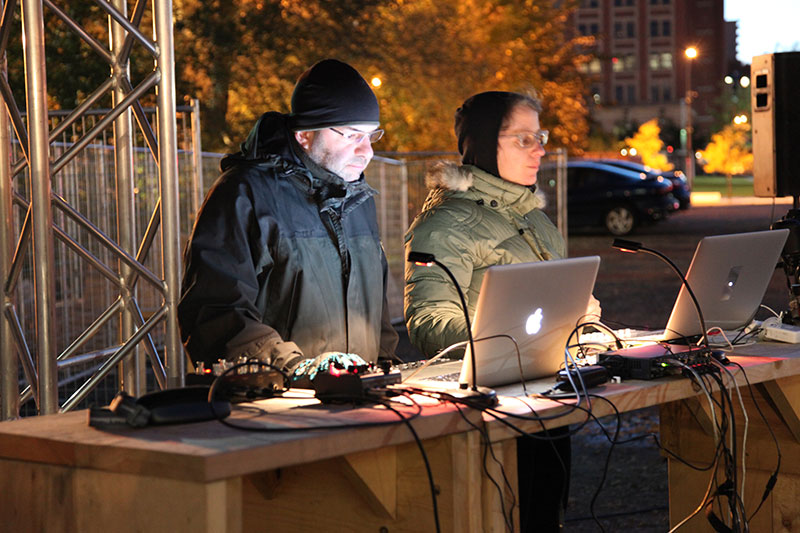
Chaque activité vélo/audio a une durée d’environ deux heures, ce qui inclut le temps de déplacement personnel. Le rendez-vous se trouve sur un site singulier au bord du fleuve, à Ville Lasalle, situé à 10 km en aller simple de La Halte DARE-DARE au Parc Sainte-Cunégonde. Les personnes inscrites recevront le circuit proposé comprenant des éléments à observer en cours de chemin; elles pourront effectuer le trajet de manière autonome, à leur propre rythme. Une fois arrivé·es au lieu, l’activité commencera avec une mise en commun des impressions recueillies durant le trajet. Ensuite, l’expérience des participant·es sera augmentée par une rencontre intimiste avec la pratique sonore et musicale de Stéphane Claude. Des dispositifs audio modulaires et portatifs (DIY, objets et petits systèmes sonores, instruments électroniques portatifs, enregistreuses mobiles, etc.) seront acoustiquement combinés in situ, selon des agentivités multimodales et multi espèces.
Performance AV avec synthétiseurs modulaires et la Station mobile À La Halte DARE-DARE au Parc Sainte-Cunégonde Jeudi 30 juillet 2026, 21h Report au lendemain en cas de pluie. Une investigation cyclo-artistique intimiste, un échange avec le majestueux érable de Norvège, un être-système, un fairecorps en mouvement. Suivie par une discussion informelle avec les artistes.
Gisèle Trudel remercie Antoine Caron de l’agencement métal des différentes itérations de la Station mobile réalisée dans le cadre de la Chaire MÉDIANE, grâce au soutien généreux du Fonds de recherche du Québec – Société et culture (FRQSC).
ENGLISH
Two bike/sound activities with the Mobile Station, and an AV performance.
The Mobile Station is a key component of Ælab’s research-creation projects, which explores the combined power of plants and mobility. It is a modular, tubular micro-art installation mounted on a bicycle trailer and moved by the duo. Here, we explore the evolving relationship with trees and waterways, with air and the sap-blood circulation as shared internal and external environments. Cycling reinforces the exchange between trees and humans through oxygen and CO2, while active listening fosters a sense of multiple connections through different modes of embodied experience.
Each bike/sound activity lasts approximately two hours which includes personal travel time to a unique site at the edge of the St-Lawrence, in Ville Lasalle, 10 km one way from HALTE DARE-DARE at Park Sainte-Cunégonde. Registered participants will receive the proposed bike itinerary which includes elements to observe along the way. Riding is done autonomously, each person at their own rhythm. Once arrived at the site, there will be a collective pooling of the participants’ riding experiences. This will be followed and enhanced by an intimate encounter with Stéphane Claude’s sound and musical practice. Modular and portable audio devices (DIY projects, objects and small sound systems, portable electronic instruments, mobile recorders, etc.) will be acoustically combined in situ, according to multimodal and multi-species agencies.
AV performance with modular synthesizers and the Mobile Station At La Halte DARE-DARE in Park Sainte-Cunégonde Thursday, July 30, 2026, 9 p.m. Postponed to the following day in case of rain.
An intimate, cyclo-artistic exploration, an exchange with the majestic Norway maple, a system-being, a moving embodiment. Followed by an informal discussion with the artists.
Gisèle Trudel thanks Antoine Caron for the metal assemblage of the various iterations of the Mobile Station, produced during the MÉDIANE Chair, with the generous support of the Fonds de recherche du Québec – Société et culture (FRQSC).
À l’ombre des bouleaux. Perfo AV et synthèse modulaire.
Dans le cadre du symposium Spectralités et speculations du Lac Osisko, organisé par Jonathan Hope (Études littéraires, UQAM) et le Collectif Territoire, Rouyn-Noranda.
Artistes : Ælab Lieu : Parcours lunaire du lac Osisko Date : 9 mai 2025 Heure : 20h30 Durée : 25 minutes
Les bouleaux, leur sève et leur écorce sont des actants et symboles de survie, de résilience et de spiritualité, dans les pratiques de plusieurs cultures. Cet arbre peuple d’anciens sites dévastés. Avec eux, nous poursuivons notre investigation artistique de l’arbre, intermédiaire vivant entre sol, eau et atmosphère. La performance AV et avec synthèse modulaire in situ intègre la Station mobile, une remorque à vélo avec équipements audiovisuels et synthétiseurs modulaires, déplacée par les artistes-cyclistes.
Gisèle Trudel remercie le Fonds de recherche du Québec – Société et culture de l’appui au développement et à la réalisation de la Station mobile.
Photo couverture : Susan Turcot Photos ci-dessous : Regis Massicotte, Gisèle Trudel, Susan Turcot
« c-six. canopée captation classification cellule cycle carbone »est une exposition audiovisuelle immersive à ciel ouvert en arts technologiques et sciences forestières, portant sur l’arbre dans le grand cycle du carbone. Elle est présentée dehors aux abords du fleuve Saint-Laurent, à l’arrière du Quai 5160 – Maison de la culture de Verdun, et inclut une série d’activités gratuites faisant état d’un réseautage exceptionnel avec divers organismes de l’arrondissement.
du 30 mai au 09 juin 2024, ouvert tous les jours, selon la météo(weather dependent) dim-lun-mar-mer-jeu 13 h à 20 h ven-sam 13 h à 22 h Entrée libre Lieu : Quai 5160 – Maison de la culture de Verdun 5160, boulevard LaSalle Tio’tia:ke /Mooniyang /Montréal (Québec) H4H 1N8 Accès universel Métro Verdun ou de l’Église Autobus 37, 58, 61 Piste cyclable Stationnement gratuit
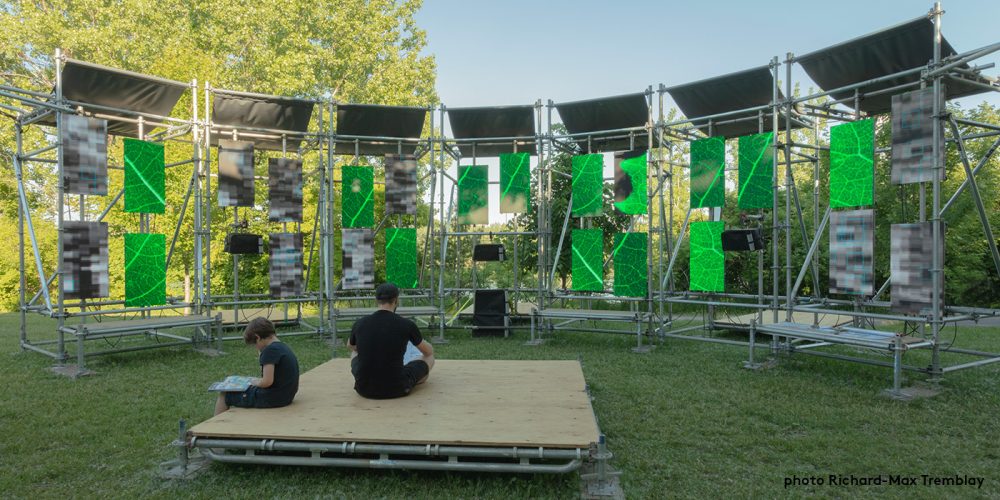
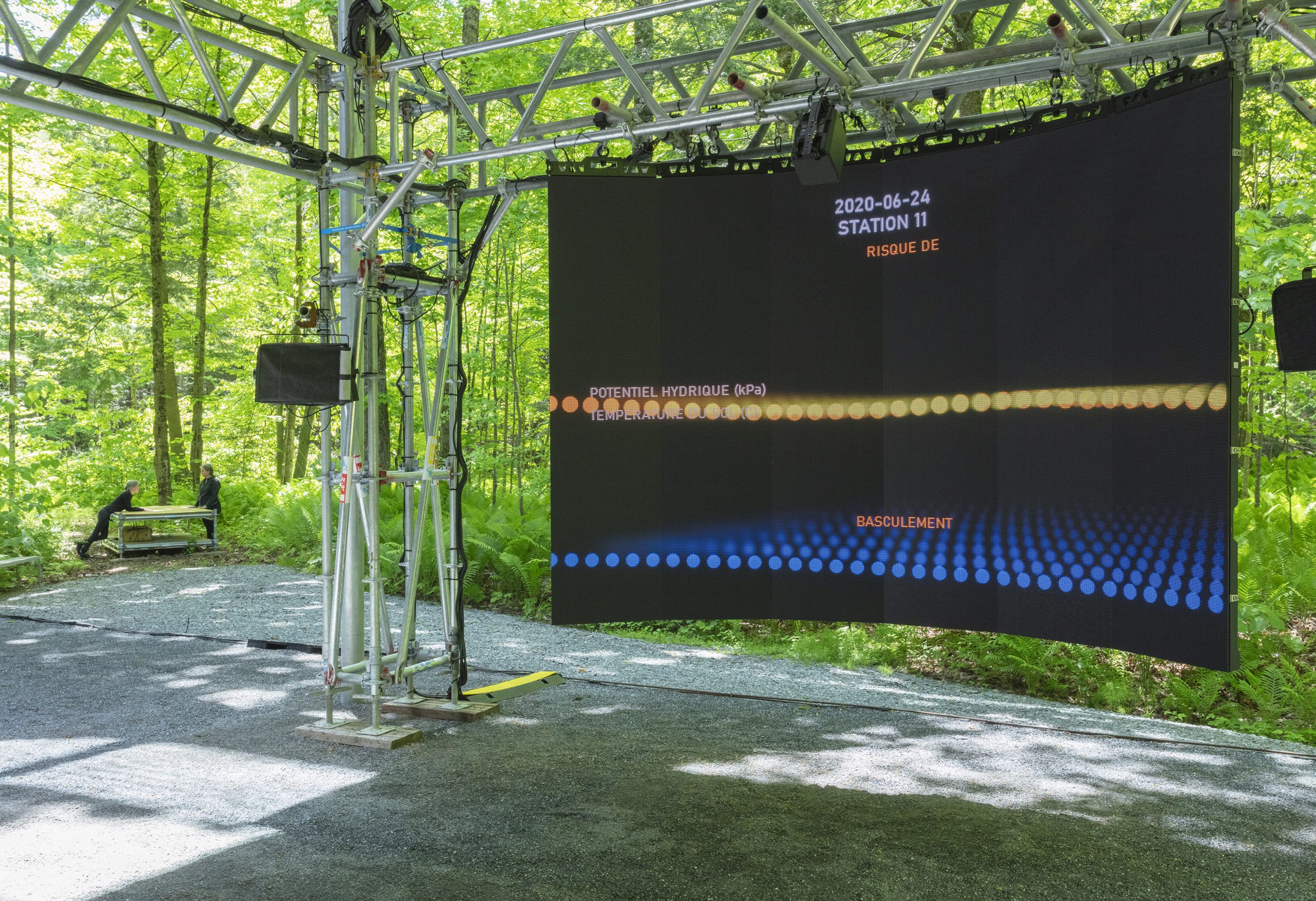
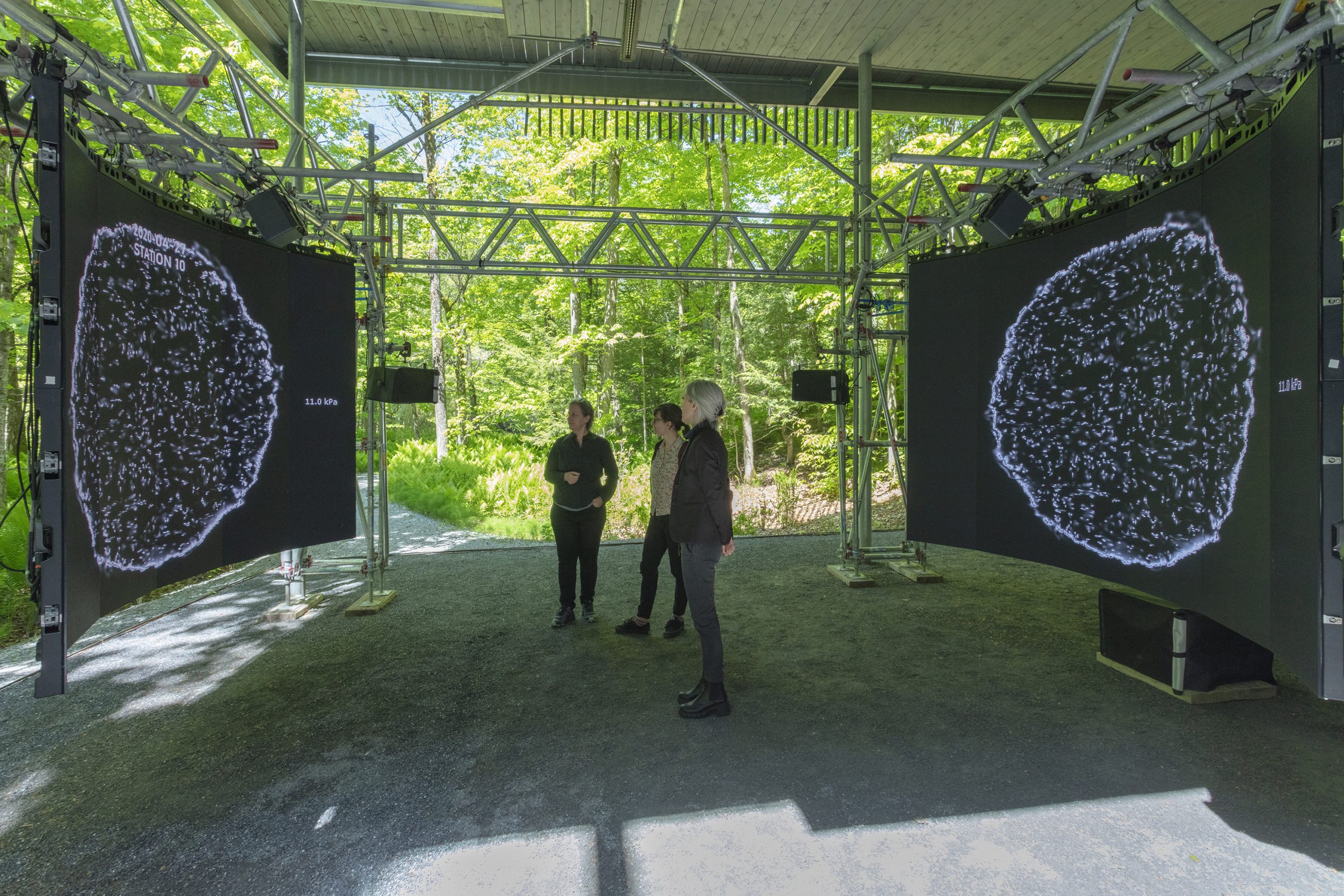
Dans le grand cycle du carbone, l’arbre est un acteur clé de la vie. Il atténue aussi les effets des changements climatiques. L’espèce, le milieu, l’âge et la santé sont des facteurs qui influencent sa réserve de carbone. Cette thématique entre arts et sciences guide la conception de l’œuvre. Une structure tubulaire et circulaire munie d’interstices permet une immersion audiovisuelle inusitée qui opère par fragments et ensembles. Imagerie par drone, vision par ordinateur et modélisation 3D font partie de la recherche en écologie forestière et en art technologique, des approches pouvant servir à quantifier la réserve de carbone. Elles se déploient ici dans un chantier ouvert, entre identification et évocation.
Œuvre réalisée par la cellule de recherche artistique Ælab, MÉDIANE et les équipes, avec la précieuse collaboration de Nicolas Bélanger, Blandine Courcot (scientifiques, DOT-Lab) et Marc-André Cossette (artiste et programmeur visuel).
Une série d’activités satellites gratuites avec des invité·e·s se tiendra en parallèle. Voir calendrier. Certaines activités exigent une inscription, car nombre limité de participant.es :
• les publics pourront participer sur une base volontaire à des interviews semi-dirigés de courte durée concernant leur expérience de l’œuvre;
• lancement de la Cartographie no 3 Devenir-Hêtre de MÉDIANE, avec le texte inédit Devenir-Hôte par Cécile Ronc et le design graphique de Marina León;
• la conversation/table ronde à propos de l’importance de la forêt, des plantes et de l’eau, avec Michèle Magema (artiste en arts visuels), Isabelle Miron (poète, essayiste et professeure) et Michel Leboeuf (biologiste et écrivain). Comodération par Simon Dansereau-Laberge (doctorant Études littéraires) et Gisèle Trudel. Une coproduction MÉDIANE, Centre d’étude de la forêt UQAM et Quai 5160.
• une rencontre/discussion portant sur la collaboration arts/sciences, avec Nicolas Bélanger, Blandine Courcot, Marc-André Cossette et Gisèle Trudel;
• le cercle de lecture avec Antoine Caron portant sur des segments du livre L’inexploré (par Baptiste Morizot) ;
• l’atelier de dessin en plein air Drawing plants inside out avec Susan Turcot (en collaboration avec la Maison de l’environnement de Verdun);
• l’atelier Écritures spatiales et performatives, avec Kevin Pinvidic;
• C6, canopées, carbone et espaces vibratiles : performance sonore avec Stephanie Castonguay, mimi et Stéphane Claude;
• l’atelier sensoriel avec David Howes.
De plus, la Station mobile, une micro-installation nomade de MÉDIANE, sera déployée lors de trois circuits coordonnés par Laurence Dauphinais et Mélodie Claire Jetté, en collaboration avec Stéphane Claude, instigateur du projet et « petit cheval » à vélo : une projection nocturne de films de l’ONF près d’un boisé; une performance avec l’objet textuel mobile Agit P.O.V. de l’artiste Alexandre Castonguay; et Bleu botanique, un atelier d’identification de plantes et de confection de cyanotypes. Activités menées en collaboration avec la Maison de l’environnement de Verdun, la Maison Nivard-De Saint-Dizier, Demain Verdun, LocoMotion.
Au Quai 5160: Un immense merci à Marc Daoust, agent culturel, Maxime Voyer, directeur technique, et Annie Turcotte, médiatrice culturelle, de leur généreux soutien au projet.
À propos de MÉDIANE, Ælab et DOT-Lab MÉDIANE, la Chaire de recherche du Canada en arts, écotechnologies de pratique et changements climatiques est portée par Gisèle Trudel et les équipes qui travaillent activement à créer un dialogue entre les données scientifiques portant sur les dynamiques de la forêt, les arts technologiques et les expériences des publics. Cela a pour objectif de favoriser la circulation d’idées et d’actions créatives relatives aux climats changeants.
Gisèle Trudel, professeure à l’École des arts visuels et médiatiques de l’UQAM et membre chercheuse de Hexagram, fonde avec Stéphane Claude la cellule de recherche artistique Ælab en 1996. Stéphane Claude est artiste sonore, ingénieur du son, consultant spécialisé indépendant et chercheur responsable de l’aire audio du centre d’artistes OBORO. Leur pratique en documentaire expérimental réunit médias analogiques/numériques et engagement collectif. Conférences, performances et expositions sont présentées régulièrement à Montréal et ailleurs. (aelab.com)
Professeur, scientifique et membre chercheur de Smartforests Canada, Nicolas Bélanger dirige le DOT-Lab. Ce laboratoire sur la science des données de l’Université TÉLUQ est formé de chercheurs dont les activités de recherche s’unissent autour du développement et de l’utilisation d’outils propres à la science des données.
Soutien Le Conseil de recherches en sciences humaines du Canada (CRSH), la Fondation canadienne pour l’innovation (FCI), le Fonds de recherche du Québec – Société et culture (FRQSC), la Faculté des arts de l’UQAM, Hexagram-UQAM, le Centre d’étude de la forêt UQAM, Smartforests Canada UQAM et le DOT-Lab (Université TÉLUQ).
ENGLISH
Trees and their carbon reserves are key actors for life on the planet, and they also mitigate the effects of climate change. Drone imagery, computer vision, and 3D modeling are part of research practices in forest ecology and technological art, employed in efforts to quantify carbon reserves. Between identification and evocation, these approaches are explored in the outdoor immersive audiovisual installation.
Collaboration: Nicolas Bélanger, Blandine Courcot (scientists, DOT-Lab), and Marc-André Cossette (artist and visual programmer).
Including a series of free activities with guests and with the Mobile Station, a micro-installation on a trailer with a bicycle.
At Quai 5160 – Maison de la culture de Verdun: an immense thank you to Marc Daoust, cultural agent, Maxime Voyer, technical director, and Annie Turcotte, cultural mediator, for their generous and precious support to the project.
Ælab is the artist research unit in experimental documentary founded by Gisèle Trudel and Stéphane Claude in 1996. Trudel is a professor at UQAM’s École des arts visuels et médiatiques. Claude is a sound artist and audio engineer. Led by Trudel and the teams, MÉDIANE is the Canada Research Chair in Arts, Ecotechnologies of Practice, and Climate Change (2020-2026).
MEDIANE would like to thank all of the students and professionals of its team as well as professor and scientist Nicolas Bélanger, director of the DOT-Lab and co-investigator of Smartforests Canada, led by Daniel Kneeshaw at UQAM. Dot-lab.teluq.ca smartforest.uqam.ca
Financial and logistical support Social Sciences and Humanities Research Council of Canada (SSHRC), Canada Foundation for Innovation (CFI), Fonds de recherche du Québec – Société et culture (FRQSC), Faculty of arts UQAM, DOT-Lab U TÉLUQ, Centre d’étude de la forêt UQAM, Smartforests Canada, Hexagram-UQAM.
Équipe /Team: Parcelle 17 de la forêt à Sainte-Émélie-de-l’Énergie Populus grandidentata Acer saccharum Abies balsamea Betula papyrifera Acer rubrum Betula alleghaniensis Prunus pensylvanica Thuja Occidentalis · herbe · Fleuve Saint-Laurent · Données drone et convolution, gracieuseté du /Drone and convolution data, courtesy of DOT-Lab, Université TÉLUQ · Caméra de drone /Drone camera Daniel Nahum · Textes originaux et voix-off dans l’installation Susan Turcot · Planches 4×8 · Aluminium · Ælab (Gisèle Trudel + Stéphane Claude) · Tuiles DEL/LEDTiles · Orthomosaïque · TouchDesigner Marc-André Cossette · DeepForest · Conseillère, recherche et données /Consultant, research and data Blandine Courcot · Vision par ordinateur · Toiles · TensorFlow · Attaches/Fasteners · Batteries · Haut-parleurs/Speakers · Direction technique et Agencement métal (Station mobile) /Technical direction and metal assemblage (Mobile Station) Antoine Caron · Plans 3D et rendus architecturaux/3D plans and architectural renderings Kevin Pinvidic · Température/Temperature · Boulons/Bolts · Caoutchouc/Rubber · Chambres à air/Air chambers · Électricity/Electricity · Senseurs météo (mise à jour)/Weather sensors (update) Josée Brouillard · Code Natalia Balska · Ordinateurs/Computers · Unité énergétique mobile/Mobile energy unit · Structures d’échafaudages/Scaffolding structures Nicolas Paulette · Asphalt · Coresponsables de la Station mobile /Mobile Station facilitators Laurence Dauphinais et Mélodie Claire Jetté · Photosynthèse · Carbone · Capteurs de la température du sol/Soil temperature sensors · Peuplier deltoïde, Tilleul, Érable de Norvège colonnaire, Érable argenté · Conseiller aux publications/Publications consultant Jacques Perron · Bois/Wood · Caméras/Cameras · Maison de l’environnement de Verdun · Maison-Nivard De-Saint-Dizier · Demain Verdun · LocoMotion · Ciné-Quartier · Office national du film ONF · Assistant∙e∙s de recherche, de production et de diffusion/Research, production and presentation assistants Laurence Dauphinais, Jihen Ben Chikha, Kevin Pinvidic, Marion Schneider, Suzanne Landry, Mélodie Claire Jetté, chantal t paris, Boris Pintado, Sébastien Huot, Gabrielle Turbide, Pierre-Olivier Déry, Solène Tessier, Isaak Paul-Rivest, Marie-Pier Vanchestein · Potentiel hydrique/Water potential · Cheeseboroughs · Soleil/Sun · Humidité/Humidity · Électronique/Electronics Panneau solaire/Solar panel · Table tactile/Tactile table · Transducteurs/Transducers · Câblages/Wires · Internet · Eau/Water · Pluie/Rain · Nicolas Bélanger (DOT-Lab) · Daniel Kneeshaw (Smartforests) · Luc Lauzon (Centre d’étude de la forêt) · Jason Pomrenski, Max Boutin (Hexagram-UQAM) · Camlock · Marc Daoust et Maxime Doyer Quai 5160 · Vis/Screws · Photographes/Photographers Denis McCready, Richard-Max Tremblay · Amplificateur/Amplifier · Lecteur DC/CD player · Sol/Soil · Vent/Wind · Plastiques/Plastics · Roues/Wheels · Pneus/Tires · Collègue et collaboratrice/Colleague and collaborator Susan Turcot.
« Devenir-Hêtre » une exposition-laboratoire in situ présentée à la Fondation Grantham pour l’art et l’environnement, incluant une série d’activités complémentaires avec invité•es.
du 11 mai au 28 mai 2023 du mercredi au dimanche 11 h à 17 h Entrée libre
Vernissage le samedi 13 mai, 14 h 30 à 17 h
Lieu : Fondation Grantham pour l’art et l’environnement 1411, rue Blanchard Saint-Edmond-de-Grantham (Québec) J0C 1K0
La Fondation Grantham pour l’art et l’environnement crée une alliance unique avec MÉDIANE, la Chaire de recherche du Canada en arts, écotechnologies de pratique et changements climatiques, afin de présenter pour la toute première fois l’exposition-laboratoire Devenir-Hêtre, réalisée par la cellule de recherche artistique Ælab et les équipes.
La troisième itération in situ de l’installation annuelle de la Chaire MÉDIANE, une collaboration continue avec Smartforests Canada, aura lieu en forêt. Cette fois, l’accent est porté sur la visualisation de périodes de sécheresse du hêtre. En situation de climats changeants, quels sont les effets du manque d’eau sur cet arbre?
Grâce à une collaboration avec Blandine Courcot (scientifique, DOT-Lab, Université TÉLUQ) et Marc-André Cossette (artiste et candidat au doctorat, Université Concordia), les compositions de variations chiffrées en couleurs, formes, lignes et particules expriment les forces et les seuils de l’arbre et de son milieu. Dans un rapprochement artistique avec l’essence d’arbre Fagus grandifolia, l’oeuvre audiovisuelle est présentée à l’extérieur dans une structure d’échafaudages, un chantier ouvert au dialogue entre collectivités.
Pendant l’exposition-laboratoire, Ælab résidera à la Fondation Grantham pour poursuivre son travail d’expérimentation artistique. Le duo sera présent pour des échanges informels pendant les visites des publics. Les publics pourront participer sur une base volontaire à des entretiens semi-dirigés de courte durée concernant leur expérience de l’oeuvre.
• deux lancements de publications : le Cahier 06 de la Fondation Grantham (textes de Denise Pérusse et Monique Régimbald-Zeiber, de Christoforos Pappas et de Juliette Pernin; design graphique par Émilie Lévesque et Louise Paradis) et la Cartographie 02 de MÉDIANE (texte de Simon Dansereau-Laberge ; design graphique par Alvaro ; photos par Caroline Pierret et Alexis Bellavance);
• deux rencontres/discussions portant sur des projets arts/sciences, le premier avec Marc-André Cossette, Gisèle Trudel et Blandine Courcot, le deuxième est le Projet Manicouagan présenté par Éric Desmarais, Erwan Gavelle et Kanatakhatsus Meunier;
• l’atelier/conversation Pheno-visioning with birch avec Susan Turcot;
• deux performances sonores avec Stephanie Castonguay, Mimi et Stéphane Claude.
De plus, la Station climatique mobile, une micro-installation nomade de MÉDIANE, fera des escales avec une équipe à vélo dans l’espace public de Drummondville au mois de juin.
À propos de MÉDIANE, Ælab, Smartforestset DOT-Lab MÉDIANE, la Chaire de recherche du Canada en arts, écotechnologies de pratique et changements climatiques est portée par Gisèle Trudel et les équipes qui travaillent activement à créer un dialogue entre les données scientifiques portant sur les dynamiques de la forêt, les arts technologiques et les expériences des publics. Cela a pour objectif de favoriser la circulation d’idées et d’actions créatives relatives aux climats changeants.
Gisèle Trudel, professeure à l’École des arts visuels et médiatiques de l’UQAM et membre chercheuse de Hexagram, fonde avec Stéphane Claude la cellule de recherche artistique Ælab en 1996. Stéphane Claude est compositeur, ingénieur du son, consultant spécialisé indépendant et chercheur responsable de l’aire audio du centre d’artistes OBORO. Leur pratique en documentaire expérimental réunit médias analogiques/numériques et engagement collectif. Conférences, performances et expositions sont présentées régulièrement à Montréal et ailleurs. Le duo était lauréat du Prix de la création de la Fondation Grantham en 2022. (aelab.com)
Piloté à l’UQAM par l’écologiste forestier et professeur du Département des sciences biologiques Daniel Kneeshaw, le réseau scientifique pancanadien Smartforestsdocumente les variations climatiques des eaux, des sols et des forêts au pays.
Professeur, scientifique et membre chercheur de Smartforests, Nicolas Bélanger dirige le DOT-Lab. Ce laboratoire sur la science des données de l’Université TÉLUQ est formé de chercheurs dont les activités de recherche s’unissent autour du développement et de l’utilisation d’outils propres à la science des données.
Soutien financier Le Conseil de recherches en sciences humaines du Canada (CRSH), la Fondation canadienne pour l’innovation (FCI), le Fonds de recherche du Québec – Société et culture (FRQSC), Hexagram-UQAM, Smartforests Canada et DOT-Lab (Université TÉLUQ).
ENGLISH
From May 11 to 28, 2023, the Fondation Grantham pour l’art et l’environnement is creating a unique alliance with MEDIANE, the Canada Research Chair in Arts, Ecotechnologies of Practice and Climate Change, to present for the very first time the exhibition-laboratory Devenir-Hêtre, by the artist research unit Ælab and teams.
The third in situ iteration of the annual installation of MEDIANE, an ongoing collaboration with Smartforests Canada, will take place in a forest. This time, the focus is on visualizing drought periods of the beech tree. In changing climates, what are the effects of lack of water on this tree?
Thanks to a collaboration with Blandine Courcot (scientist, DOT-Lab, TÉLUQ University) and Marc-André Cossette (artist and doctoral candidate, Concordia University), the compositions made with numbers are variations in colors, shapes, lines and particles that express the forces and the thresholds of the tree and its environment. In an artistic connection with the tree essence of Fagus grandifolia, the audiovisual work is presented outside in a scaffolding structure, a site open to construct dialogues between collectivities.
During the exhibition-laboratory, Ælab will reside at the Grantham Foundation to continue to work on their artistic experimentation. The duo will be present for informal exchanges during public visits. Visitors will be able to participate on a voluntary basis in short semi-directed interviews concerning their experience of the artwork.
– two publication launches: Cahier 06 from the Grantham Foundation with texts by Denise Pérusse and Monique Régimbald-Zeiber, Christoforos Pappas, and Juliette Pernin as well as Cartography 02 from MÉDIANE with a literary creation by Simon Dansereau-Laberge;
– two meetings/discussions about art/science projects: the first with Marc-André Cossette, Blandine Courcot and Gisèle Trudel, the second is the Projet Manicouagan presented by Éric Desmarais, Erwan Gavelle and Kanatakhatsus Meunier;
– the workshop/conversation Pheno-visioning with birch with Susan Turcot;
– and finally, two sound performances with Stephanie Castonguay, Mimi and Stéphane Claude.
Furthermore, the Mobile Climate Station, a nomadic micro-installation of MEDIANE, will make stops with a bike team in public space of Drummondville in June.
Ælab is the artistic research unit co-founded by Gisèle Trudel and Stéphane Claude in 1996 who practice experimental documentary. She is an artist, professor at the École des arts visuels et médiatiques, UQAM, and MÉDIANE Chair (2020-2025). He is a composer, sound engineer and head audio researcher at OBORO. The duo were laureates of the Foundation’s Creation Prize in 2022.
MEDIANE would like to thank all the students and professionals of its team as well as professor and scientist Nicolas Bélanger, director of the DOT-Lab and co-investigator of Smartforests Canada. Dot-lab.teluq.ca smartforest.uqam.ca
Financial and logistical support Social Sciences and Humanities Research Council of Canada (SSHRC), Canada Foundation for Innovation (CFI), Fonds de recherche du Québec – Société et culture (FRQSC), DOT-Lab, Smartforests Canada and Hexagram-UQAM.
The Foundation thanks the Conseil des arts et des lettres du Québec (CALQ), the MRC of Drummond and the Mouvement Desjardins for their support. All activities are free.
Located at 1411, rue Blanchard in Saint-Edmond-de-Grantham, the Foundation is open Wednesday to Sunday, from 11 a.m. to 5 p.m. The Foundation Grantham pour l’art et l’environnement would like to acknowledge that it is located on the unceded ancestral territory of the W8banaki Nation, the Ndakina. The W8banakiak (Abenakis) are among the eleven First Nations of Quebec. The Foundation pays tribute to the W8banaki Nation and is committed to promoting the voice and values it has defended since time immemorial.
Équipe /Team: Fagus grandifolia · Texte original et voix-off dans l’installation Susan Turcot · Aluminium · Ælab (Gisèle Trudel + Stéphane Claude) · Tuiles DEL/LEDTiles · Touch Designer Marc-André Cossette · Recherche et données du hêtre/Research and beech data Blandine Courcot · Images microscopiques du hêtre/Microscopic images of beech Cornell University Plant Anatomy Collection (cupac.bh.cornell.edu) · Attaches/Fasteners · Batteries · Haut-parleurs/Speakers · Direction technique et Agencement métal (Station climatique mobile) /Technicaldirection and metal assemblage (Mobile Climate Station) Antoine Caron · Plans 3D et rendusarchitecturaux/3D plans and architectural renderings Kévin Pinvidic · Température/Temperature · Boulons/Bolts · Caoutchouc/Rubber · Chambres à air/Air chambers · Électricity/Electricity · Senseurs météo (mise à jour)/Weather sensors (update) Josée Brouillard · Code Natalia Balska · Ordinateurs/Computers · Unité énergétique mobile/Mobile energy unit · Structures d’échafaudages/Scaffolding structures Nicolas Paulette · Chronophotographies du hêtre en 2020/Timelapse photographs of beech tree in 2020 Station biologique des Laurentides · Capteurs de la température du sol/Soil temperature sensors · Conseiller aux publications/Publications consultant Jacques Perron · Bois/Wood · Caméras/Cameras · Données du hêtre, gracieuseté du/Beech data, courtesy of DOT-Lab, Université TÉLUQ · Assistant∙e∙s de recherche, de production et de diffusion/Research, production and presentation assistants Alvaro Marinho, Maxence Lemire, Mélodie Claire Jetté, chantal t paris, Boris Pintado, Sébastien Huot, Élyse Brodeur-Magna, Nathalie Guilloux · Potentiel hydrique/Water potential · Cheeseboroughs · Soleil/Sun · Humidité/Humidity · Table tactile/Tactile table · Conseiller/Consultant Jean Dubois · Transducteurs/Transducers · Câblages/Wires · Internet · Eau/Water · Pluie/Rain · Nicolas Bélanger (DOT-Lab) · Daniel Kneeshaw (Smartforests) · Jason Pomrenski, Max Boutin (Hexagram-UQAM) · Camlock · Maison Lampron à St-Edmond-de-Grantham · Centre d’étude de la forêt UQAM · Photographes/Photographers Caroline Pierret, Richard-Max Tremblay · Amplificateur/Amplifier · Lecteur DC/CD player · Sol/Soil · Vent/Wind · Plastiques/Plastics · Roues/Wheels · Pneus/Tires · Collègue et collaboratrice/Colleague and collaborator Susan Turcot · Électronique/Electronics · Vis/Screws · Panneau solaire/Solar panel.
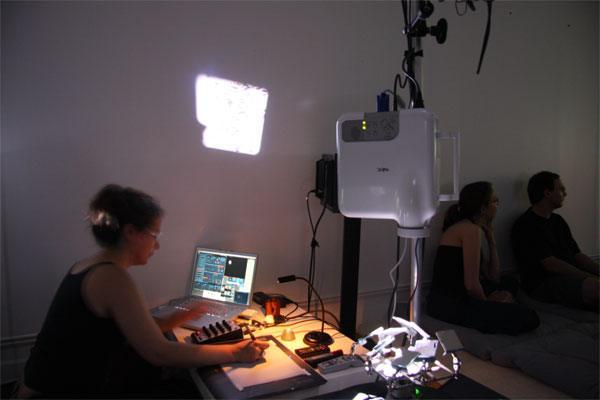
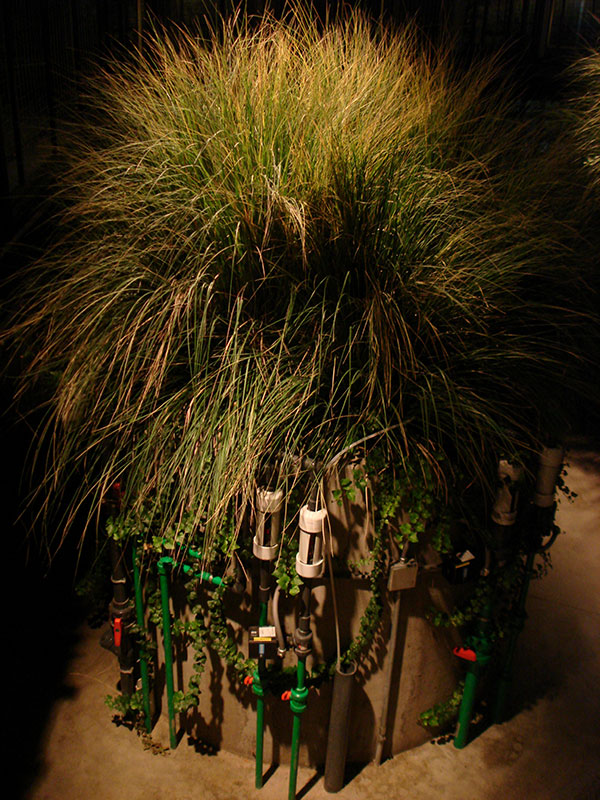
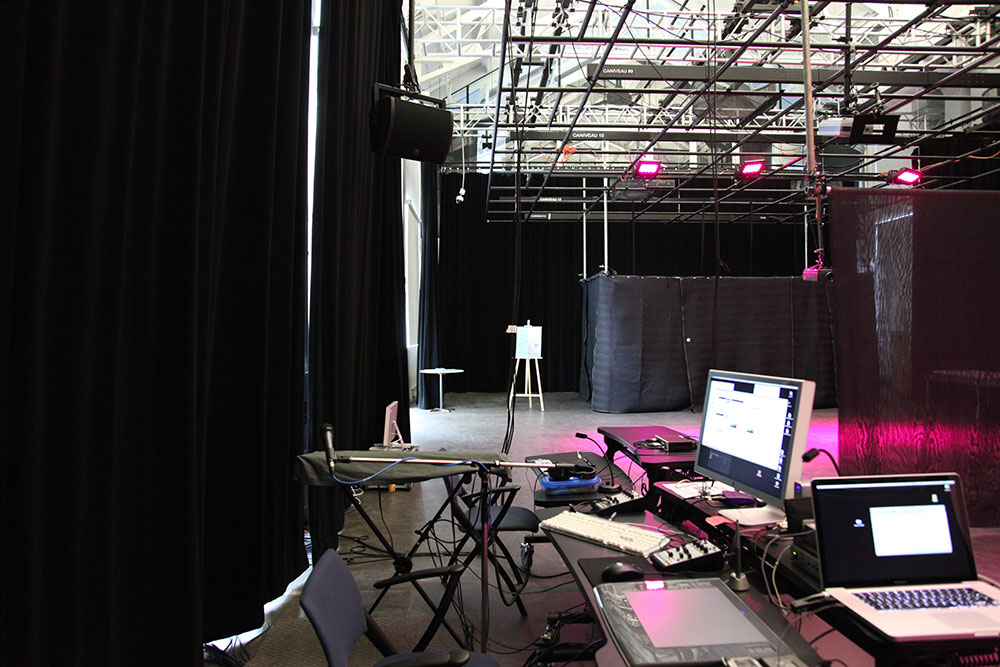
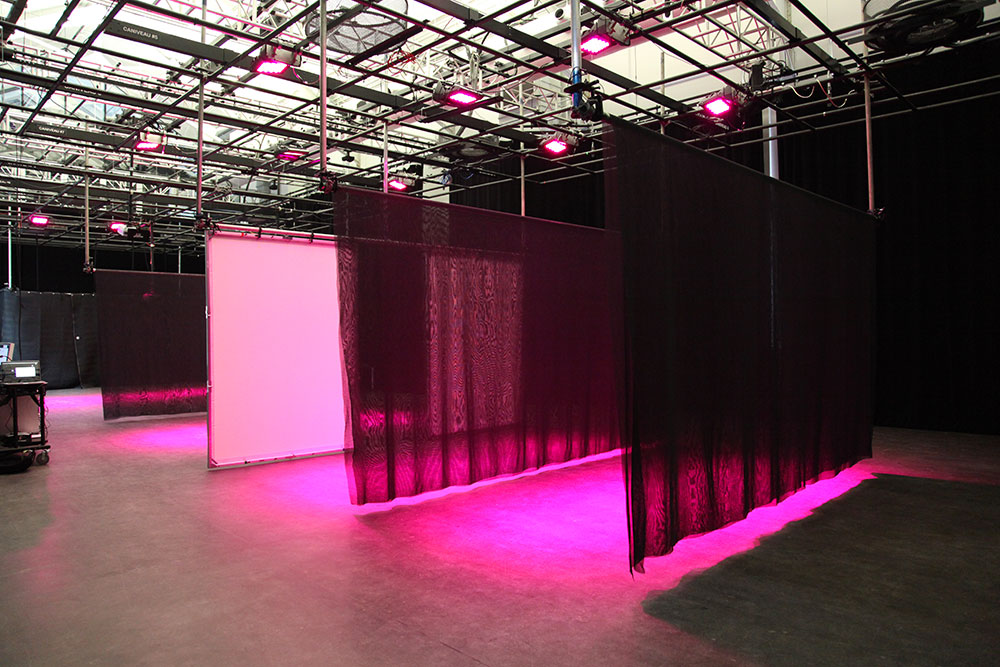
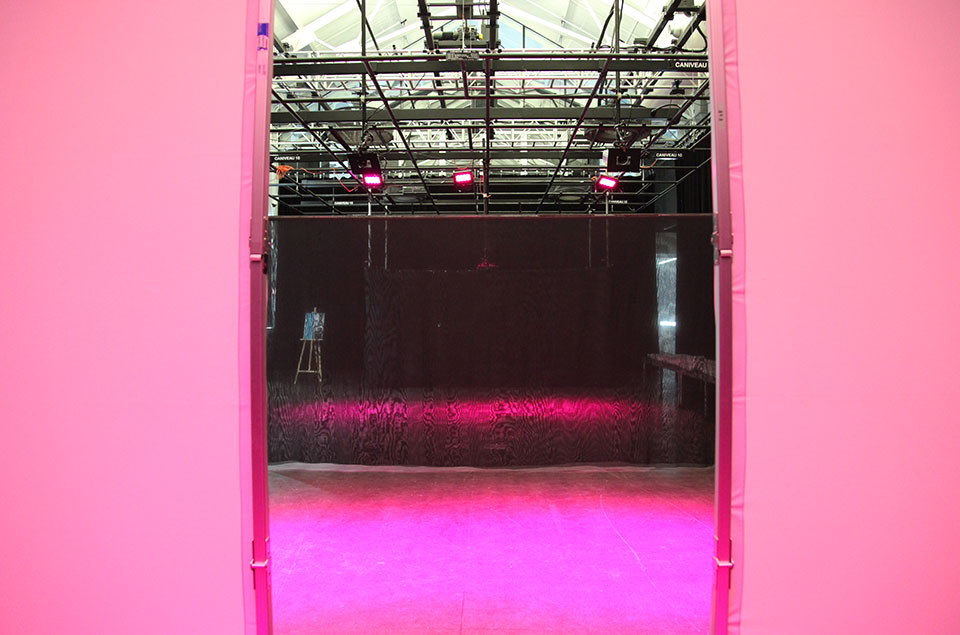
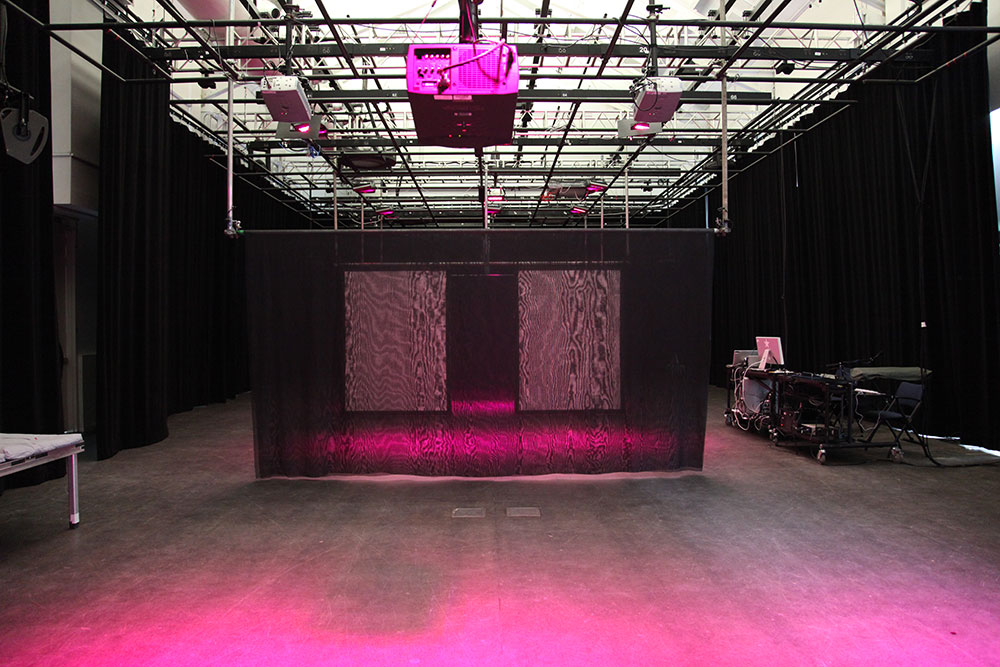
Process-oriented and informal in nature, the research and production of this work with immersive sound, moving image, drawing and light is informed by the realities of “gray waters” in various states of composition, decomposition and recomposition. The source material originates in the « Eco Machines » system, pioneered by biologist and ecologist Dr. John Todd situated situated at the rest area of Sharon, Vermont and the Station d’épuration des eaux usées, an industrial system for the city of Montreal. The project is extended with images and sounds from the deserts of southwestern USA.
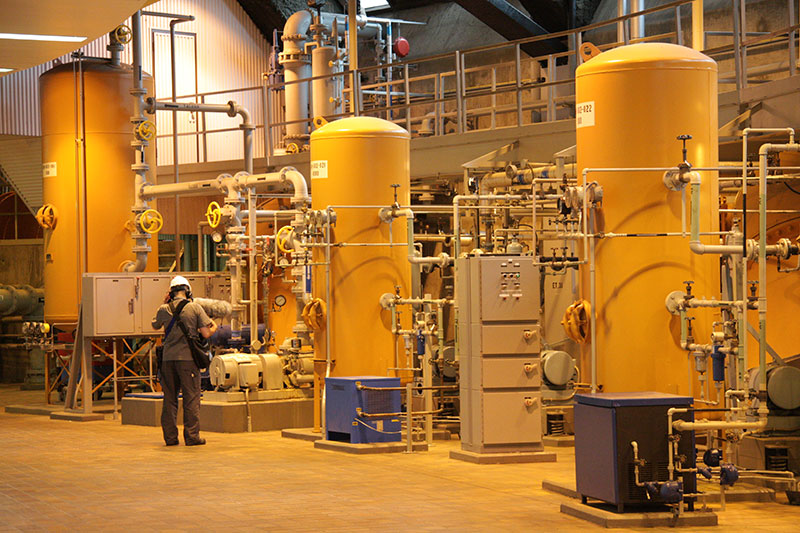
The project finds its inspiration in the concept of the transduction as defined by French philosopher Gilbert Simondon (1928-1989), by which nature, information and technology co-evolve. The series was initially performed in an intimate setting, disrupting the greek root of the word ecology, eikos, which means « house ».
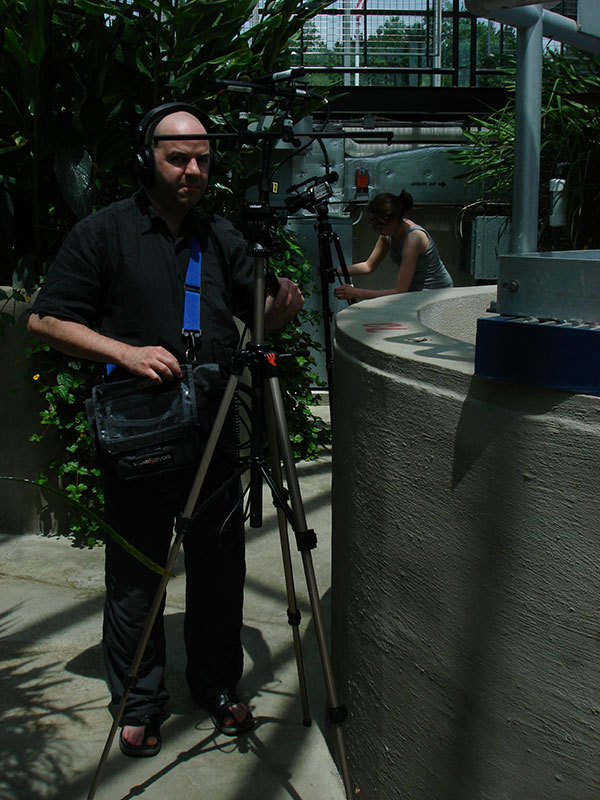
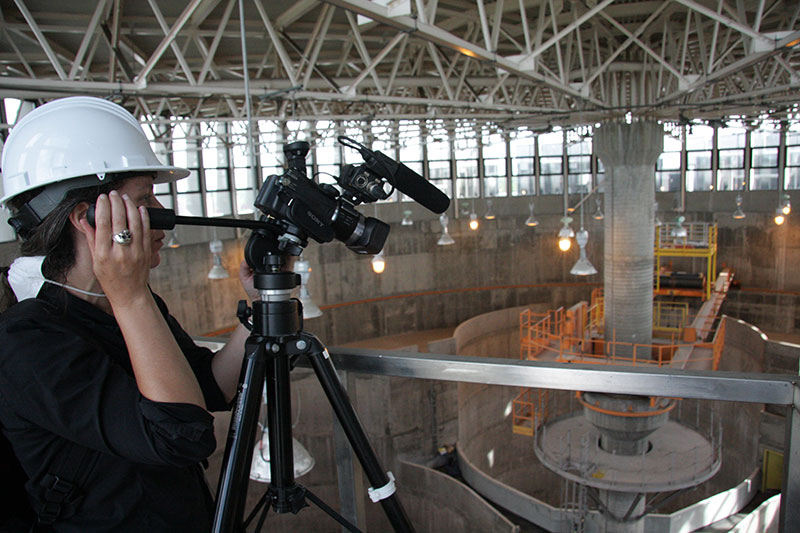
Credits Text excerpts _Gilbert Simondon Production Catherine Béliveau _additional camera, EcoMachines, Sharon, Vermont and production assistance, Fountain House production assistance and documentation Sophie Bellissent _initial production and research assistance Roberto Di Giacomantonio _zafuton design and production Nate Fredericks _bench flow data, Sharon, Vermont Marc Lavallée _PureData DMX Varichrome LED programming Florian Grond _MAX-MSP algorithmic ambisonic panner programming Pier Lefebvre _projection apparatus Jacques Perron _additional camera and documentation, Station d’épuration des eaux usées, Montréal Jean-Marc Ratté, Sophie Voyer _Station d’épuration des eaux usées, Montréal Shot on location at EcoMachines, Sharon, Vermont; Joshua Tree National Park, California; Station d’épuration des eaux usées, Montréal; Grand Canyon and Glen Canyon, Arizona.
Presentation at Flevoland, Thinking with Water conference JacquesPerron _documentation Simon Rolland _production assistance Sophie Bellissent, Nadia Seboussi _assistance
Equipment and software support from Hexagram-UQAM and Sennheiser Canada.
Presentations (in reverse chronological order) Fountain House Esplanade Clark, Montréal, Oct 9-10-11, 2014 in collaboration with raumlabor (Berlin) and Goethe-Institut Montreal, Biennale de Montréal EcoSapiens Residency, Fernery Room, Pukekura Park, Botanical Garden, New Plymouth, New Zealand Jan 2011 Thinking With Water Conference, Concordia University, Montreal, June 21 2010 Festival Temps d’Images Usine C, Montréal, 19-20-21 février 2009 Deep North, transmediale Haus der Kulturen der Welt, Berlin, Germany Jan 2009 Flevoland Montréal June 9, June 28, Aug 8 2008
Produced with the financial assistance of the Canada Council for the Arts, Media Arts and PAFARC-UQAM (Programme d’aide financière à la recherche et à la création de l’Université du Québec à Montréal).
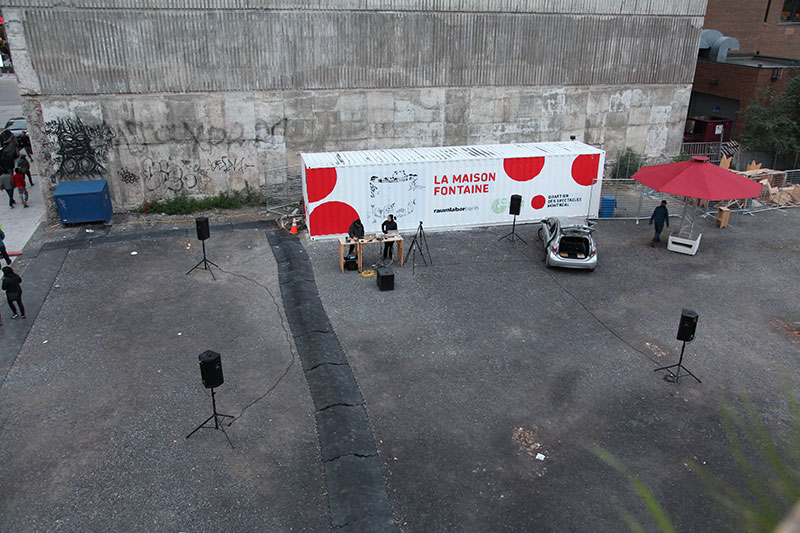
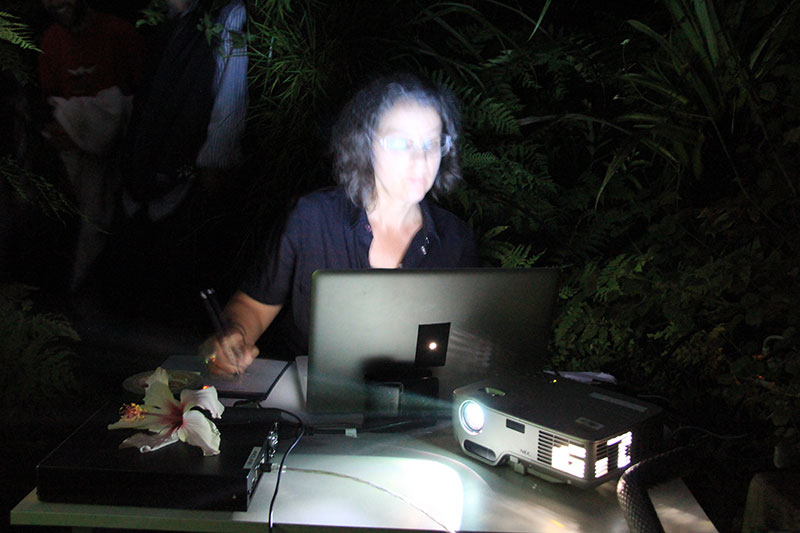
LSCDC à la maison Fontaine, octobre 2014, Montréal. Coproduction Goethe-Institut. Photo : Catherine Béliveau.
LSCDC à la maison Fontaine, octobre 2014, Montréal. Coproduction Goethe-Institut. Photo : Catherine Béliveau.
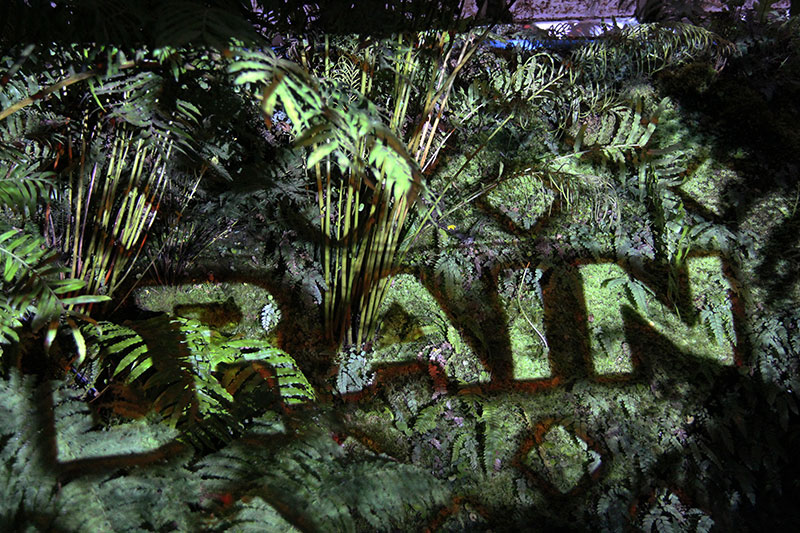
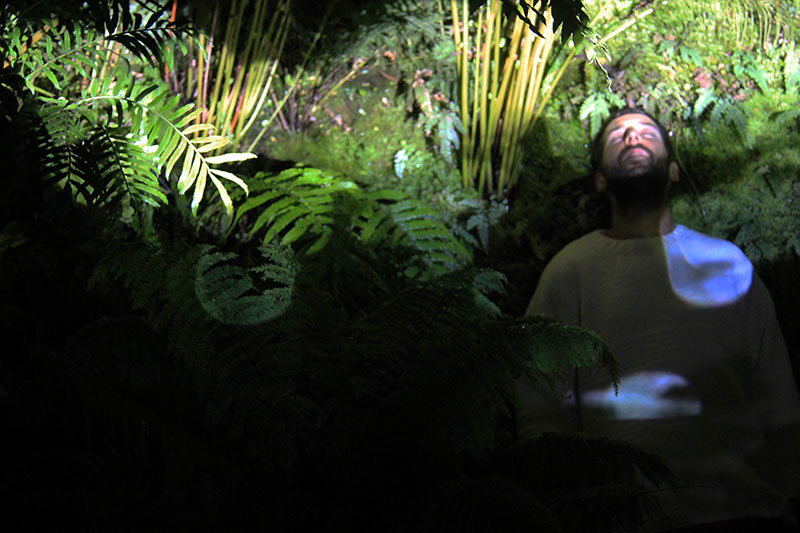
LSCDC au Pukekura Botanical Garden, New Plymouth, New Zealand, jan 2011. Photo : Keith Armstrong.
LSCDC au Pukekura Botanical Garden, New Plymouth, New Zealand, jan 2011. Photo : Keith Armstrong.
LSCDC au Pukekura Botanical Garden, New Plymouth, New Zealand, jan 2011. Photo : Keith Armstrong.
LSCDC au Festival Temps d’Images, Usine C, Montréal, février 2009. Photo : Jacques Perron.
LSCDC au Festival Temps d’Images, Usine C, Montréal, février 2009. Photo : Jacques Perron.
LSCDC au Festival Temps d’Images, Usine C, Montréal, février 2009. Photo : Jacques Perron.
LSCDC à Deep North, Transmediale, Haus der Kulturen der Welt, Berlin, Allemagne, 2009. Photo : Jonathan Gröeger.
LSCDC à Flevoland, Montréal, 2008. Photo : Jacques Perron.
LSCDC à Flevoland, Montréal, 2008. Photo : Jacques Perron.
Stéphane Claude et Catherine Béliveau au Eco-Machines, Sharon North Welcome Centre, Vermont, 2007.
Eco-Machines, Sharon North Welcome Centre, Vermont, 2007.
À la Station d’épuration des eaux usées, Montréal, 2008. Photo : Jacques Perron.
À la Station d’épuration des eaux usées, Montréal, 2008. Photo : Jacques Perron.
Permutational performative installation & night projection May 5-22, 2014 cover photo : Lorna Bauer
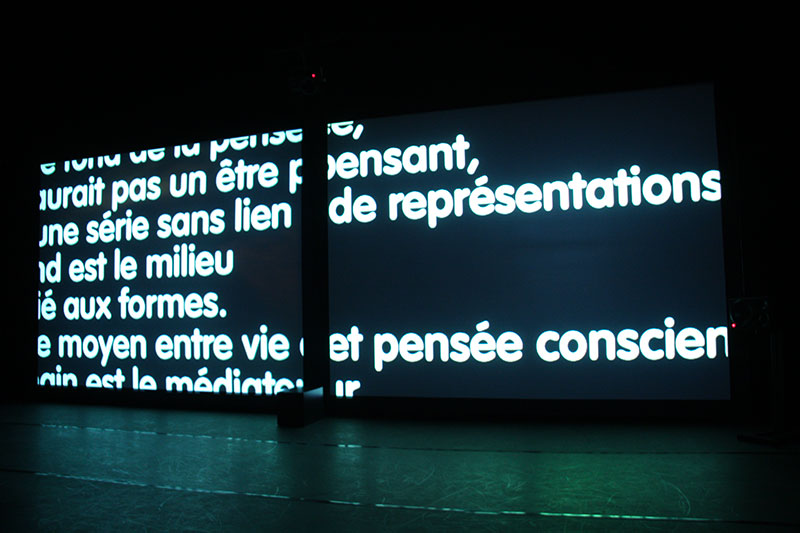
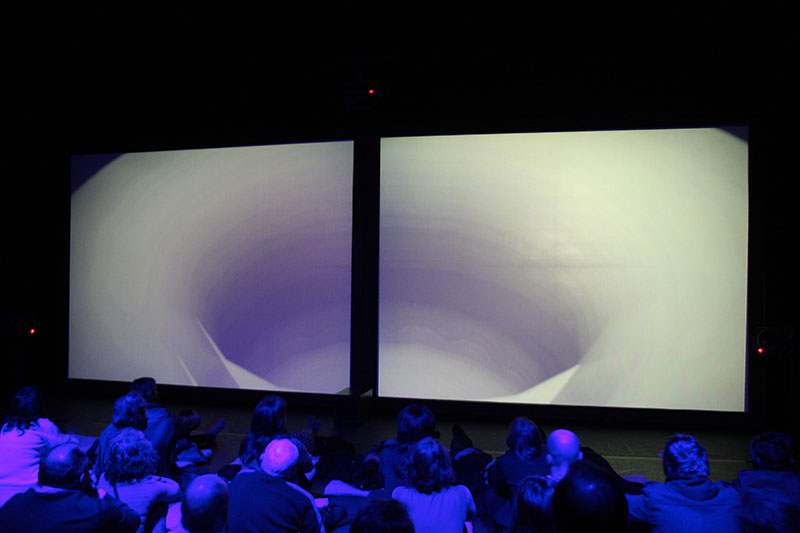
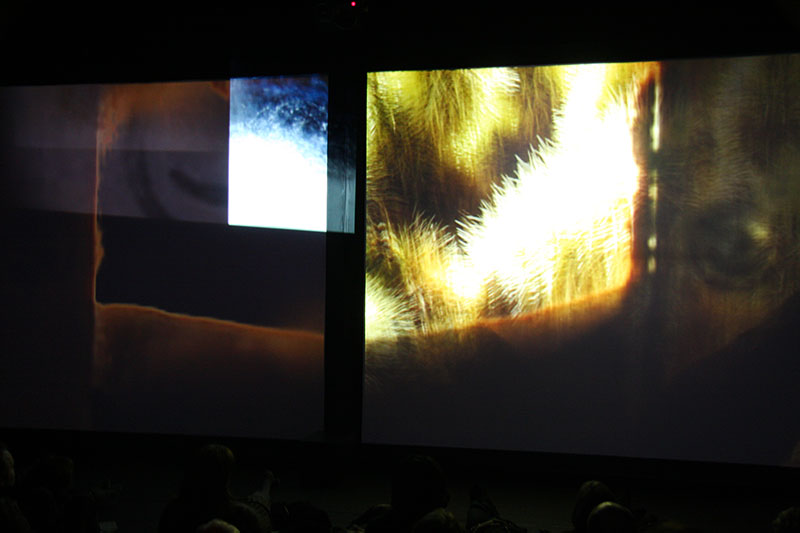
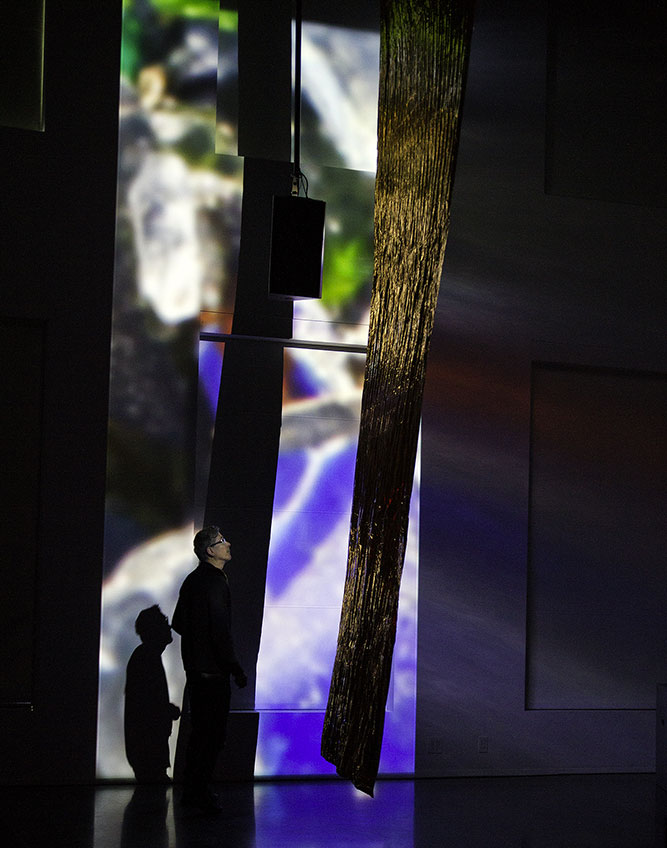
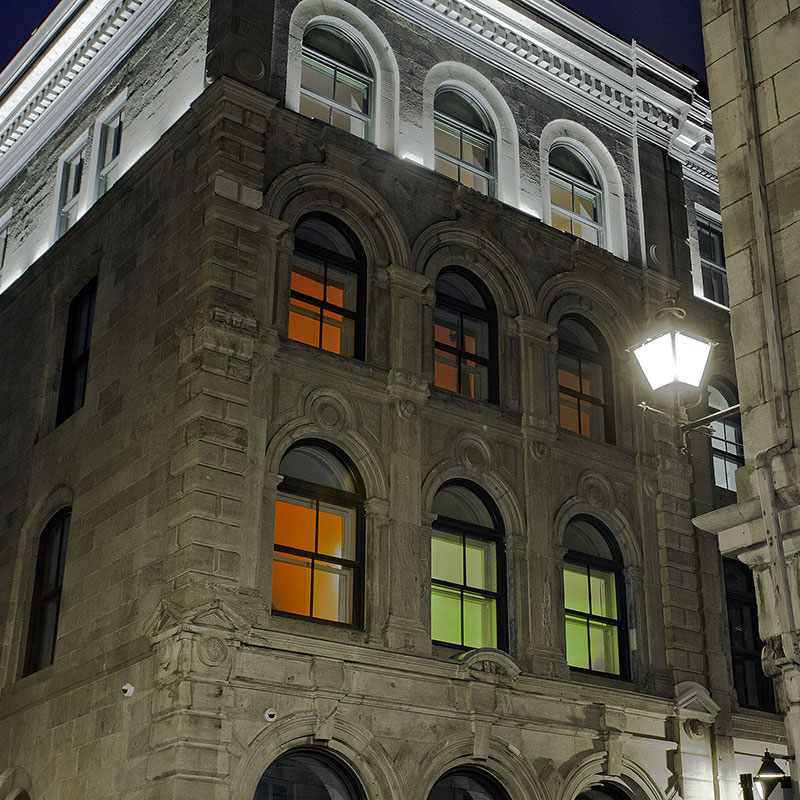
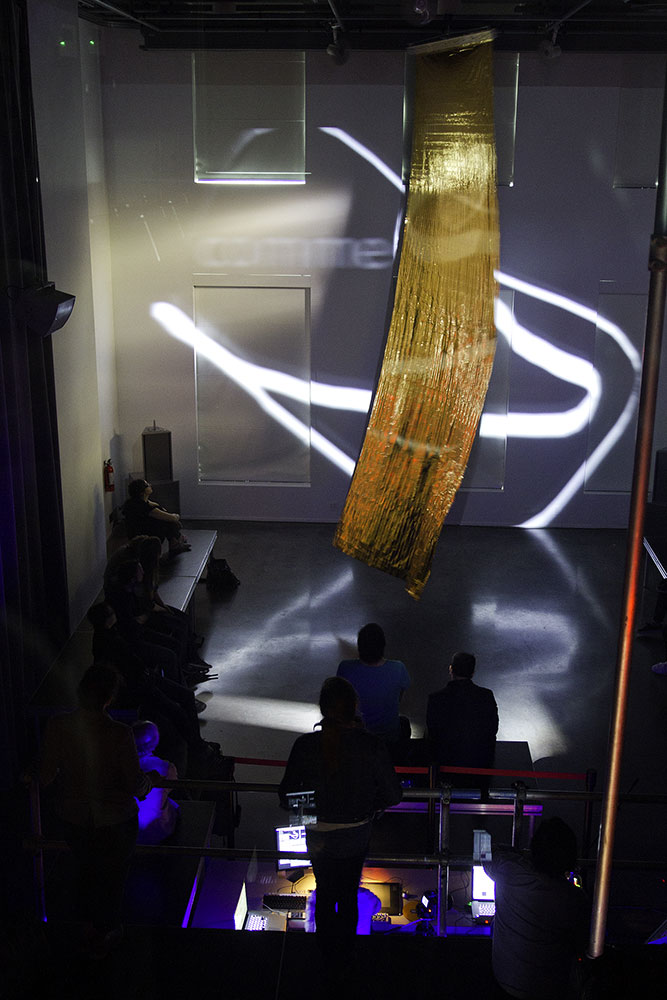
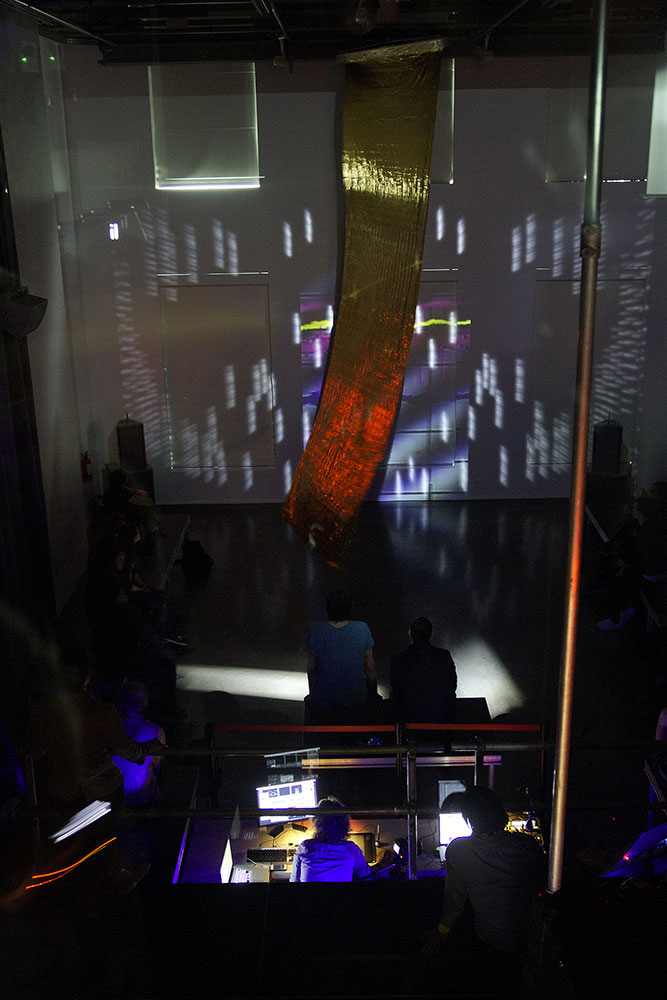
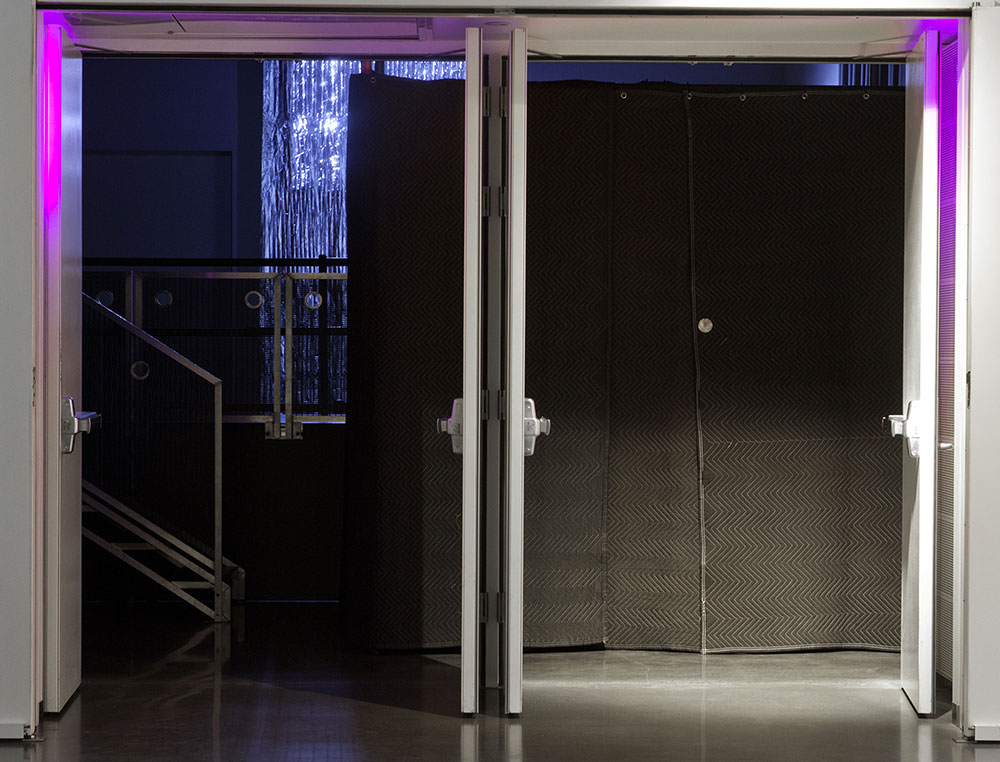
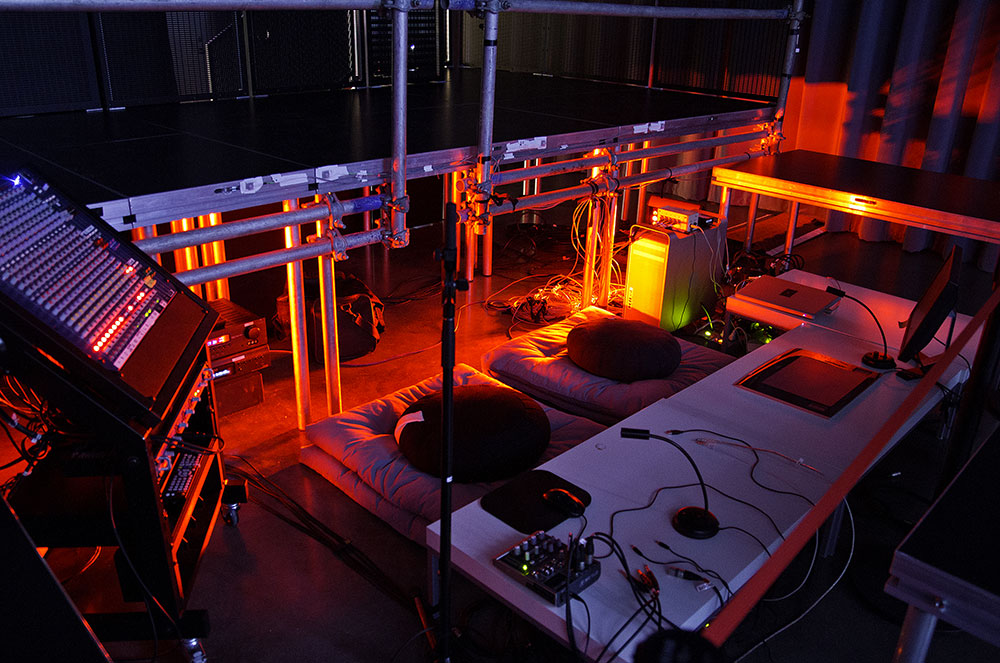
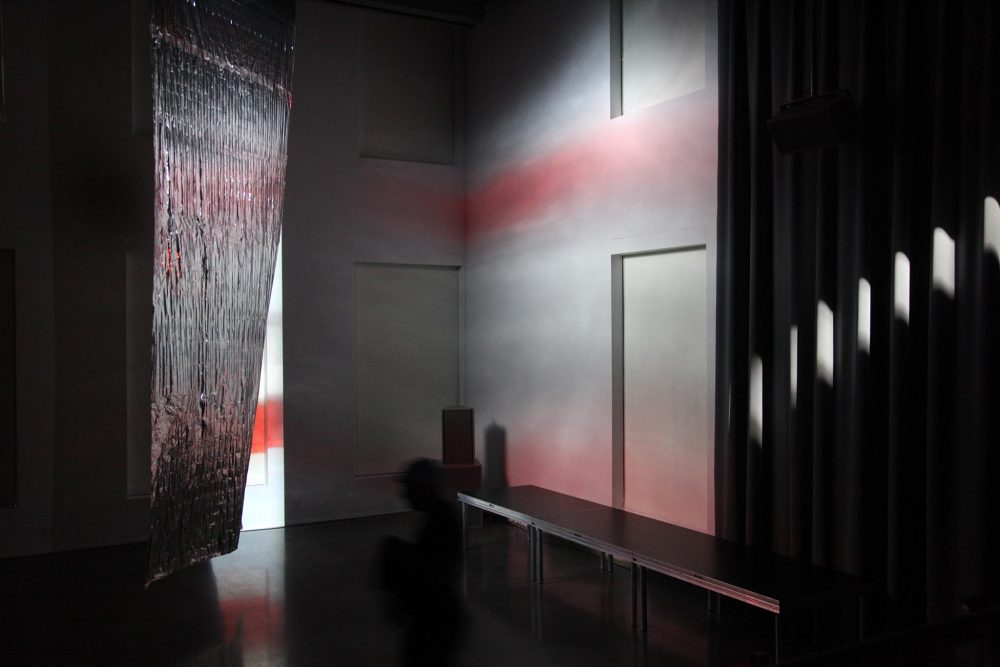
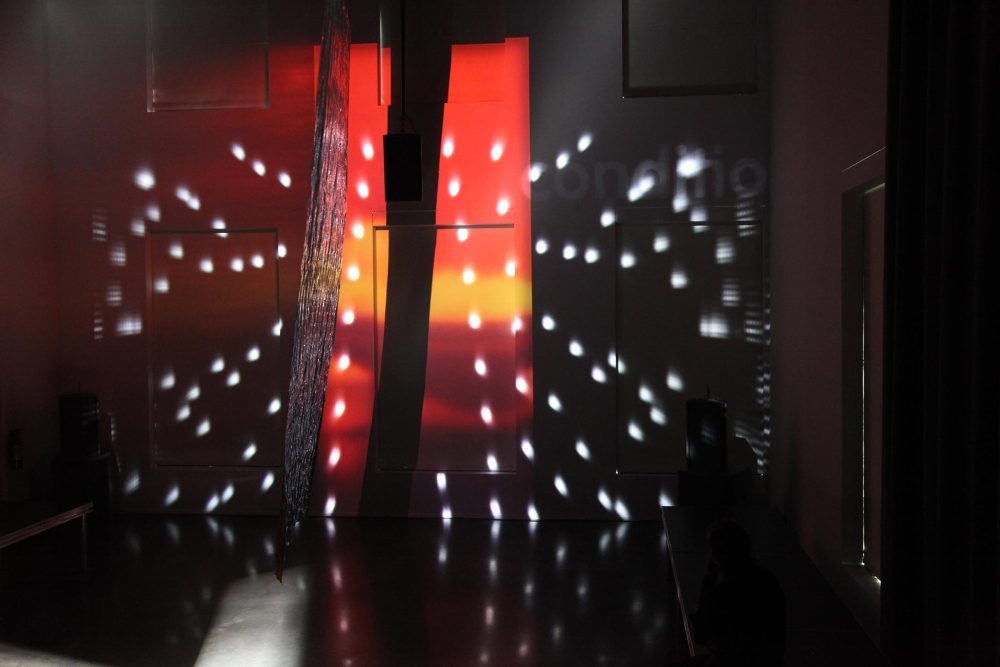
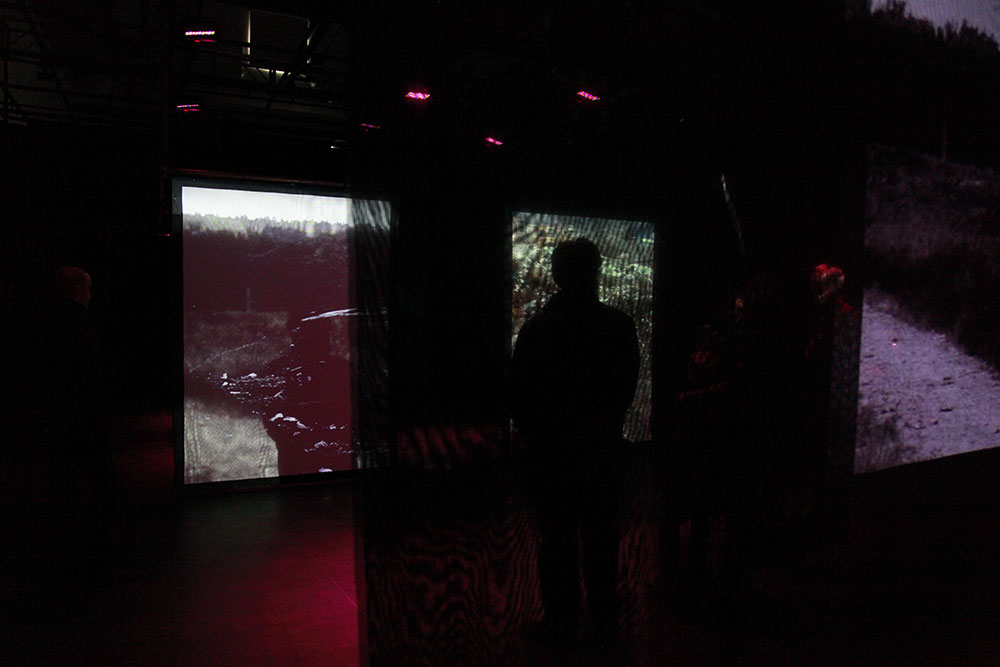
Milieux associés is a permutational and performative installation linking art, technology and residual matter. The installation and performances engage the public through a variety of physical environments distributed in zones. Consisting of video, a swirling membrane, proximity and movement sensors, digital drawing, tactile and immersive sound, it also spills out onto the street at night as an evening projection on the windows of the Phi Centre seen from Saint Paul Street. The work explores the relationship of humans to hidden and neglected materialities that still hold capacity for transformation.
Curated by Cheryl Sim Presented at the Phi Centre The installation will be on view Monday to Saturday, noon – 6 PM Projections will be viewable from the street Monday to Saturday, 9 PM – midnight Performances will take place Thursday to Saturday between 3-4 PM Exhibition opening, May 3, 3 PM Free admission This is a co-presentation of DHC/ART, Ælab, Grupmuv, Phi Centre and BIAN, as part of the International Digital Arts Biennial. Funding: Fonds québécois de recherche sur la société et la culture (FRQSC)
Credits Sensors and programming: Jim Bell / Technical Director: Jason Pomrenski / Production assistants: Johannie Séguin, Simon Rolland, Matthieu Gagnon Lamarre, Natalie Lafortune / Technical support: Hexagram-UQAM, Laboratoire nouveaux médias OBORO / Financial support: Fonds de recherche québécois sur la société et la culture (FRQSC)
Thank you Cheryl Sim, Phoebe Greenberg, Phi Center, Brian Massumi, Jimmy Lakatos, Laurent Lamarche, Yan Breuleux, Grupmuv, BFI-Lachenaie, Martin Pelletier, Andrea-Jane Cornell, Anne-Françoise Jacques, Daniel Courville, Philippe-Aubert Gauthier.
Sub-matter May 10 2014 Curated and presented by Florian Wüst (Berlin)
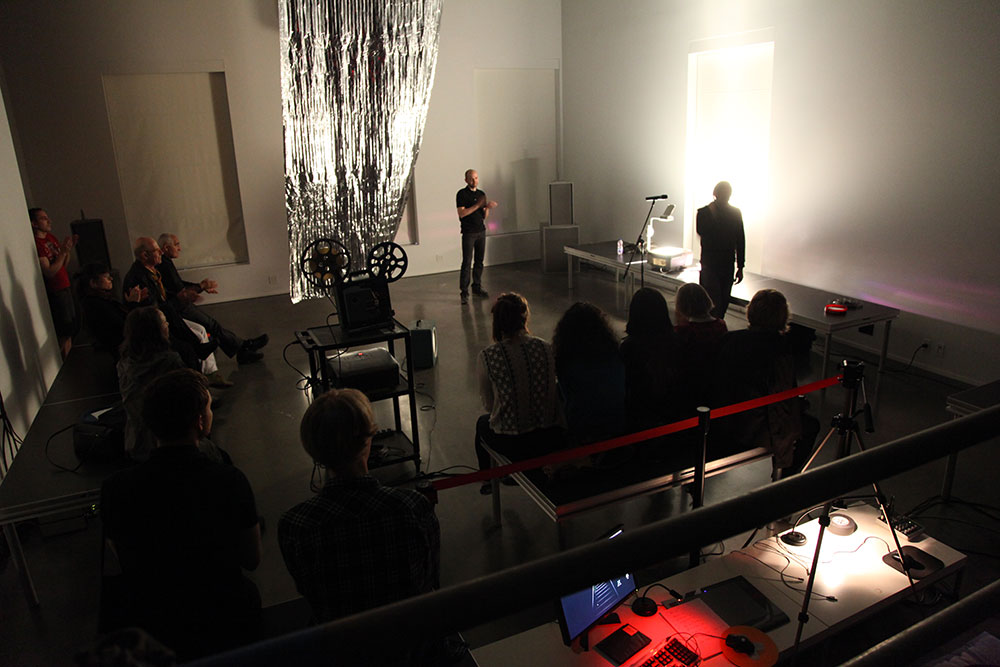
A special event presented as part of Ælab’s exhibition Milieux Associés.
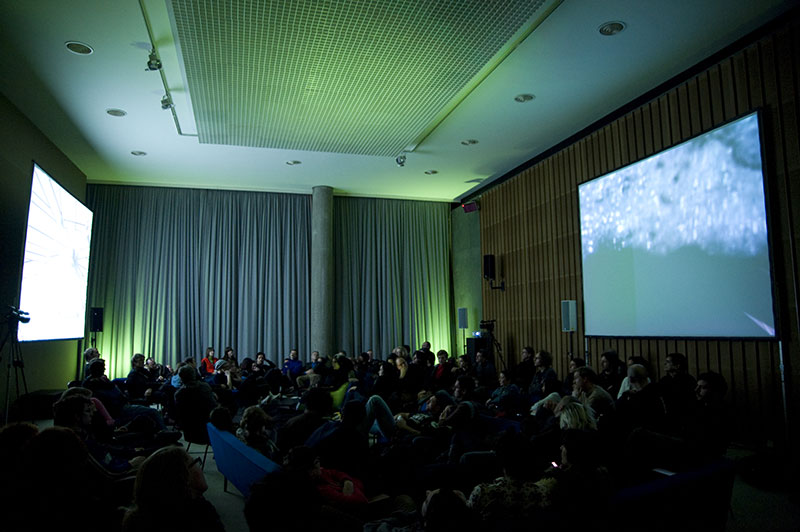
Through a selection of experimental, documentary and industrial short films, film excerpts, audio pieces, and fragments of text, Florian Wüst will reflect on processes of transformation in relation to residue and waste, energy and subsistence.
Le rapport à la composition de l’image vidéo en direct se poursuit dans ce nouveau projet sur les opérations du lieu d’enfouissement technique de déchets situé à Lachenaie, Québec. Seront tracées « des manières d’être dans des rapports entre le visible et l’invisible » (Rancière) par une fragmentation visuelle éphémère qui réfléchit aux stratifications entre objets déchus, actions humaines et milieux physiques.
Le dessin réagence des plans dans un espace avec écrans multiples, systèmes lumineux varichrome et varilite, et une variété de dispositifs de son immersif. Le stylet, la tablette graphique et le son activent la relation avec les milieux qui informent l’opération de transformation du déchet.
Crédits Collaborateurs : Jim Bell, Nancy Bussières, Philippe-Aubert Gauthier. Appui à la production : Catherine Béliveau, Natalie Lafortune, Laurent Lamarche, Keith McMullen, Martin Pelletier, Jacques Perron. Appui à la recherche : Gabriel L. Savage Accueil: Geneviève Godin, Geneviève Trudel, Catherine Lescarbeau Soutien technique : Hexagram-UQAM
vendredi 28 octobre et samedi 29 octobre 2011 : 16h à 20h Performances aux demi-heures Agora Hydro-Québec du Coeur des Sciences de l’UQAM 175, avenue du Président-Kennedy (Métro Place-des-Arts) Entrée libre
Présentée dans le cadre de la série d’événements Marqueurs de subduction organisée par le Grupmuv en octobre et novembre 2011 à Montréal
Stéphane Claude remercie le Conseil des arts du Canada et le Conseil des arts et des lettres du Québec. Gisèle Trudel remercie le FQRSC, le Programme d’aide financière à la recherche-création de l’UQAM et BFI-Lachenaie.
Documentary, 12 min, color, stereo Original English version with French subtitles
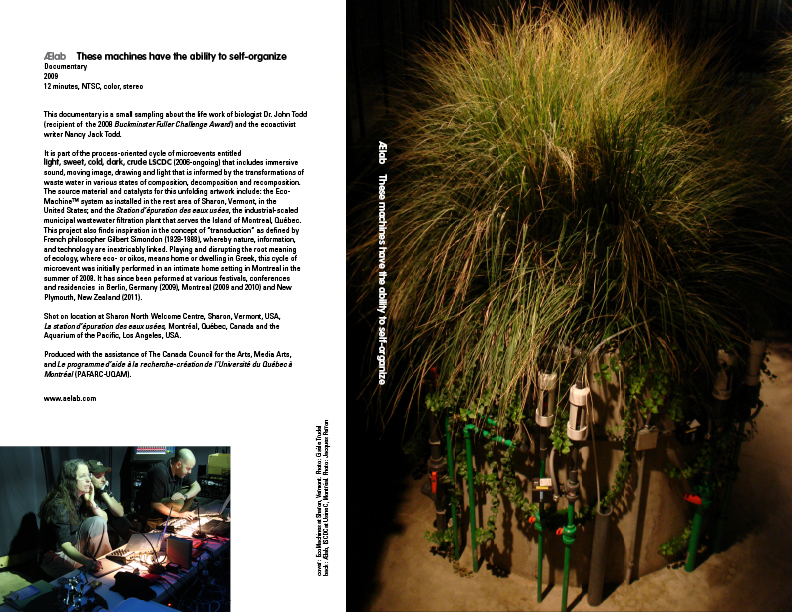
This documentary is a small sampling about the life work of biologist Dr. John Todd (recipient of the 2008 Buckminster Fuller Challenge Award) and the ecoactivist writer Nancy Jack Todd.
It is part of the process-oriented cycle of microevents entitled light sweet cold dark crude LSCDC (2006-ongoing) that includes immersive sound, moving image, drawing and light that is informed by the transformations of waste water in various states of composition, decomposition and recomposition.
Credits Documentary segment, interviews with Nancy Jack Todd and John Todd Jacques Perron _interview camera (video, photo) Stéphane Claude_interview sound Gisèle Trudel _interview, editing Catherine Béliveau _English transcription Jacques Perron _French translation
Presented in Berlin, Germany (2009) Montreal (2009 and 2010) Govett-Brewster Gallery, New Plymouth, New Zealand (2011) EcoBio Festival, Prague, Czech Republic (2011)
Produced with the financial assistance of the Canada Council for the Arts, Media Arts and PAFARC-UQAM (Programme d’aide financière à la recherche et à la création de l’Université du Québec à Montréal).
Audio program with live voice Musée d’art contemporain, Montréal nov 19 2003 Commissioned in the context of Projet Bulbes par Artificiel. MIDI-synchronized matrix of 8×8 oversized light bulbs
We would like to thank: Sophie Bellissent for her insight, Pascal Dufaux for La machination sonore, M/S sound recording by Ælab during his exhibition Des mesures dévastées, presented at La Maison de la culture du plateau Mont-Royal, Nikola Tesla for his words (adapted from My inventions,The Electrical Experimenter magazine, 1919), Louise Ismert for her warmth and support, and Artificiel for their superb impulsion apparatus.
three versions performative audiovisual essay, multichannel audio and video, approx 45 minutes
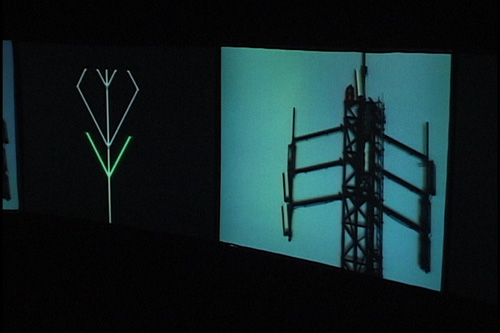
s8p antennas, transmission is a multi-channel performative essay integrating a central interpretative audiovisual component (20mn) which deals with the metaphorical interpretation of antenna principles and transmission. This piece engages a physiological response to the root subject of the project, the electromagnetic medium.
s8p originates from the Sparks series. It is a mix of documentary facts within a larger experimental genre with shifting perspectives which include interviews, autobiographical texts, animations, archival sources, metaphorical interpretations and original sound design.
Interviews with Jeffrey Stanley (screenwriter, New York), Velimir Abramovic (philosopher, Belgrade, Serbia) and Andrew Michrowski (director of PACE _Planetary Association for Clean Energy, Ottawa).
Shot on location in New York, the Nikola Tesla Museum (Belgrade), Museum of Science and Technology (Belgrade) and Institut de recherche d’Hydro-Québec (Varennes, Qc).
Produced with the financial assistance of Le Conseil des arts et des lettres du Québec and The Canada Council for the Arts.