Dans ce texte, je retrace mon premier contact avec le concept de sympoïèse pensé par Beth Dempster. Après un bref retour sur le concept d’autopoïèse, je poursuis ensuite avec l’analyse du caractère sans frontières (boundarylessness) de la sympoïèse, telle que présentée par Dempster dans un schéma qui accompagne un de ses textes (1999). L’absence de frontières peut laisser perplexe. Comment s’allier ou s’agencer s’il n’y a pas de distinctions ? Comment s’active un partage ?
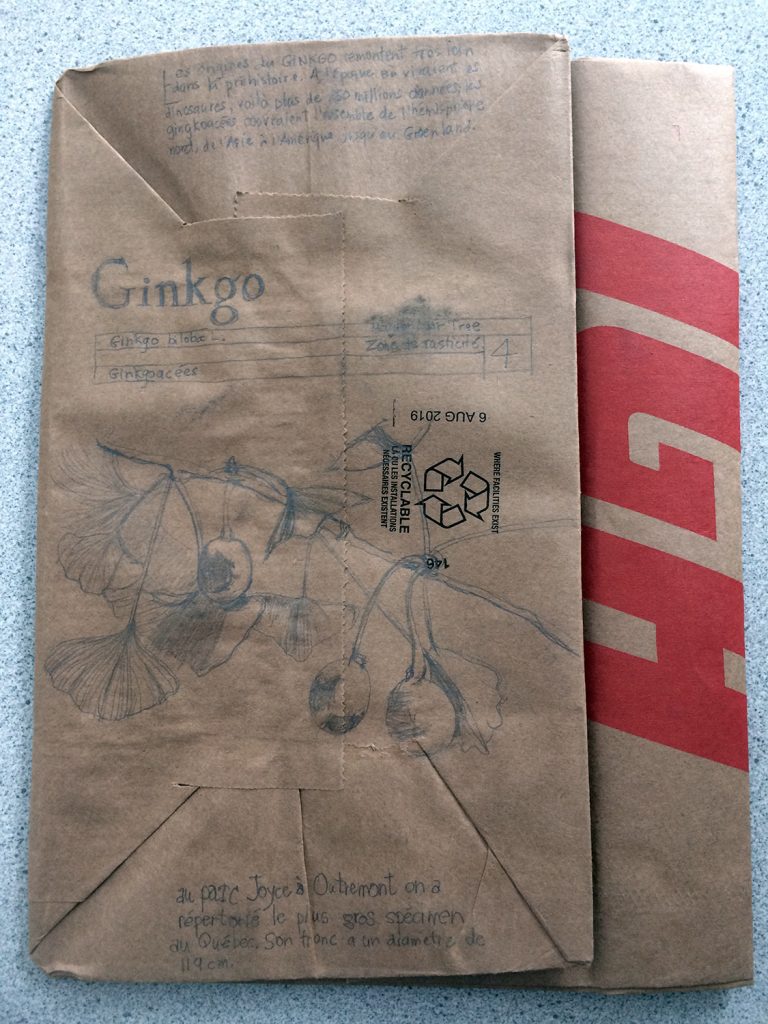
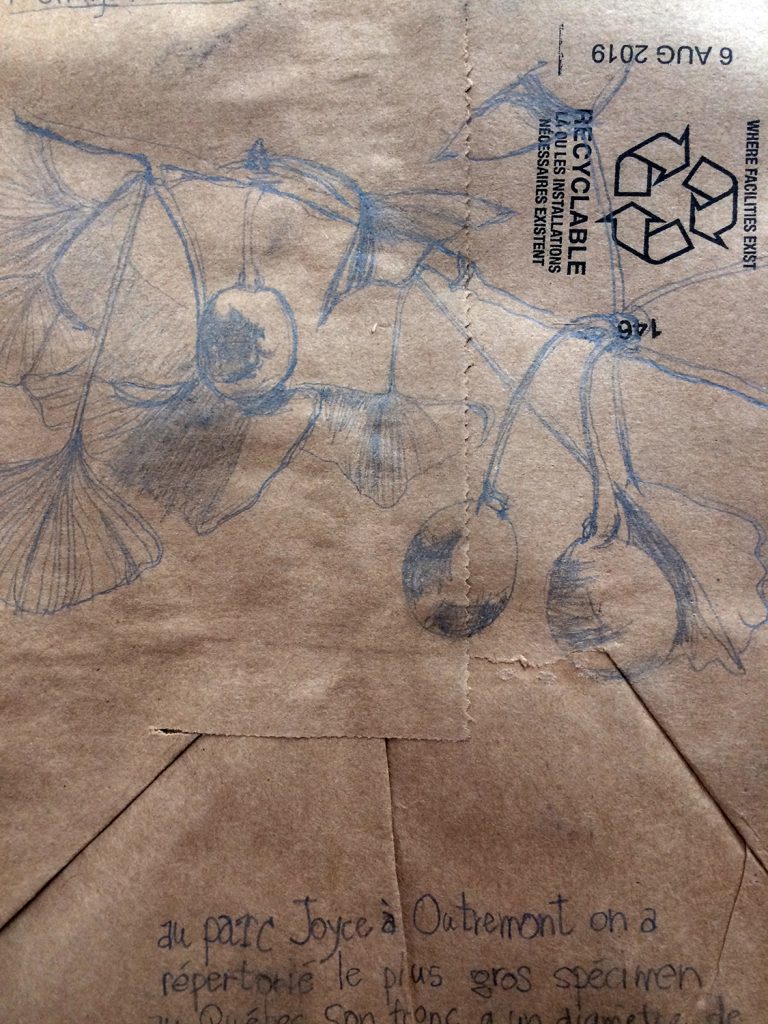
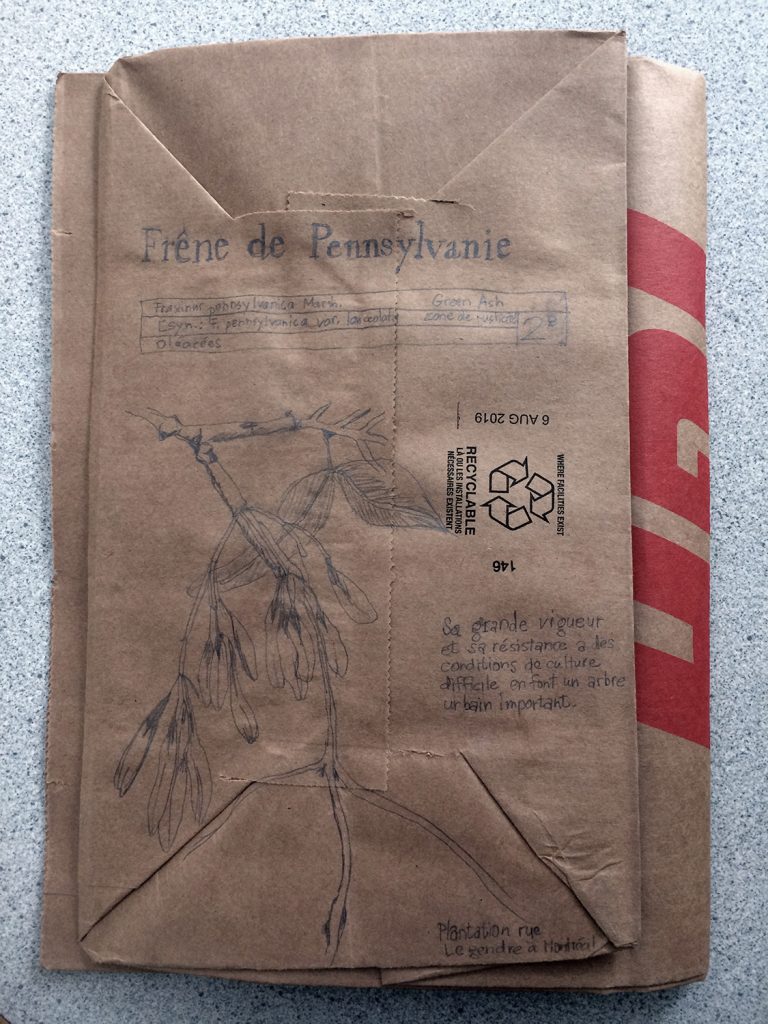
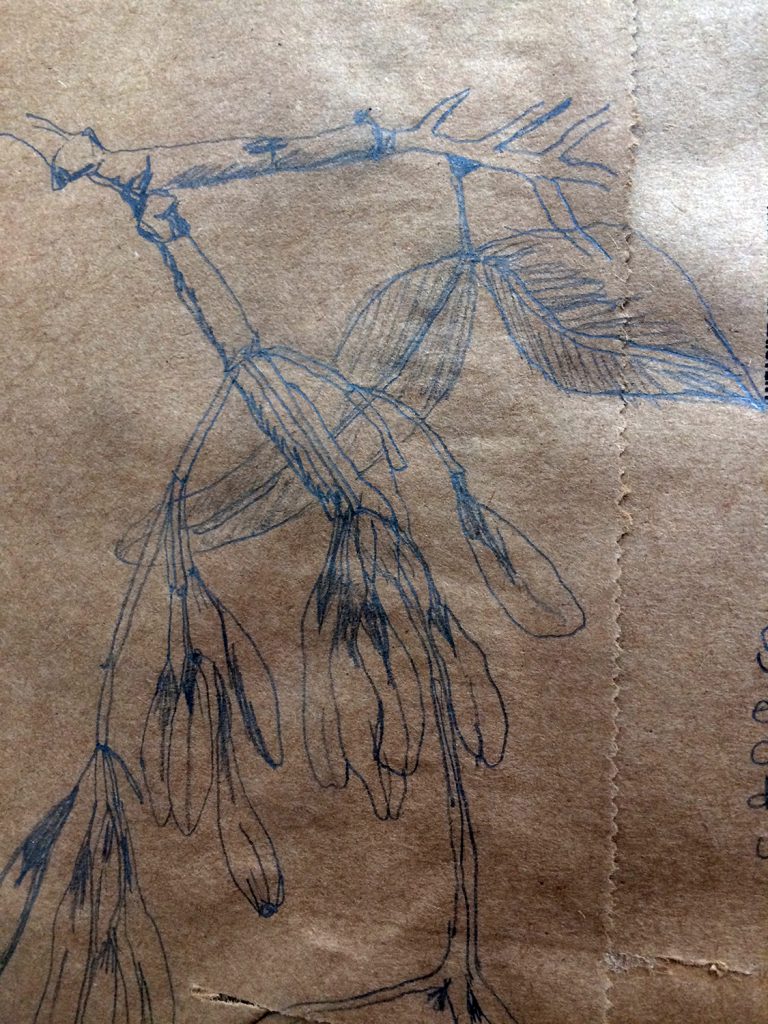
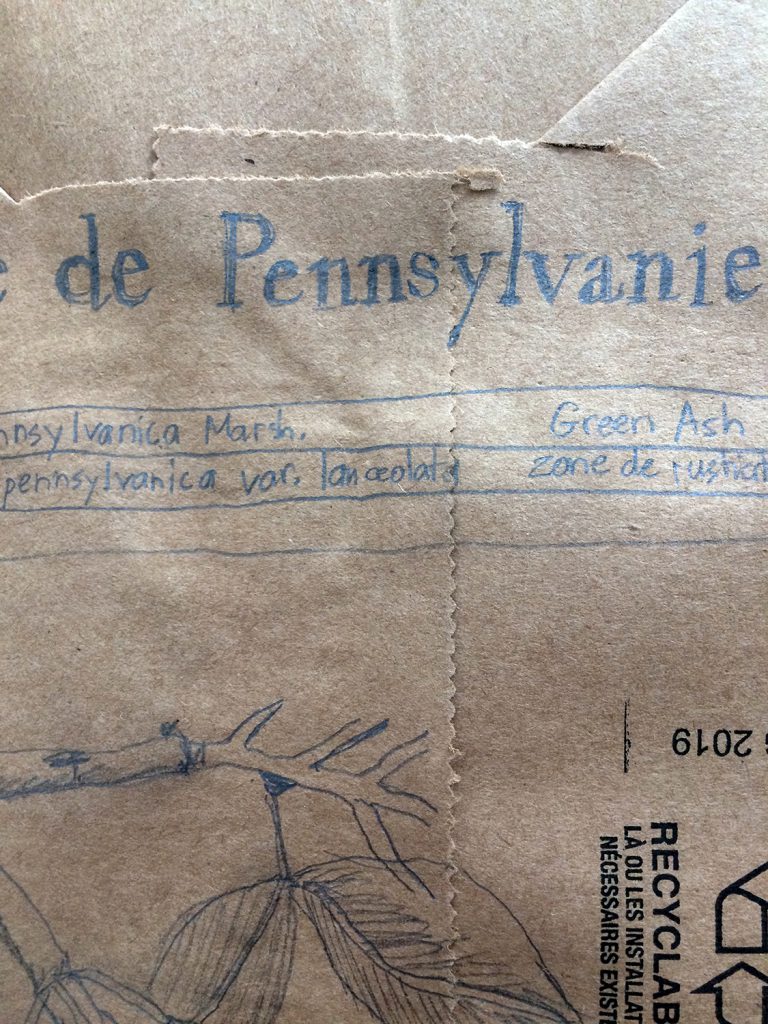
Série de dessins effectués sur des sacs d’épicerie en papier Kraft trouvés qui rappellent le format d’un livre. Les dessins sont basés sur les photos d’arbres prises à Montréal venant du livre Les arbres de Montréal de Martin Gaudet (2007), acheté dans une vente de garage pour 1$.
Set of drawings done on found Kraft paper grocery bags which recall a book shape. The drawings are based on the photos of trees in Montreal as published in the book by Martin Gaudet, bought at a yard sale for $1.
Dessins / Drawings Gisèle Trudel Merci pour la vitrine / Thank you for the window display Susan Turcot
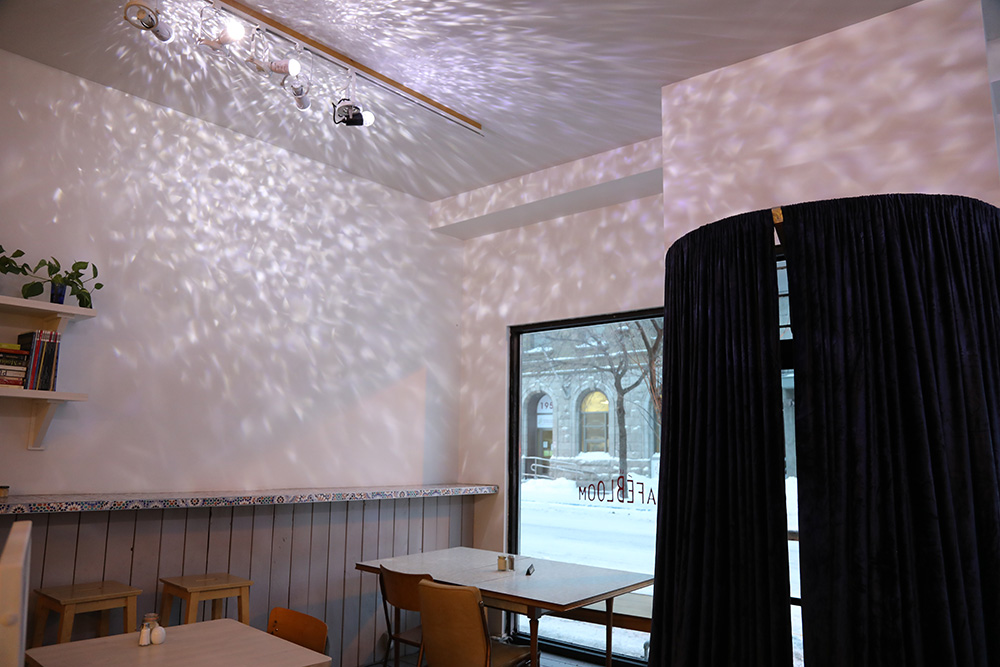
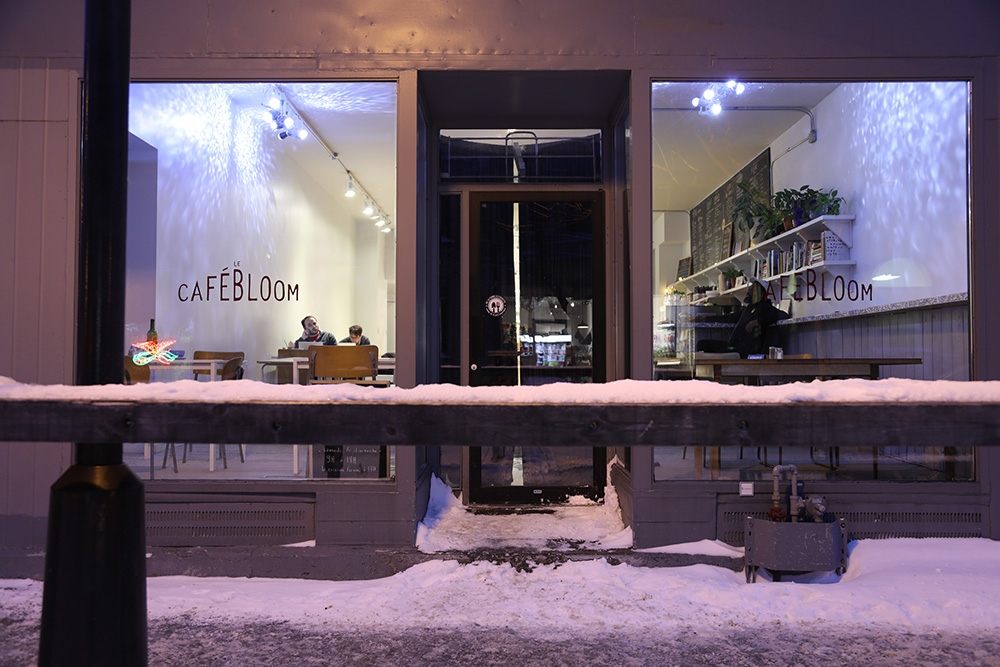
Café Bloom Pointe-St-Charles, Montréal October 28, 2018 – March 21, 2019 everyday 08h-21h et 00h-03h
Curator : Caroline Andrieux
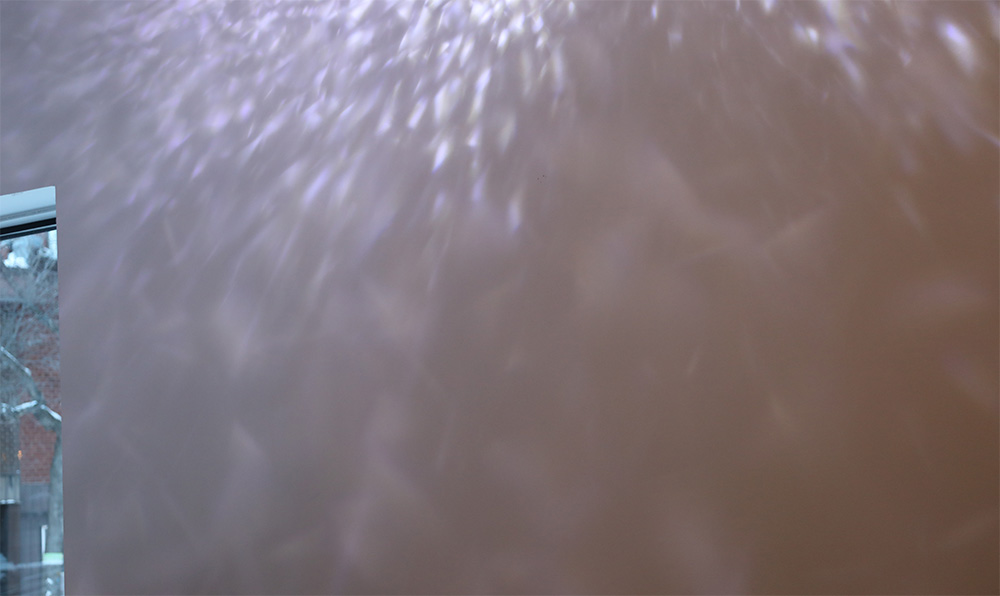
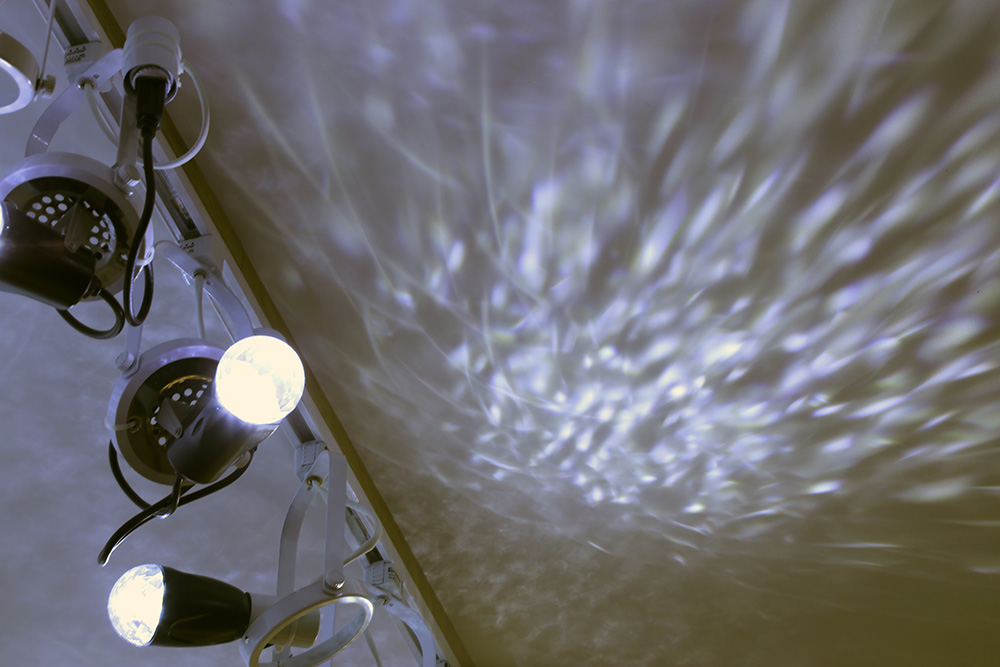
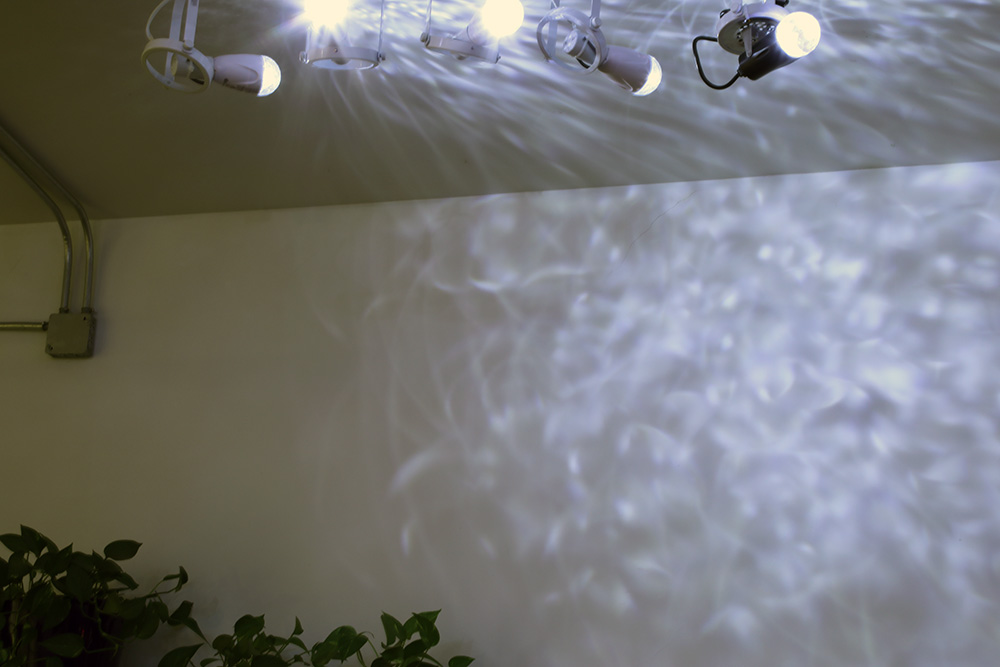
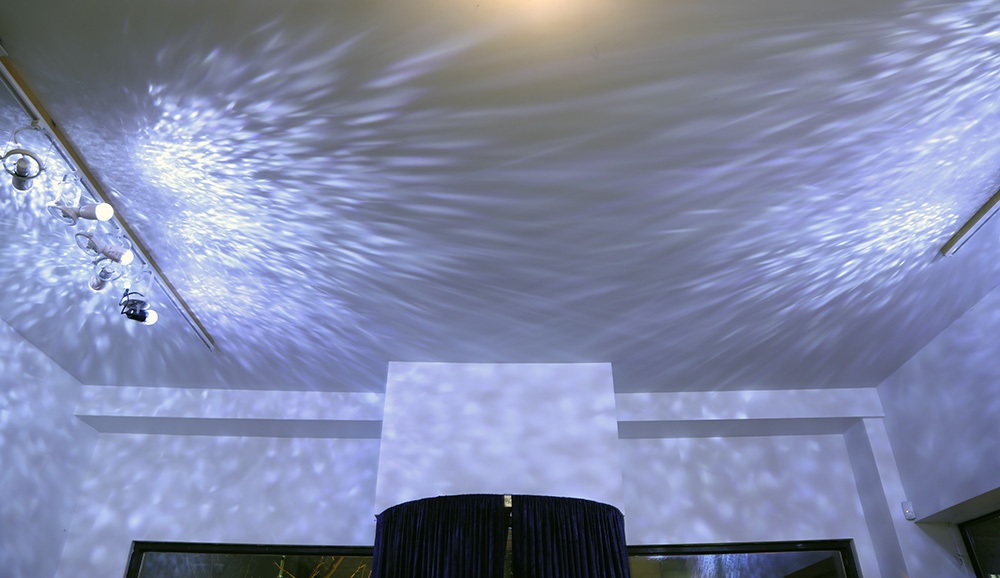
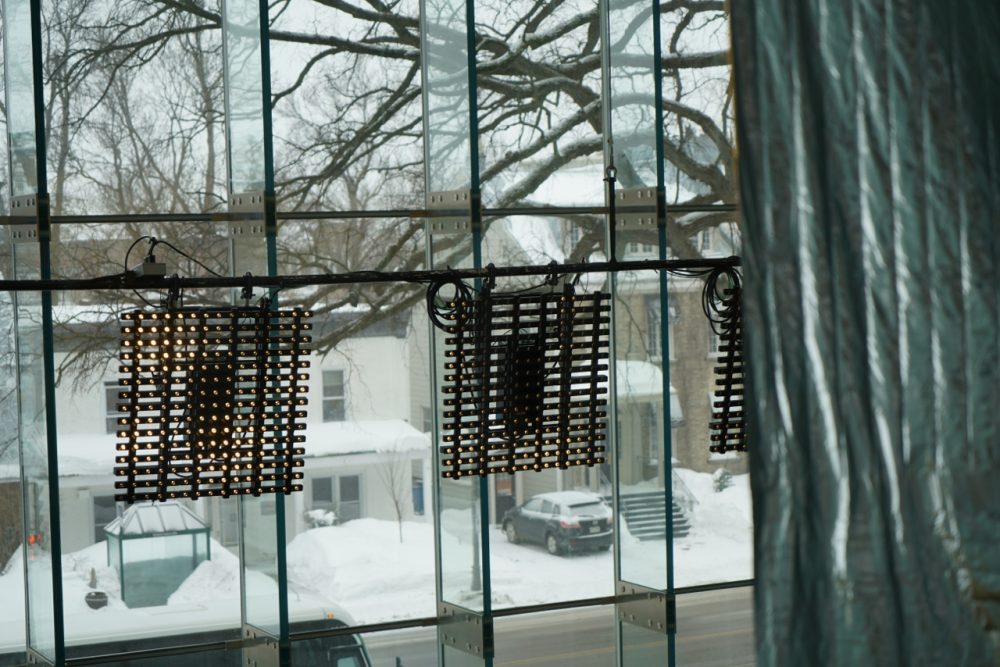
At the Café Bloom in Pointe-St-Charles, Caroline Andrieux (Artistic Director of the Darling Foundry) has invited artists to exhibit for the last three years. In this context, Trudel created the first light installation in the window. The installation consists of adapting the track-light sockets with LED bulbs which create interference between animated pattern of glittering light. This intervention is in line with the artist’s interest in integrating contemporary art into liminal architectural spaces such as windows, resulting in different experiences from both within and outside the building, during the day and night.
Un grand merci à Jessica Bégault.
Other artworks with light & windows Milieux associés (2014) ; Futur au présent (2012) ; Between light & night (2012) ; L’espace du milieu (2011) ; Interfacing (2010)
Une coproduction Ælab – Manif d’art 8, la Biennale de Québec.
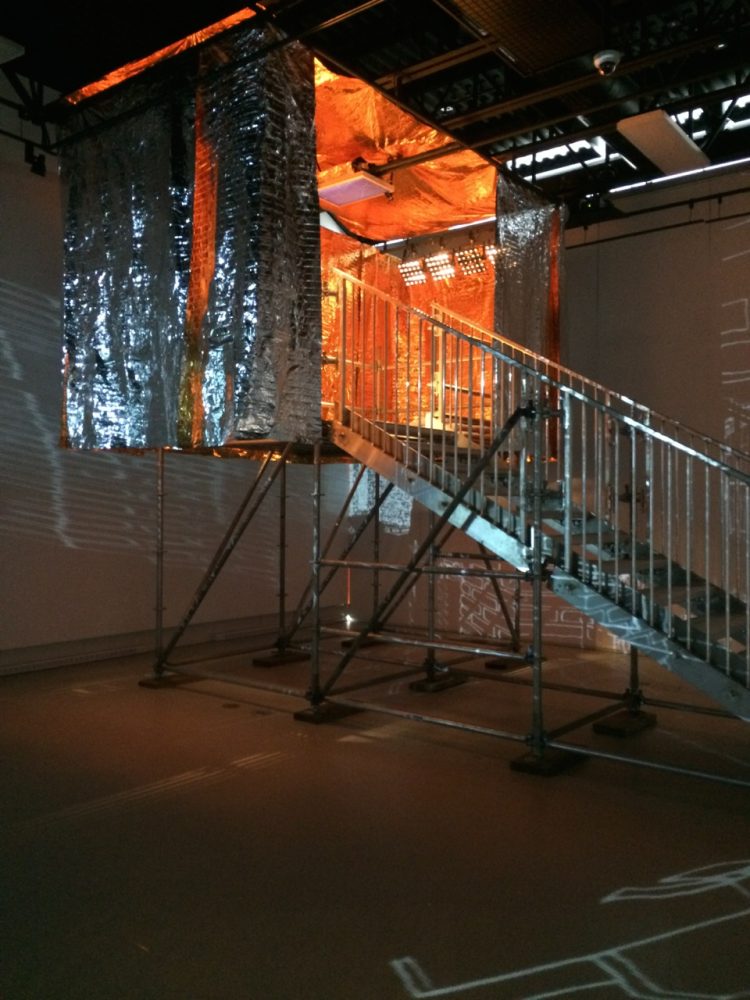
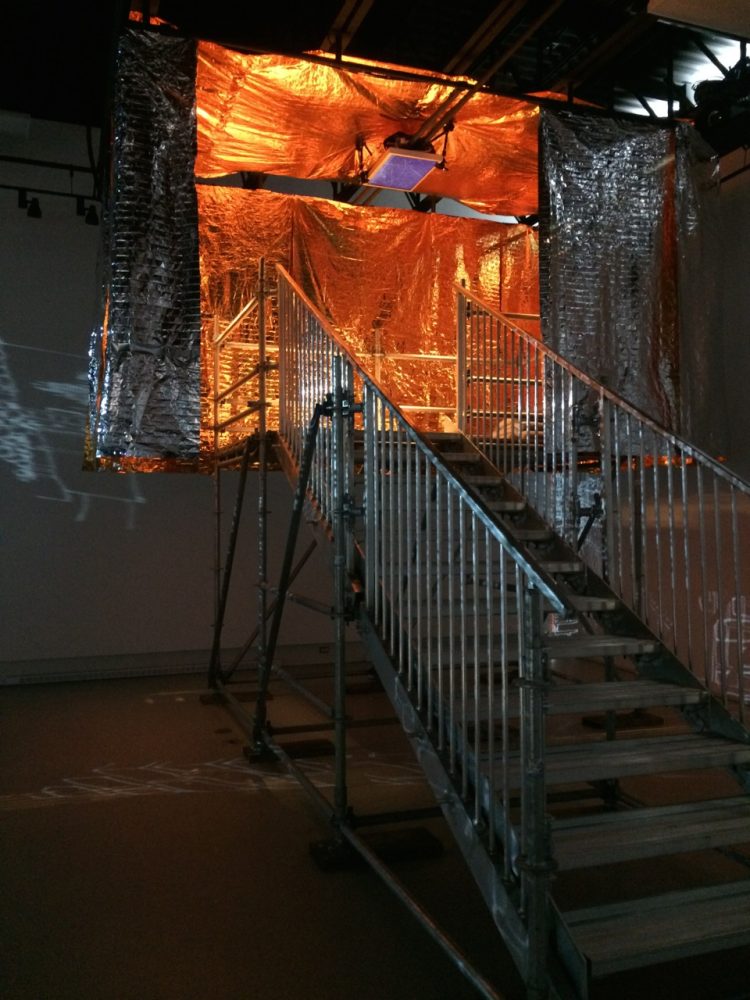
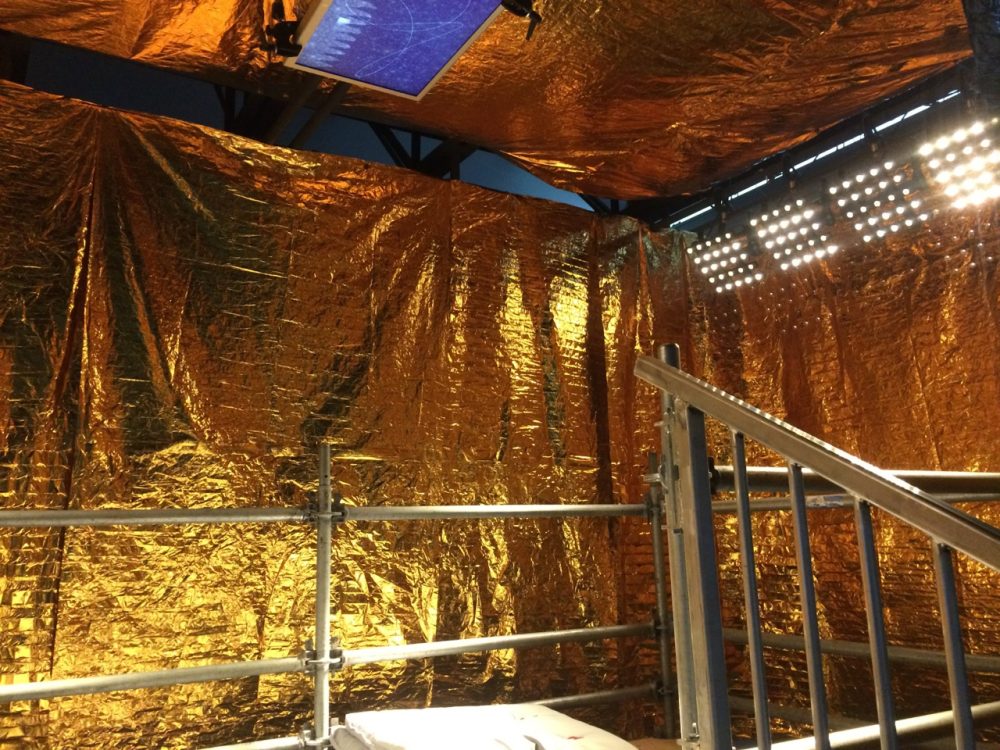
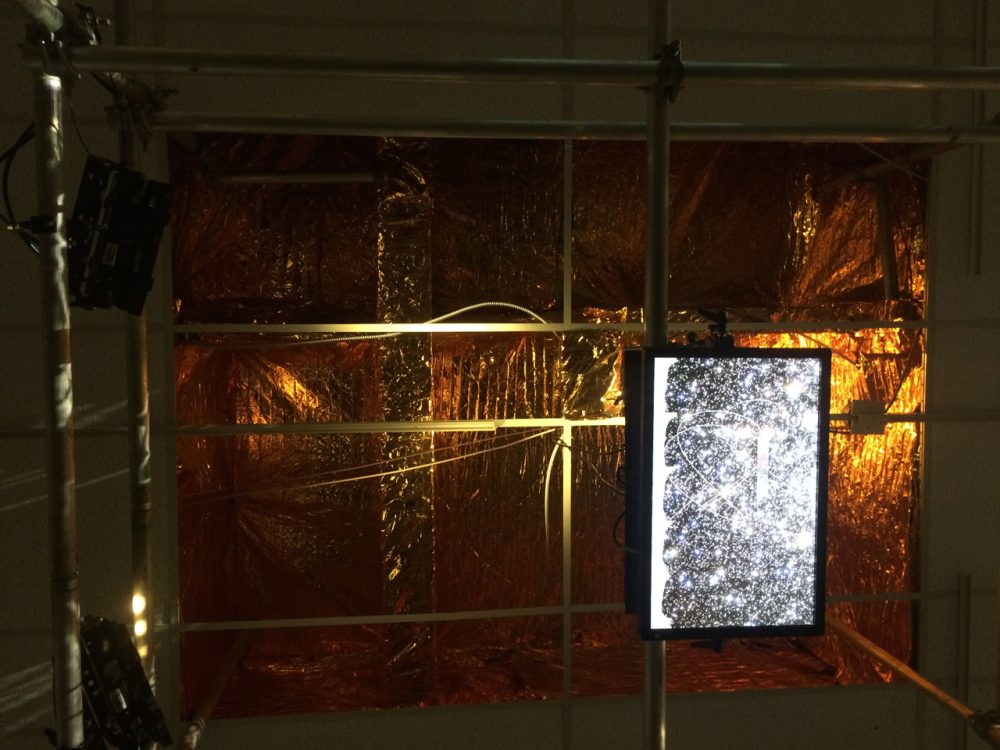
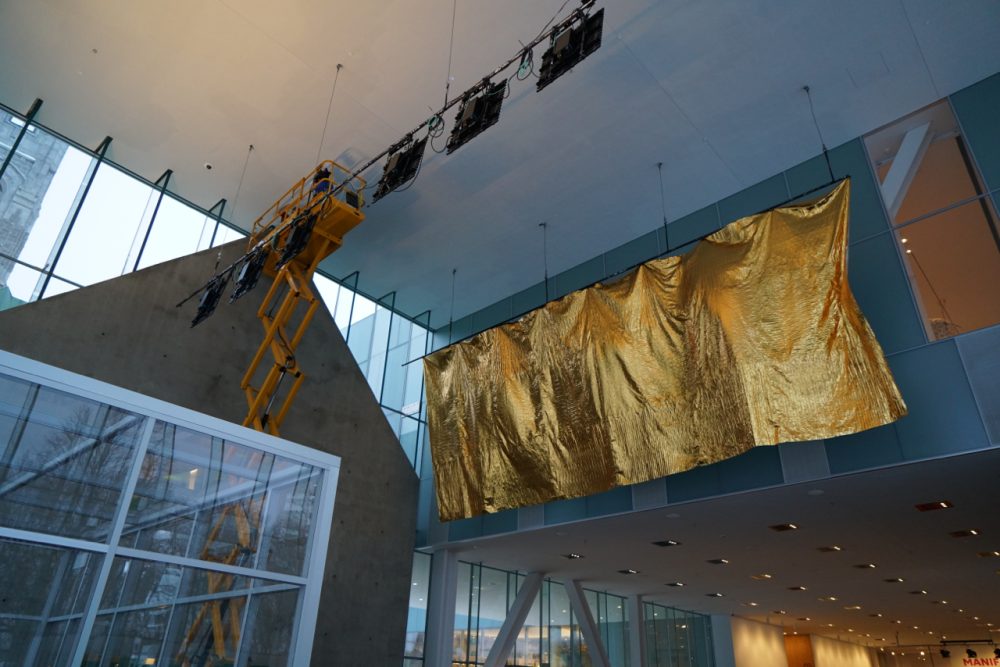
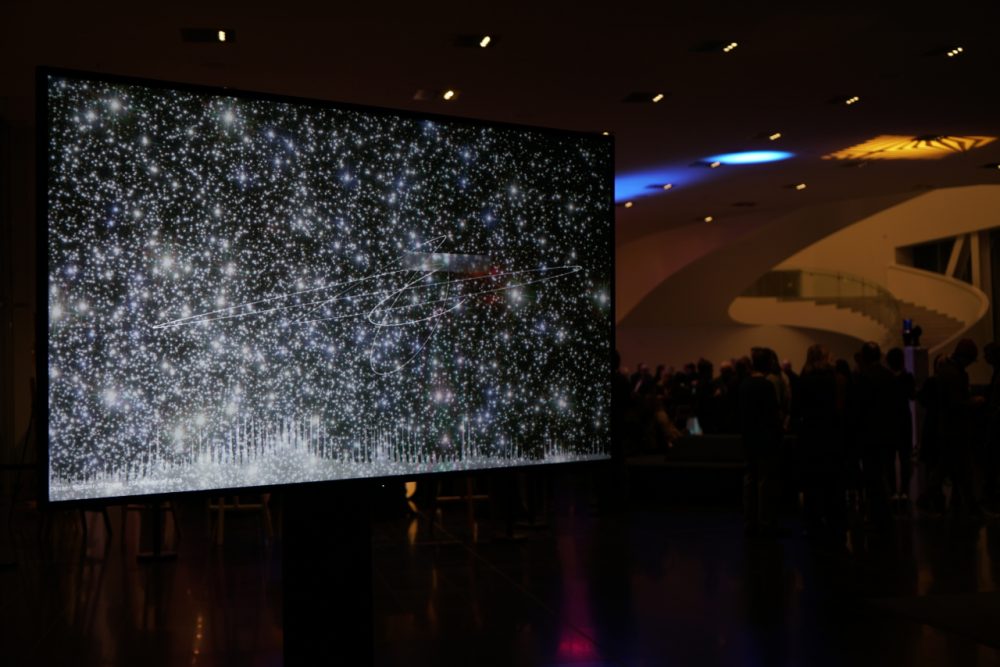
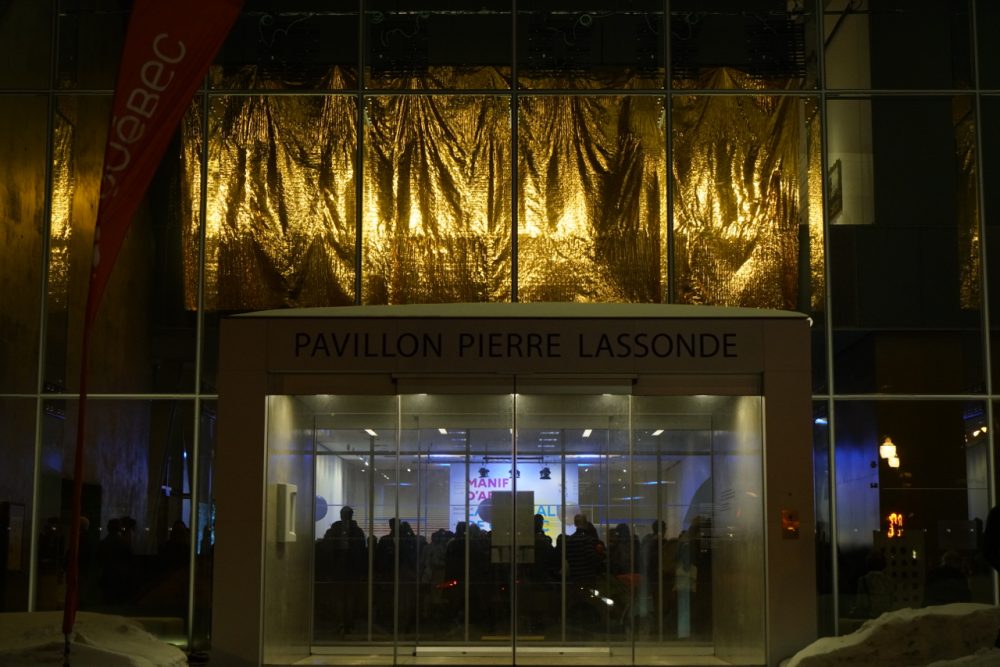
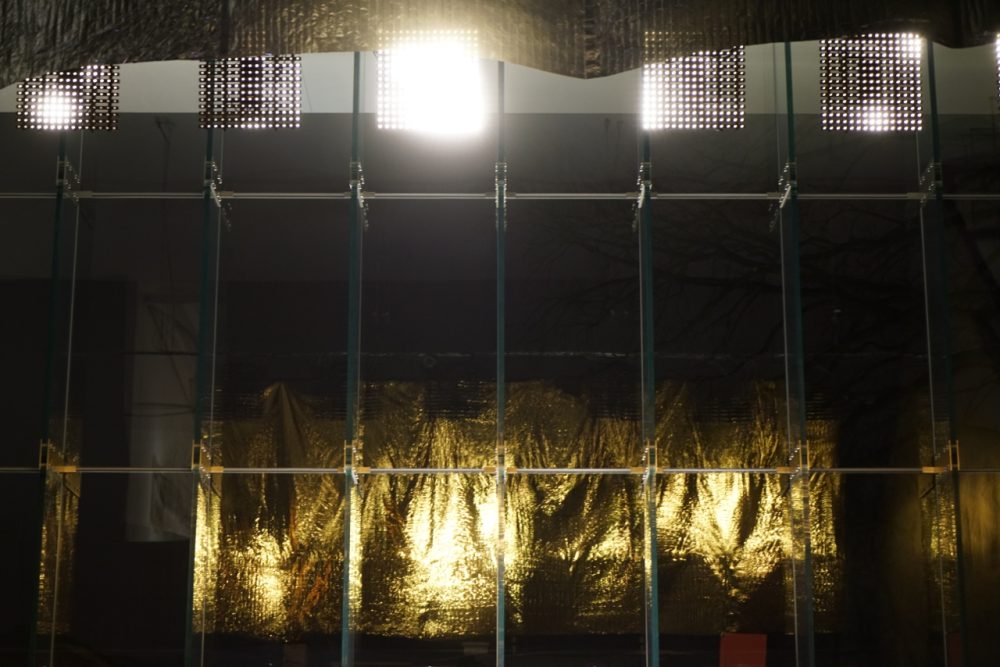
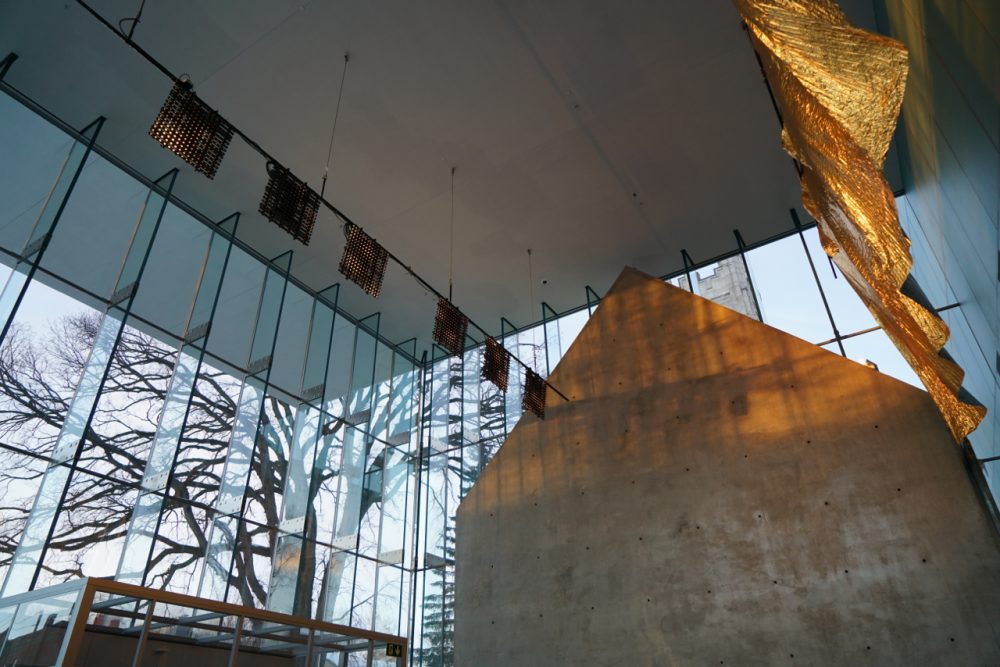
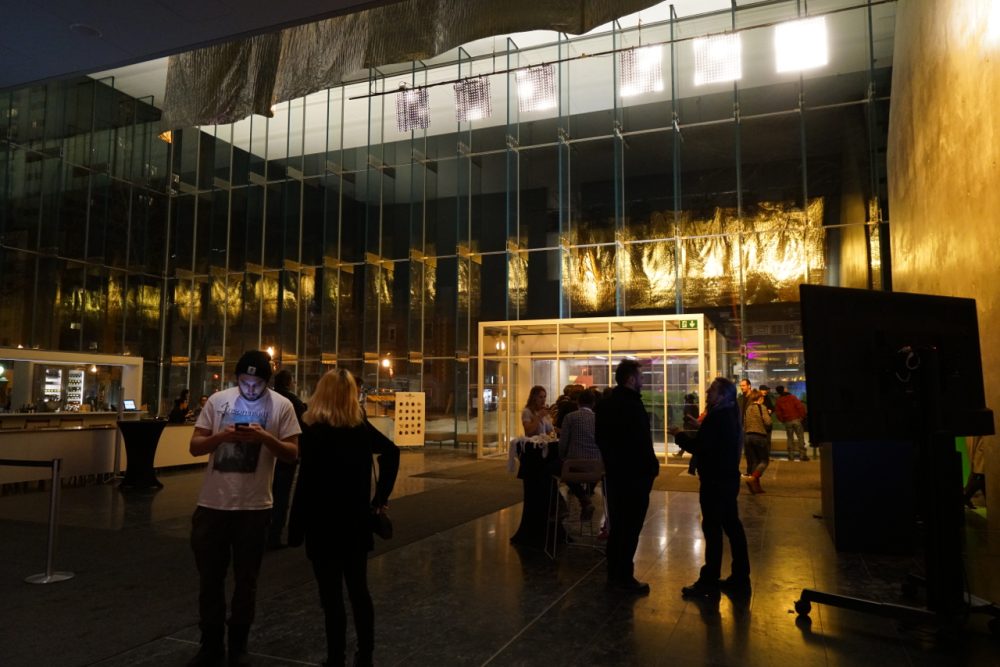
Grâce à un processus d’échantillonnage d’images de la nébuleuse Messier 5, le mouvement d’une ligne orbitale trace la luminosité des étoiles pour générer une captivante chorégraphie sans cesse renouvelée avec les lumières DEL. Celles-ci scintillent sur une membrane plissée réfléchissante, venant elle aussi de la recherche spatiale. Une expérience contemplative de lueurs dorées qui rythment des expériences nouvelles de l’espace.
À la Galerie R3, Intersidéral est combinée in situ à la projection Les mailles du Vieux-Palais de Catherine Béliveau, une nouvelle version de leur association dans l’espace, en continuité avec l’exposition présentée au Musée d’art contemporain des Laurentides au printemps 2017.
Crédit image : ESA/Hubble et NASA. Guillaume Arseneault : artisan-programmeurAssistant de recherche et de production : Kévin Pinvidic Partenaires : Grupmuv, Hexagram-UQAM, FRQSC, Programme d’aide financière à la recherche et à la création de l’UQAM (PAFARC), Avontus (logiciel d’échafaudages, Californie).
Merci À la Galerie R3 : Lorraine Beaulieu et Joël Marchand. Merci aussi à Catherine Béliveau et Jason Pomrenski.
Intersidéral, 2017 (version 2). Installation lumineuse in situ Exposition collective CYCLAGES du GRUPMUV, au Musée d’art contemporain des Laurentides du 1er mars du 16 avril 2017.
Version 1 : Biennale de Québec, au Pavillon Pierre Lassonde du MNBAQ
Une coproduction Ælab – Manif d’art 8, la Biennale de Québec.
Grâce à un processus d’échantillonnage d’images de la nébuleuse Messier 5, le mouvement d’une ligne orbitale trace la luminosité des étoiles pour générer une captivante chorégraphie sans cesse renouvelée avec les lumières DEL. Celles-ci scintillent sur une membrane plissée réfléchissante, venant elle aussi de la recherche spatiale. Une expérience contemplative de lueurs dorées qui rythment des expériences nouvelles de l’espace.
Merci Au MACL : Jonathan Demers, Manon Quintal, Christine Boudreau, Elizabeth Lauzon, Sara Savignac, Christelle Renoux, Catherine Béliveau, Jason Pomrenski, Émilie Boudrias.
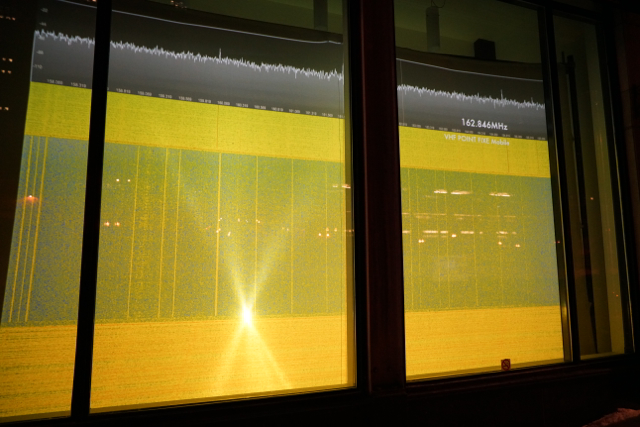
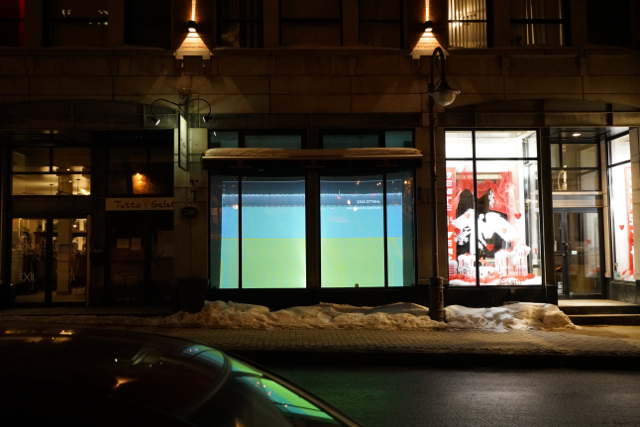
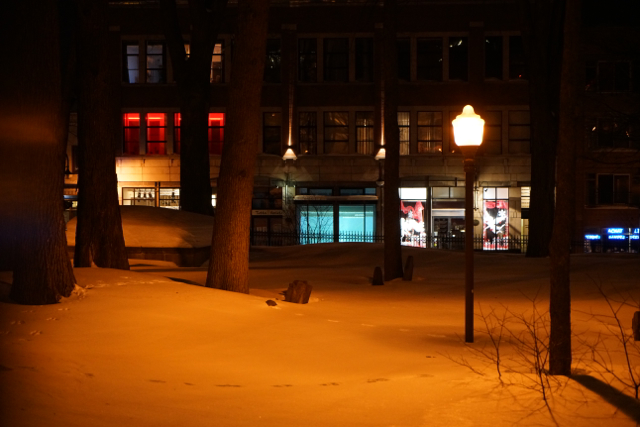
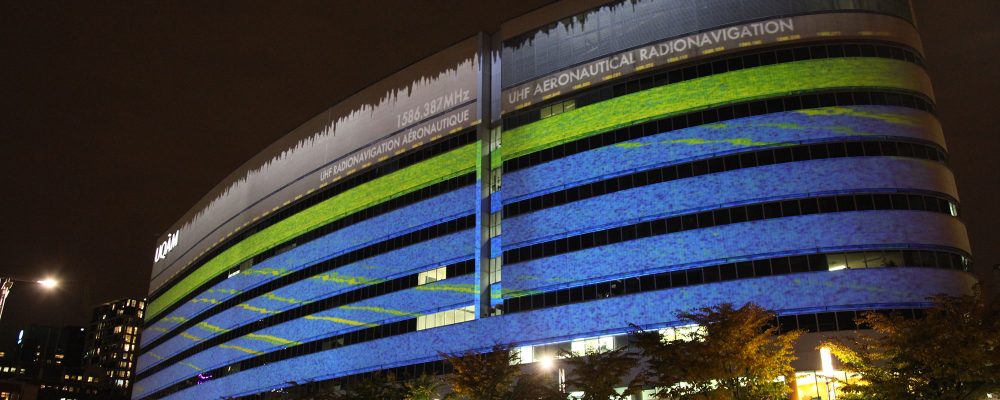
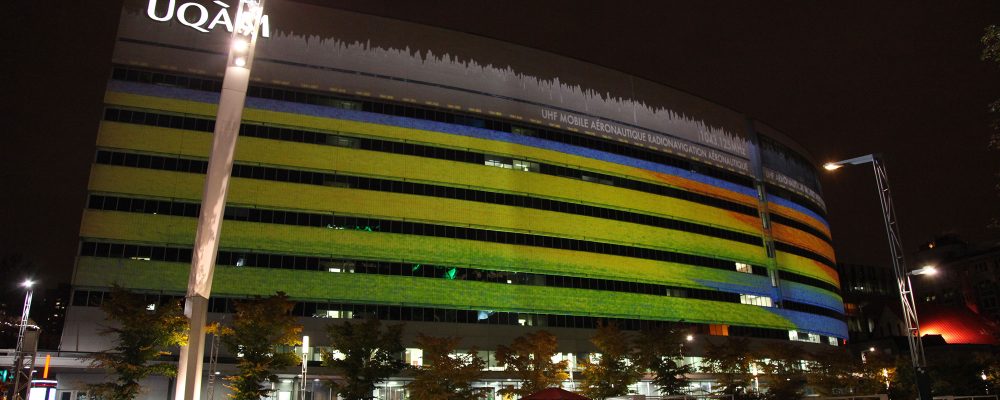
IRRADIER. IRRADIATE is generated from environmental data and electromagnetic frequencies. The installation reflects the increasing density of wireless communication signals in the urban environment.
A presentation of Manif d’art, in collaboration with Tutto Gelato and Galerie Ni Vu Ni Cornu. Manif d’art would like to thank the Conseil des arts et des lettres du Québec, Tutto Gelato, Galerie Ni Vu Ni Cornu, and SDC Faubourg Saint-Jean.
This project was undertaken with the financial aid of the Fonds de recherche du Québec – Société et culture (FRQSC), along with the support of Grupmuv and Hexagram-UQAM.
The work’s initial version was created with the support of the Partenariat du Quartier des spectacles and UQAM. Tutto Gelato store window 716, rue Saint-Jean Quebec cityFebruary 17 to March 19, 2017 On view in the evening Free admission
Intersidéral, 2017 (version 1). Installation lumineuse in situ. Version 1 : Commande d’oeuvre Manif d’art 8 – Biennale de Québec. Présentée dans le Grand Hall du pavillon Pierre Lassonde du Musée national des beaux-arts du Québec, du 17 février au 19 mars 2017.
Une coproduction Ælab et Manif d’art 8, la Biennale de Québec.
Grâce à un processus d’échantillonnage d’images de la nébuleuse Messier 5, le mouvement d’une ligne orbitale trace la luminosité des étoiles pour générer une captivante chorégraphie sans cesse renouvelée avec les lumières DEL. Celles-ci scintillent sur une membrane plissée réfléchissante, venant elle aussi de la recherche spatiale. Une expérience contemplative de lueurs dorées qui rythment des expériences nouvelles de l’espace.
Crédit image : ESA/Hubble et NASA. Guillaume Arseneault : artisan-programmeur Camille Courier de Méré : Assemblage de la membrane pour la Biennale Partenaires : Grupmuv, Hexagram-UQAM, FRQSC.
Merci À la Biennale : Claude Bélanger, Alexia Fabre, Anne-Sophie Blanchet, Bernard Lamarche, Line Ouellet, Justine Jacob-Roy, Steve Montambault, Guillaume Côté Roux, Ilana Pichon.
Projection architecturale avec composante sonore Photo couverture : Frédérique Ménard-Aubin
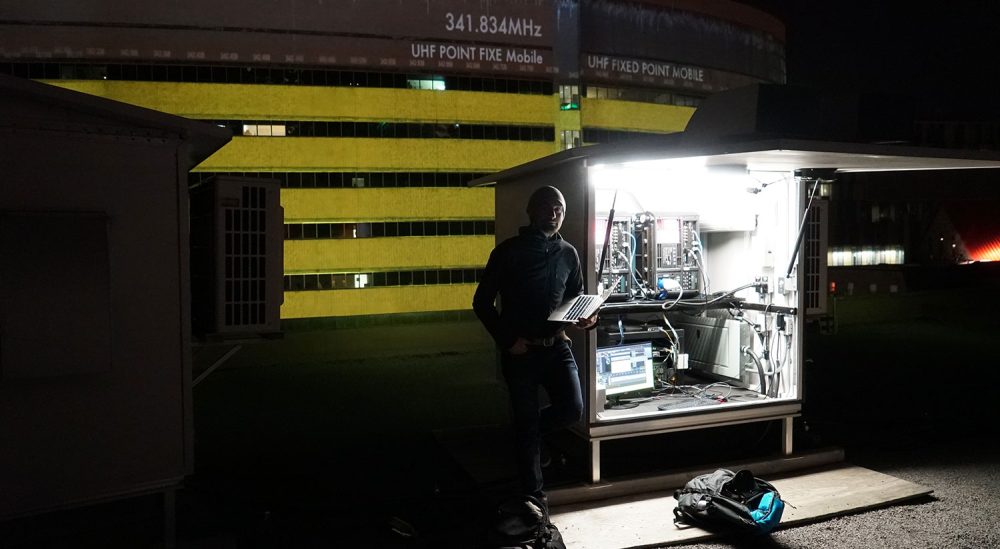
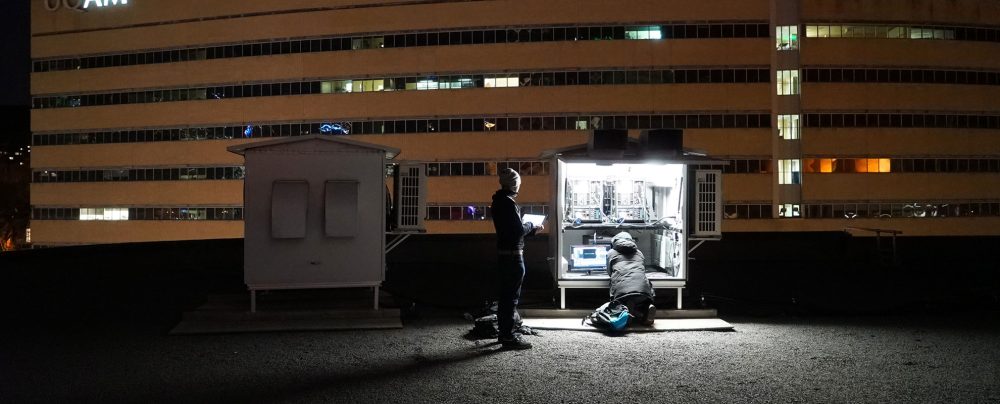
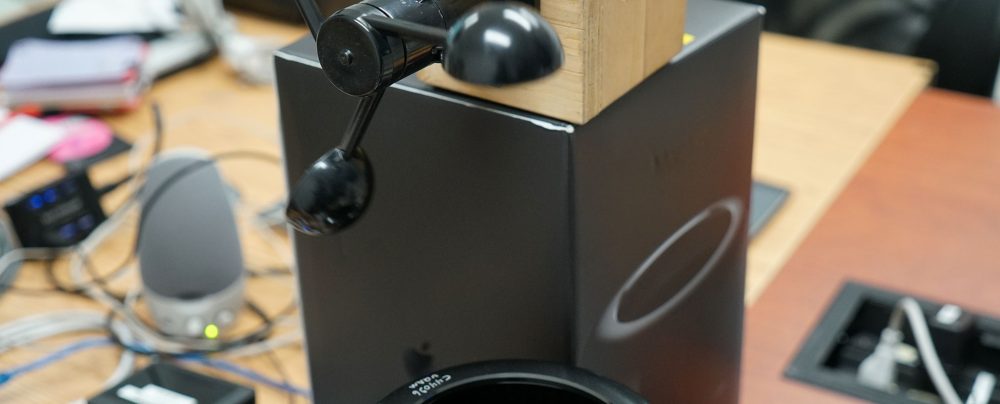
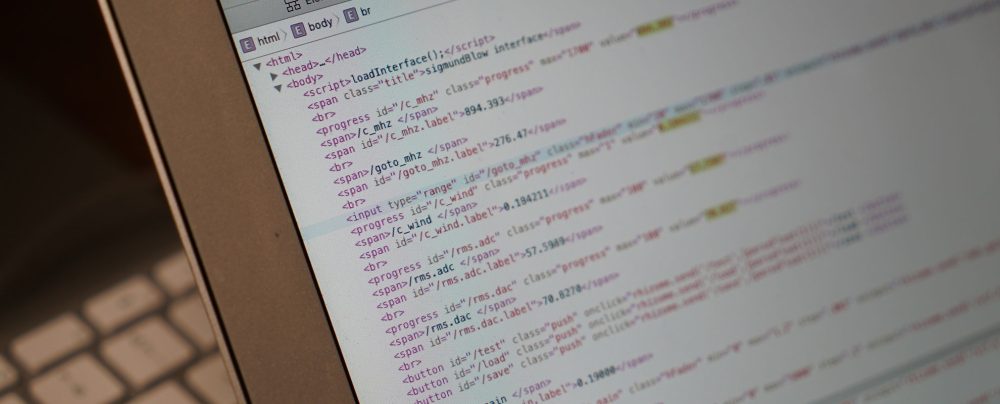
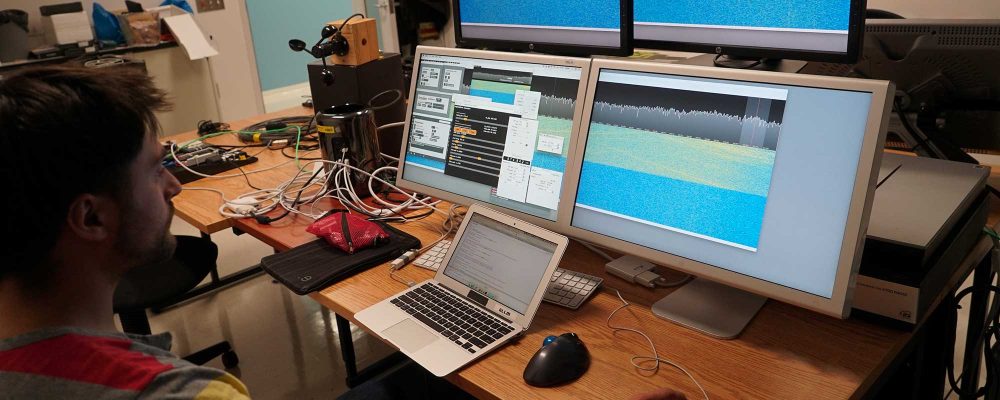
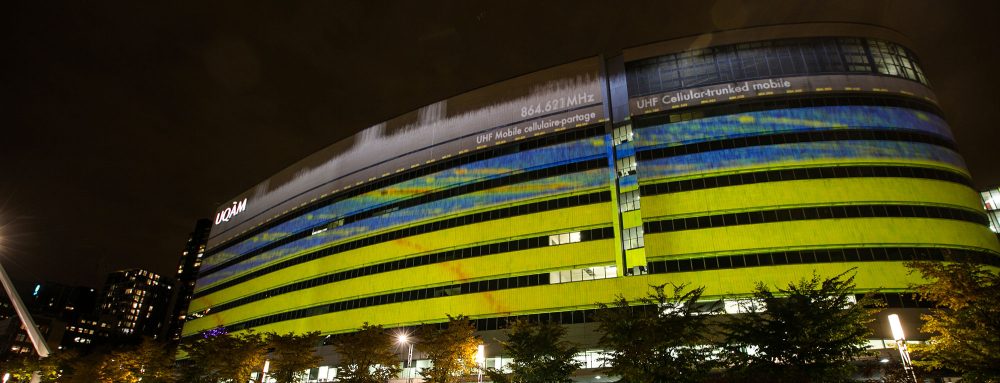
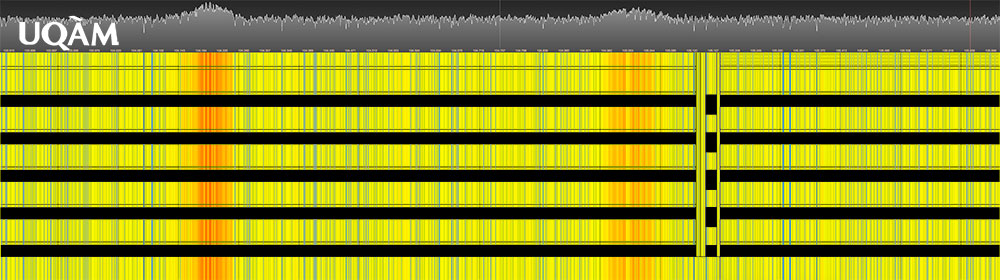
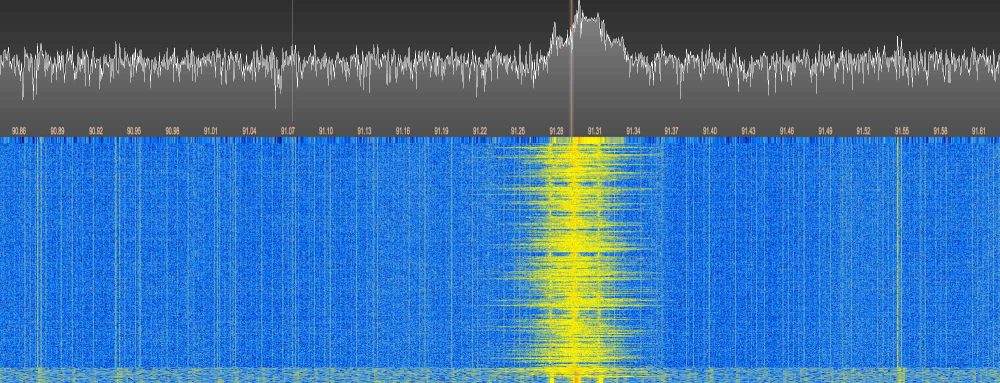
IRRADIER. IRRADIATE est une projection qui puise des fréquences électromagnétiques (EMF) invisibles et inaudibles parmi lesquelles vont et viennent quotidiennement les êtres vivants. Les visualisations EMF sont générées en direct, à l’aide d’un logiciel libre (Gqrx-SDR), d’un anémomètre et d’une antenne, pour rendre l’intensification et la densification des signaux de communication sans fil dans des cadres urbains. Avec son format monumental, ses couleurs minimalistes et ses lignes vibrantes, ce panorama de bruit-à-signal transmet aux citadins un sentiment d’immersion et les nouvelles formes de radiation non consenties comme modalités de pollution. Irradiées – exposées, traitées et illuminées – par et dans des machines, elles co-constituent alors des vibrations corporelles. Texte par Mél Hogan, Illinois Tech, Chicago
9 mai au 13 mai 2106 Lundi au vendredi : 20 h 30 – 01 h 00 Façade du pavillon Président-Kennedy de l’UQAM 201, avenue du Président-Kennedy
Partenaires Cette oeuvre est présentée grâce à l’appui technique et financier des organismes suivants: UQAM, Partenariat du Quartier des spectacles, Hexagram-UQAM, Grupmuv, Fonds québécois de recherche – Société et Culture (FRQSC).
IRRADIER.IRRADIATE est une projection architecturale de la place des Festivals, au Quartier des spectacles, générée à partir de données environnementales et des fréquences électromagnétiques. Grâce à un logiciel libre (Gqrx SDR), une antenne et un anémomètre, la façade du pavillon Président-Kennedy de l’UQAM se transforme en un immense récepteur radio où est projetée une ligne vibratile modulée en direct par la force du vent. Oeuvre minimaliste aux champs de couleurs primaires, ce projet est une mise en forme critique et poétique de la densification des signaux en milieu urbain numérique, où se côtoient communication, pollution et mouvements de l’air.
Ce projet prolonge la tétralogie d’oeuvres d’envergure produite entre 2008 et 2014 par la cellule de recherche artistique Ælab. Il propose une exploration nouvelle de la relation enchâssée entre nature, humains et technologies.
Gisèle Trudel est artiste en arts médiatiques et professeure à l’École des arts visuels et médiatiques de l’UQAM. Elle a été directrice d’Hexagram-UQAM et codirectrice du réseau Hexagram. Elle a fondé la cellule de recherche artistique Ælab avec Stéphane Claude en 1996, et cofondé, en 2008, le Laboratoire de recherche-création sur le dessin et l’image en mouvement Grupmuv. Son travail est régulièrement présenté à Montréal et à l’international.
Guillaume Arseneault est artiste numérique transmédiatique. Il complète une maîtrise en communication, concentration recherche-création en média expérimental, à l’UQAM. Il s’intéresse à la réinjection cinétique du corps en interactivité et hybride la technologie pour susciter réactions interpersonnelles et dialogues. Son travail a notamment été diffusé lors de l’édition 2015 du festival Chromatic.
Projet présenté dans le cadre du colloque Media Art Histories Re-Create 2015.
Façade du pavillon Président-Kennedy de l’UQAM 201 avenue du Président-Kennedy (entre Jeanne-Mance et St-Urbain) du jeudi 22 octobre au dimanche 8 novembre inclusivement les jeudis et dimanches 18 h 30 – 23 h les vendredis et samedis 18 h 30 – 02 h Dès le 5 novembre, la projection débutera à 17 h 30
Projet présenté en partenariat avec l’UQAM, le Partenariat du Quartier des spectacles, Hexagram-UQAM et le Grupmuv. Avec l’appui financier du Fonds de Recherche du Québec – Société et Culture (FRQSC).
PRESSE 22 octobre 2015 Irradier. Une nouvelle vidéoprojection architecturale s’intéresse aux ondes électromagnétiques. Article par Valérie Martin.
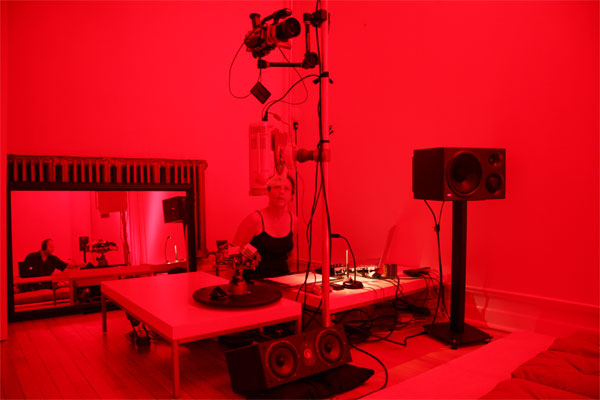
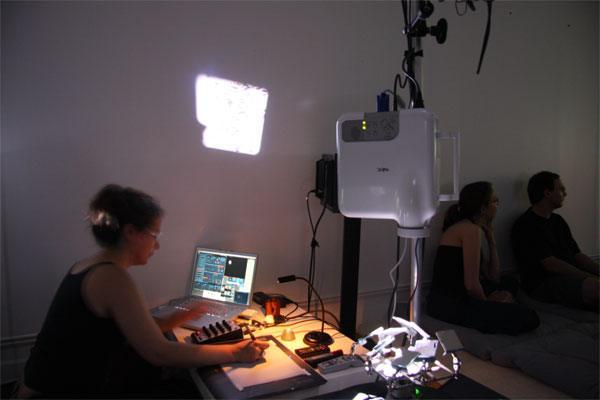
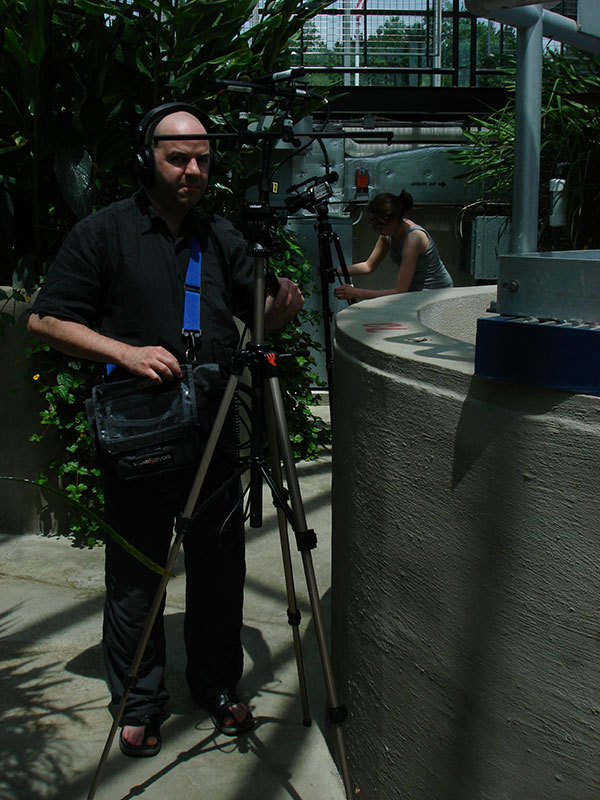
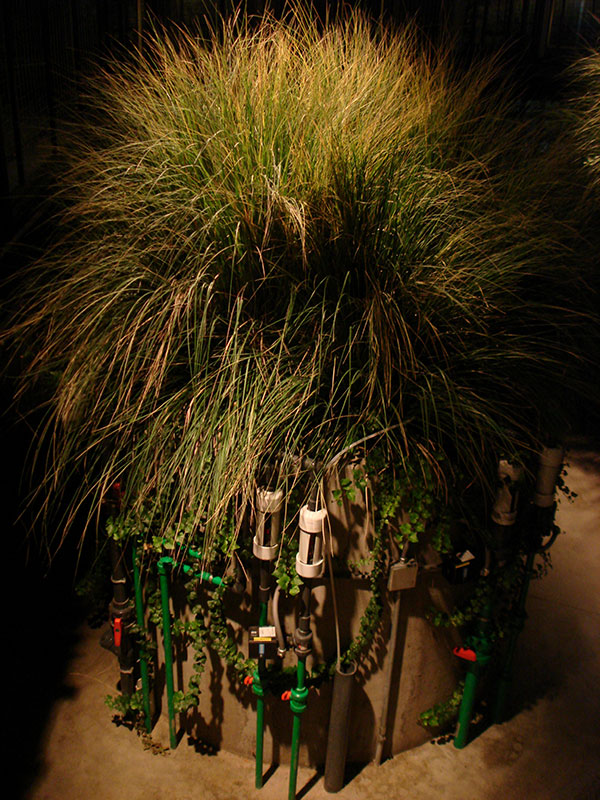
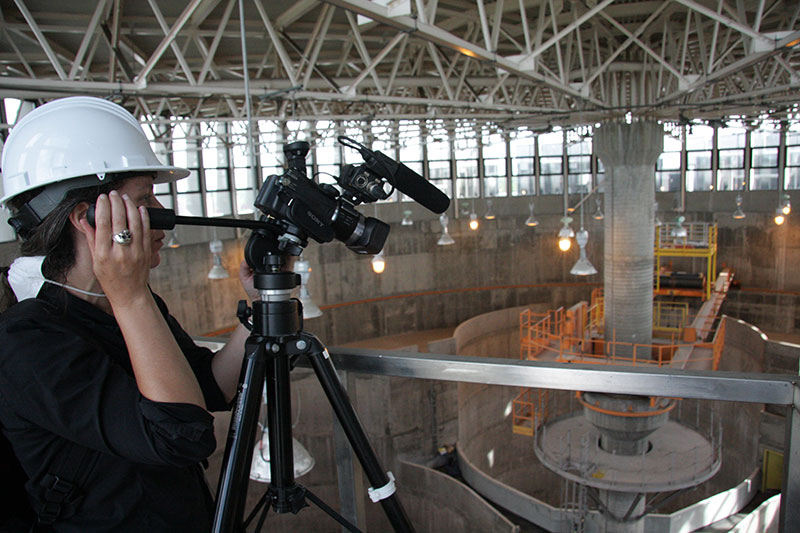
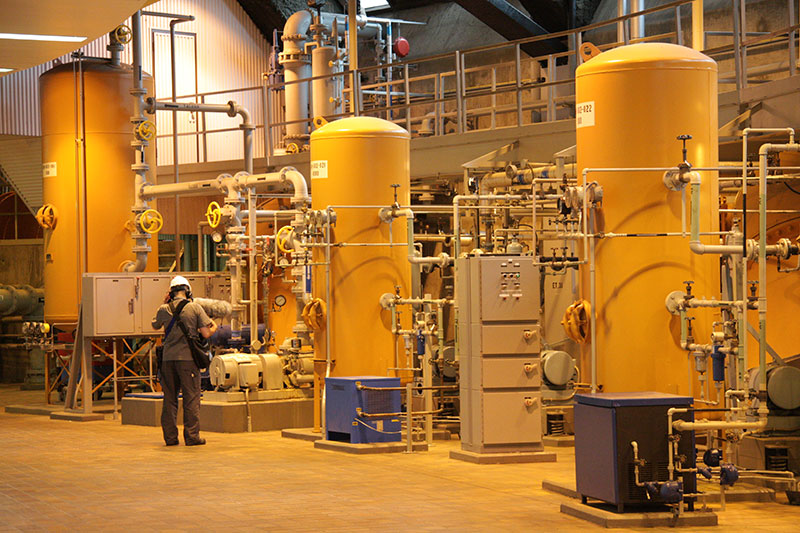
Process-oriented and informal in nature, the research and production of this work with immersive sound, moving image, drawing and light is informed by the realities of “gray waters” in various states of composition, decomposition and recomposition. The source material originates in the « Eco Machines » system, pioneered by biologist and ecologist Dr. John Todd situated situated at the rest area of Sharon, Vermont and the Station d’épuration des eaux usées, an industrial system for the city of Montreal. The project is extended with images and sounds from the deserts of southwestern USA.
The project finds its inspiration in the concept of the transduction as defined by French philosopher Gilbert Simondon (1928-1989), by which nature, information and technology co-evolve. The series was initially performed in an intimate setting, disrupting the greek root of the word ecology, eikos, which means « house ».
Credits Text excerpts _Gilbert Simondon Production Catherine Béliveau _additional camera, EcoMachines, Sharon, Vermont and production assistance, Fountain House production assistance and documentation Sophie Bellissent _initial production and research assistance Roberto Di Giacomantonio _zafuton design and production Nate Fredericks _bench flow data, Sharon, Vermont Marc Lavallée _PureData DMX Varichrome LED programming Florian Grond _MAX-MSP algorithmic ambisonic panner programming Pier Lefebvre _projection apparatus Jacques Perron _additional camera and documentation, Station d’épuration des eaux usées, Montréal Jean-Marc Ratté, Sophie Voyer _Station d’épuration des eaux usées, Montréal Shot on location at EcoMachines, Sharon, Vermont; Joshua Tree National Park, California; Station d’épuration des eaux usées, Montréal; Grand Canyon and Glen Canyon, Arizona.
Presentation at Flevoland, Thinking with Water conference JacquesPerron _documentation Simon Rolland _production assistance Sophie Bellissent, Nadia Seboussi _assistance
Equipment and software support from Hexagram-UQAM and Sennheiser Canada.
Presentations (in reverse chronological order) Fountain House Esplanade Clark, Montréal, Oct 9-10-11, 2014 in collaboration with raumlabor (Berlin) and Goethe-Institut Montreal, Biennale de Montréal EcoSapiens Residency, Fernery Room, Pukekura Park, Botanical Garden, New Plymouth, New Zealand Jan 2011 Thinking With Water Conference, Concordia University, Montreal, June 21 2010 Festival Temps d’Images Usine C, Montréal, 19-20-21 février 2009 Deep North, transmediale Haus der Kulturen der Welt, Berlin, Germany Jan 2009 Flevoland Montréal June 9, June 28, Aug 8 2008
Produced with the financial assistance of the Canada Council for the Arts, Media Arts and PAFARC-UQAM (Programme d’aide financière à la recherche et à la création de l’Université du Québec à Montréal).
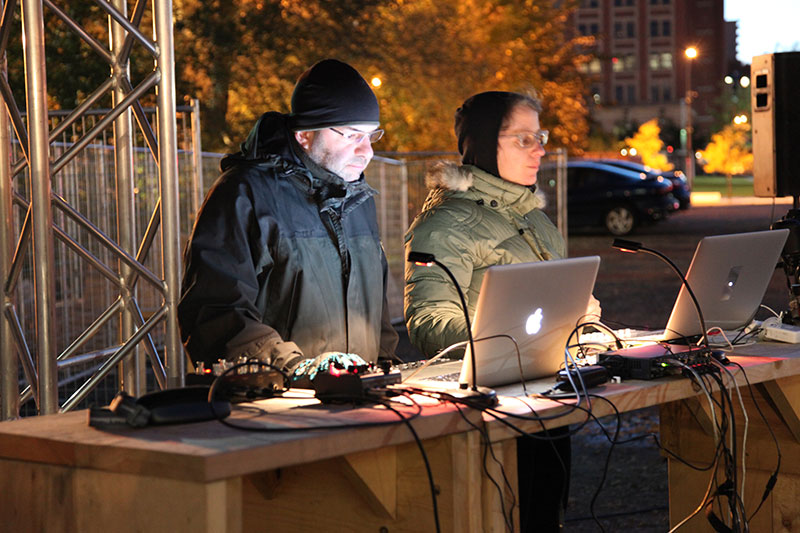
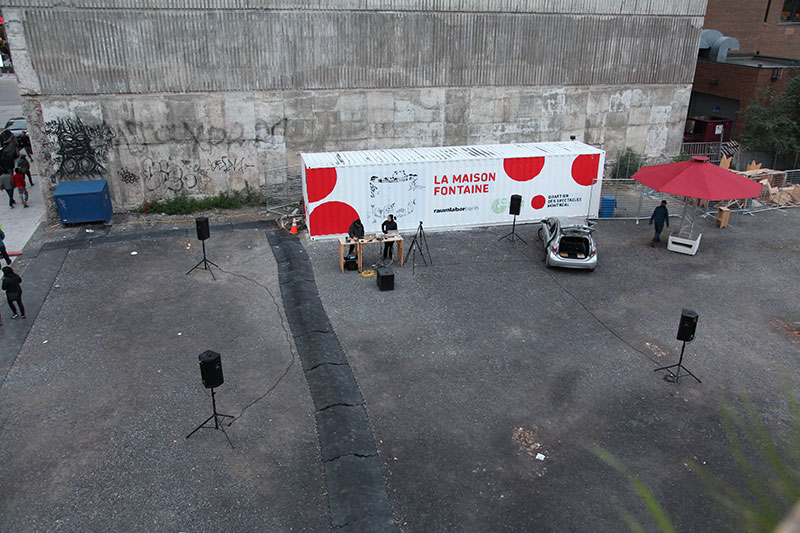
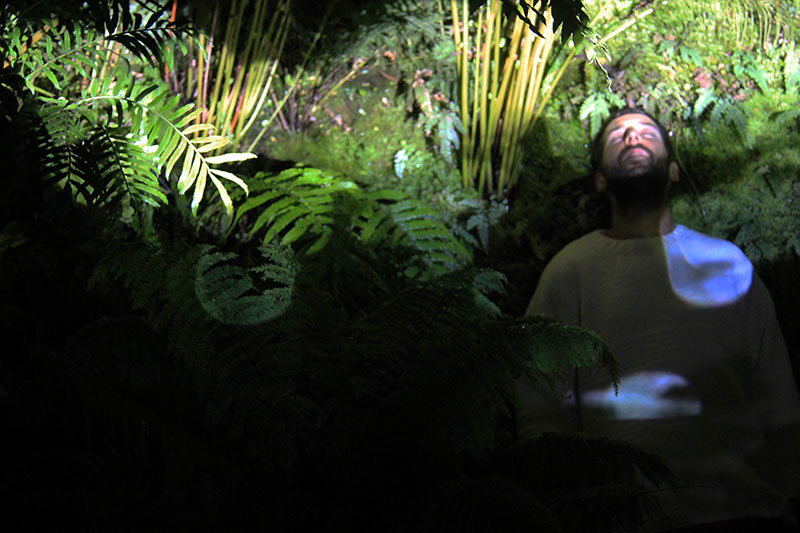
LSCDC à la maison Fontaine, octobre 2014, Montréal. Coproduction Goethe-Institut. Photo : Catherine Béliveau.
LSCDC à la maison Fontaine, octobre 2014, Montréal. Coproduction Goethe-Institut. Photo : Catherine Béliveau.
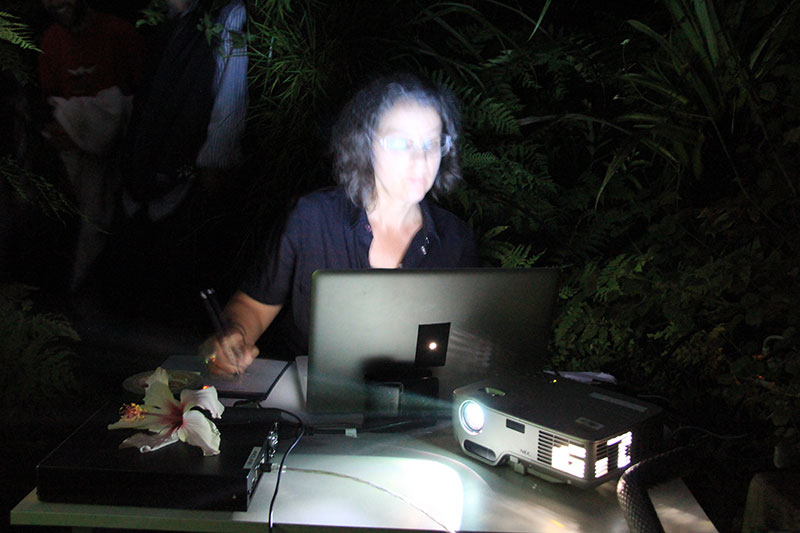
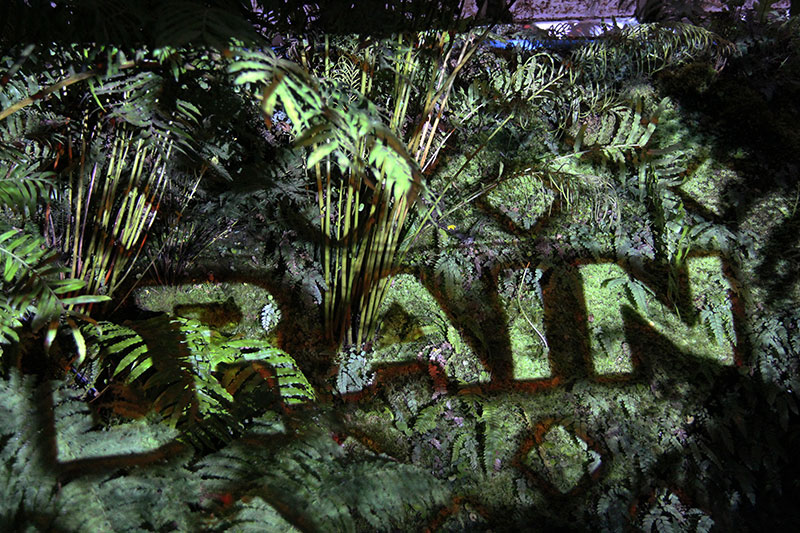
LSCDC au Pukekura Botanical Garden, New Plymouth, New Zealand, jan 2011. Photo : Keith Armstrong.
LSCDC au Pukekura Botanical Garden, New Plymouth, New Zealand, jan 2011. Photo : Keith Armstrong.
LSCDC au Pukekura Botanical Garden, New Plymouth, New Zealand, jan 2011. Photo : Keith Armstrong.
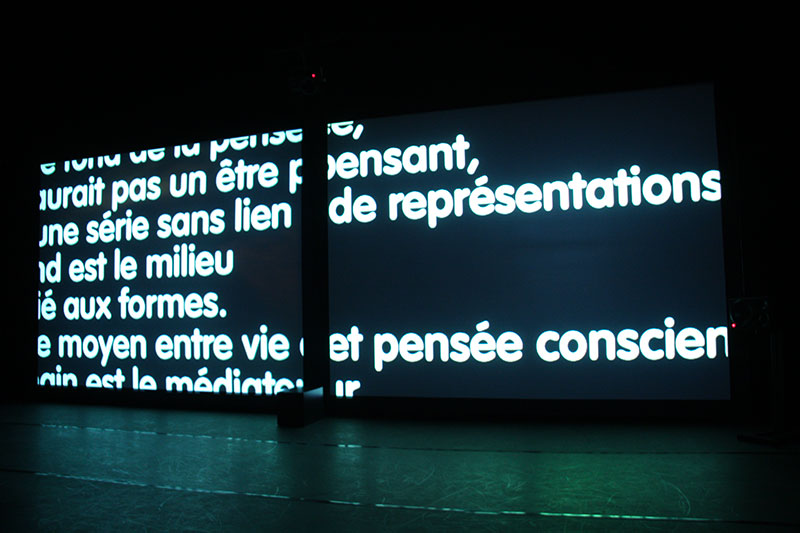
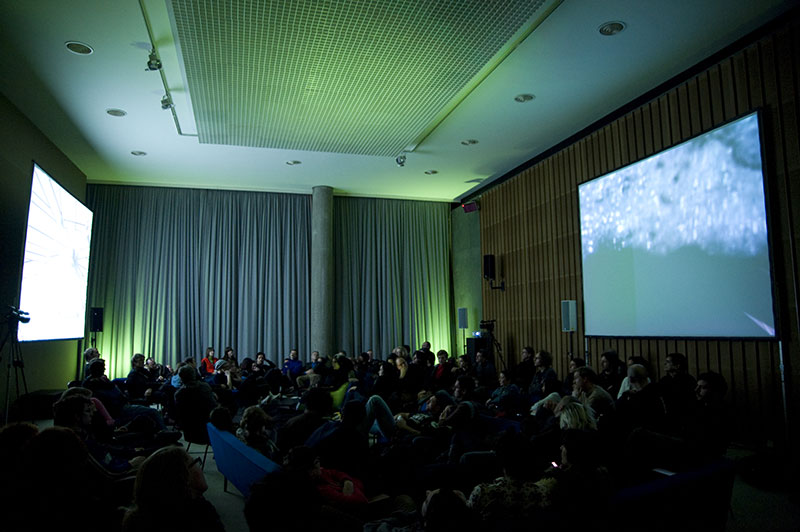
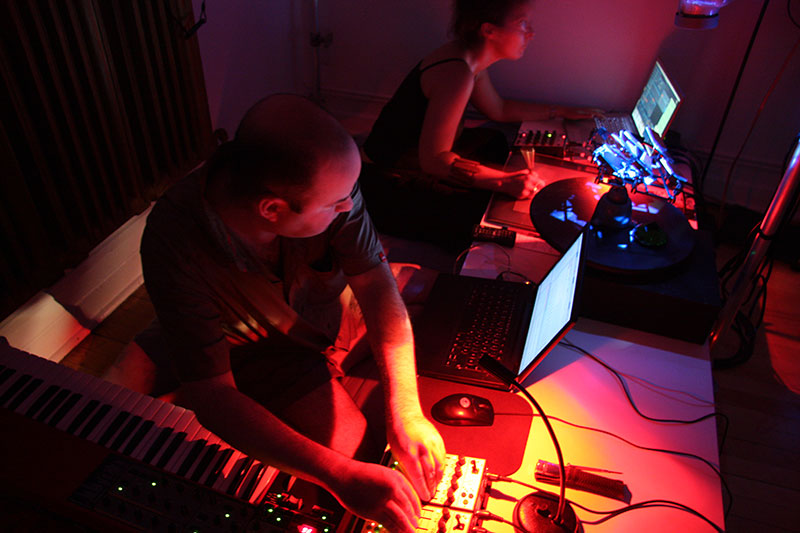
LSCDC au Festival Temps d’Images, Usine C, Montréal, février 2009. Photo : Jacques Perron.
LSCDC au Festival Temps d’Images, Usine C, Montréal, février 2009. Photo : Jacques Perron.
LSCDC au Festival Temps d’Images, Usine C, Montréal, février 2009. Photo : Jacques Perron.
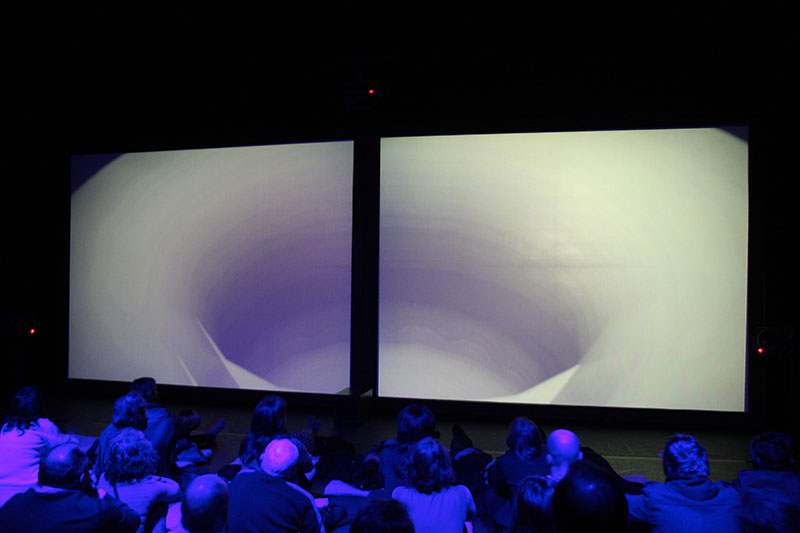
LSCDC à Deep North, Transmediale, Haus der Kulturen der Welt, Berlin, Allemagne, 2009. Photo : Jonathan Gröeger.
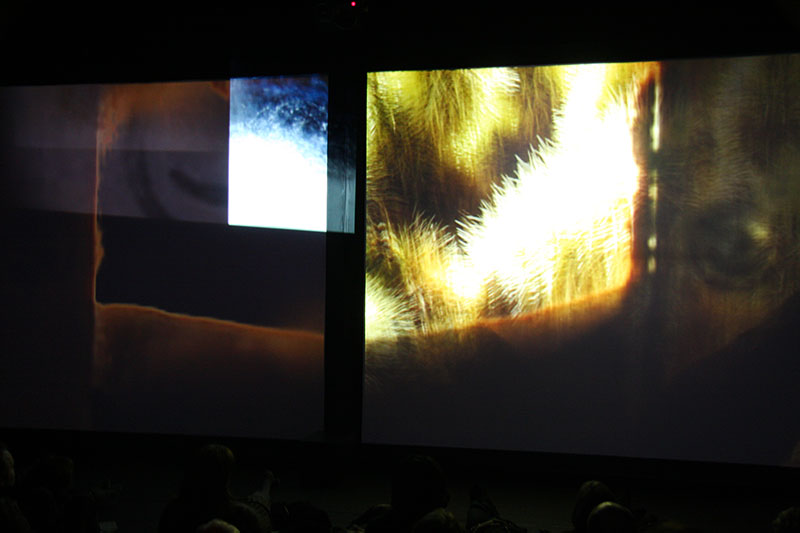
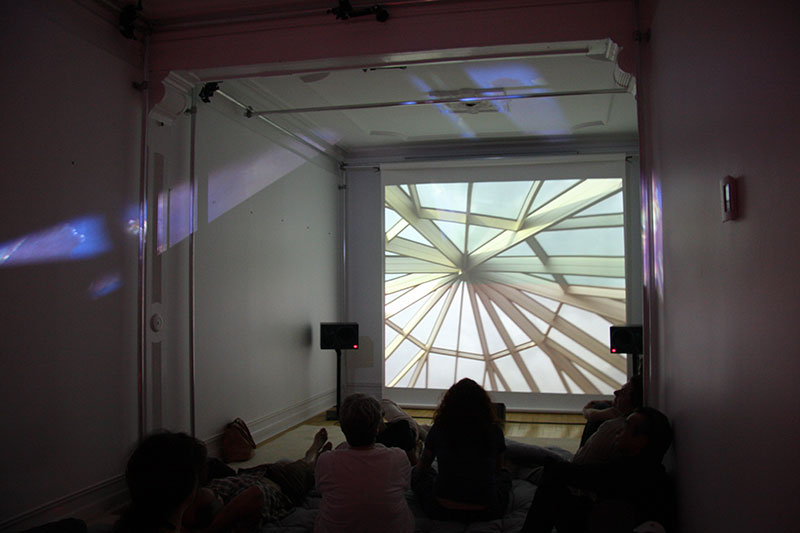
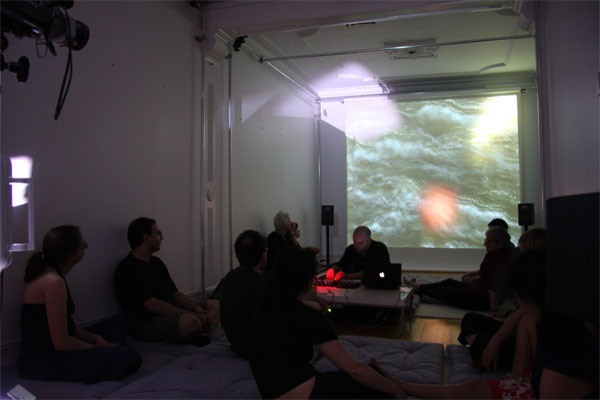
LSCDC à Flevoland, Montréal, 2008. Photo : Jacques Perron.
LSCDC à Flevoland, Montréal, 2008. Photo : Jacques Perron.
Stéphane Claude et Catherine Béliveau au Eco-Machines, Sharon North Welcome Centre, Vermont, 2007.
Eco-Machines, Sharon North Welcome Centre, Vermont, 2007.
À la Station d’épuration des eaux usées, Montréal, 2008. Photo : Jacques Perron.
À la Station d’épuration des eaux usées, Montréal, 2008. Photo : Jacques Perron.