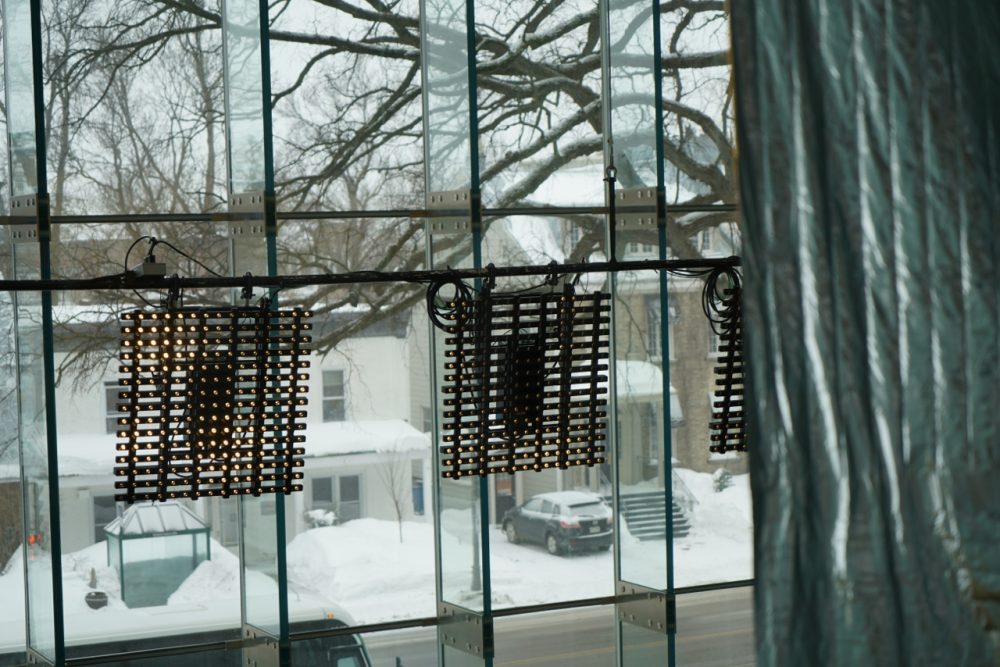
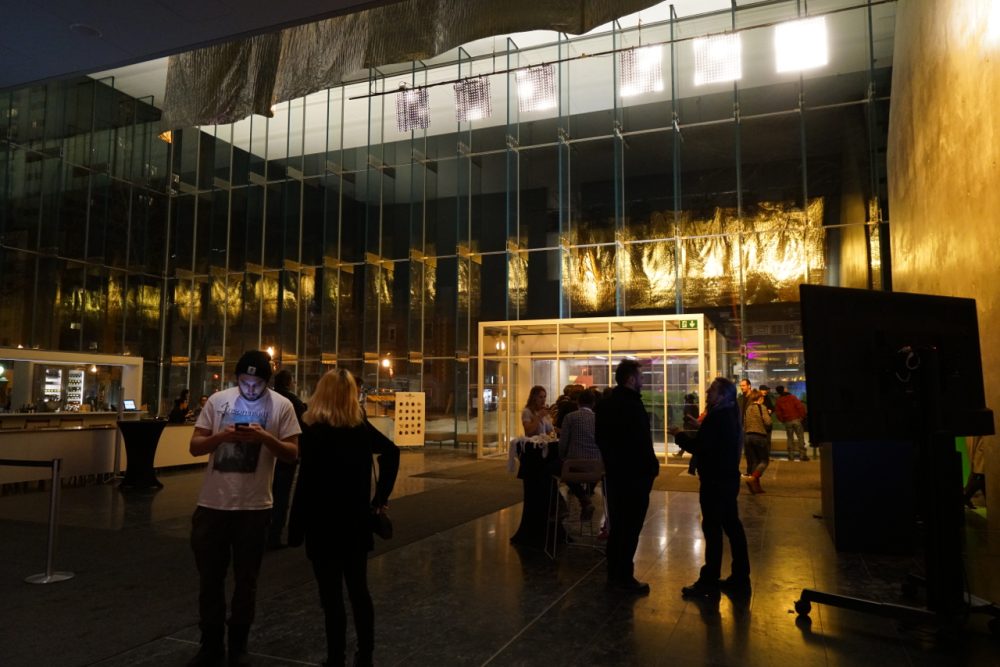
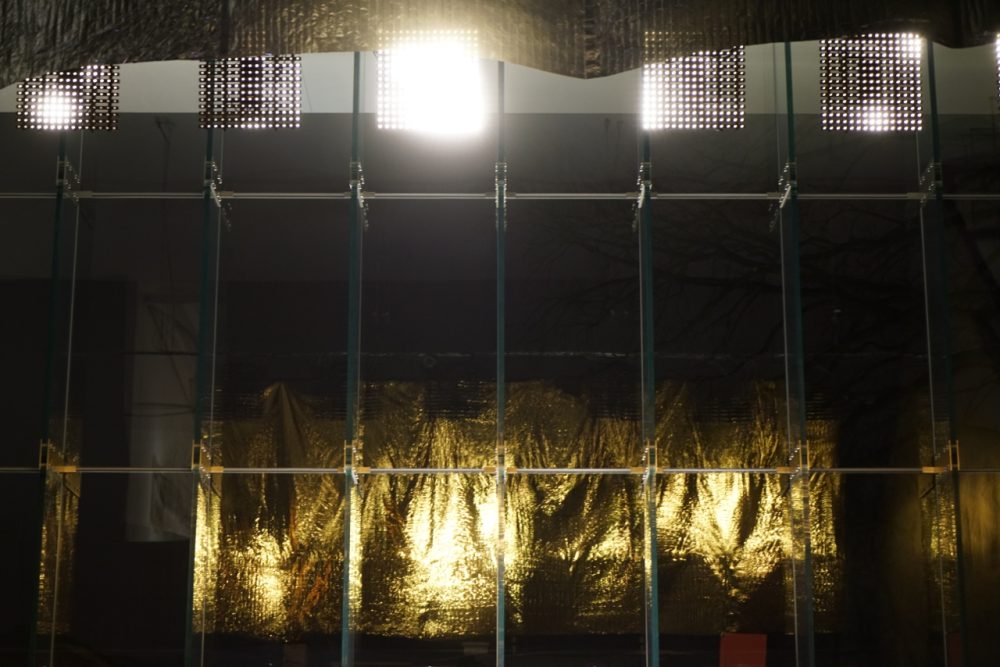
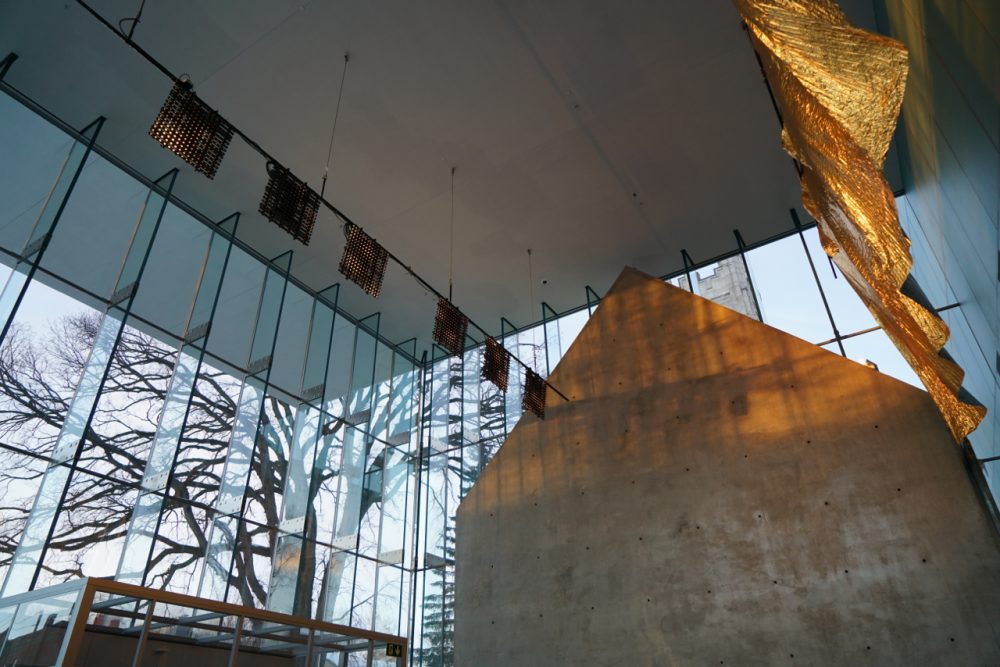
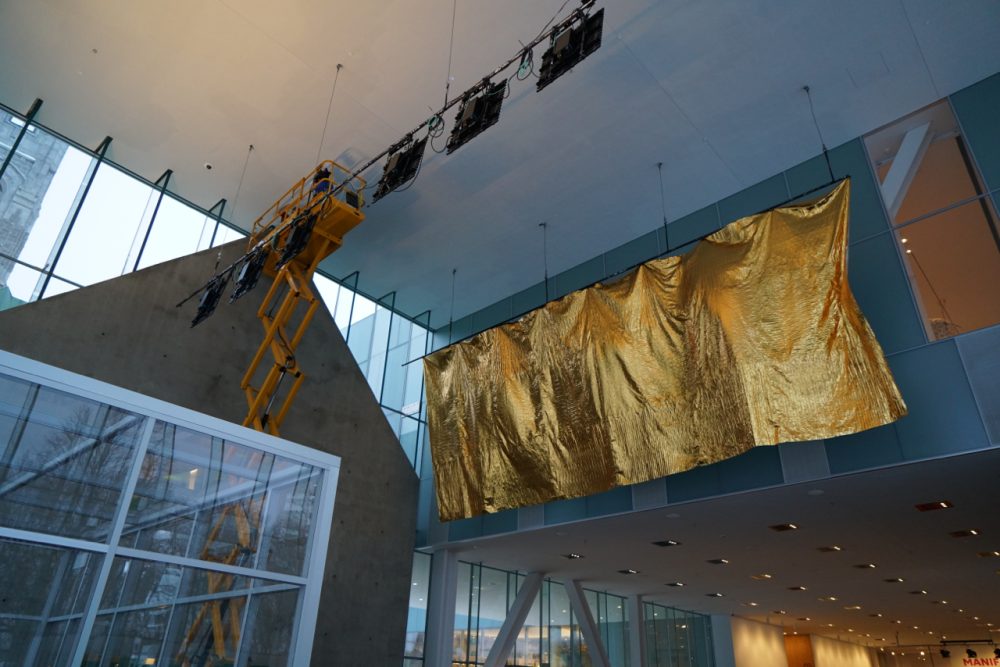
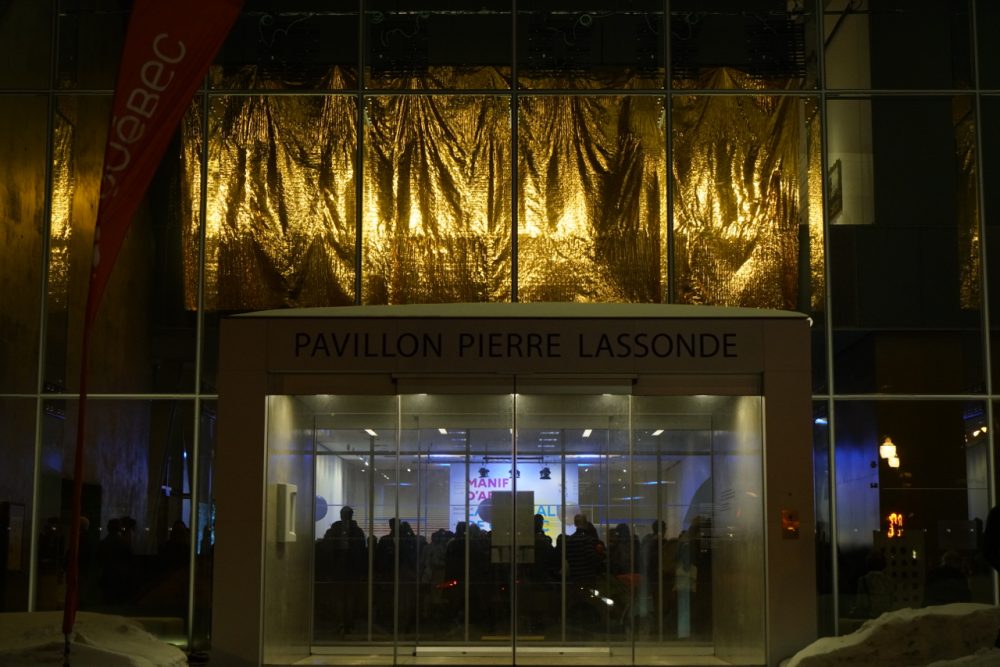
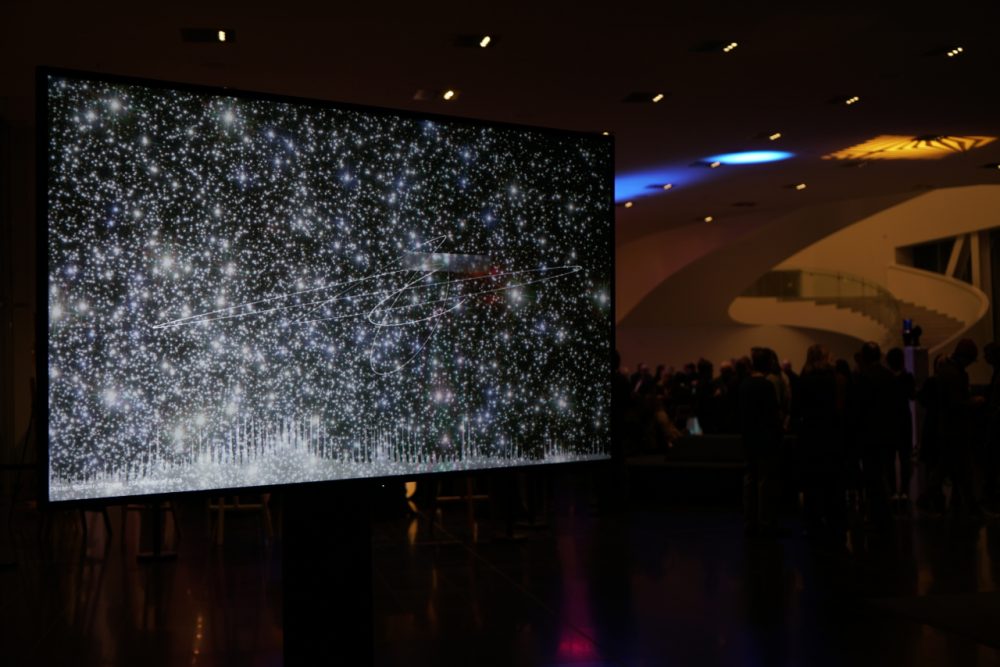
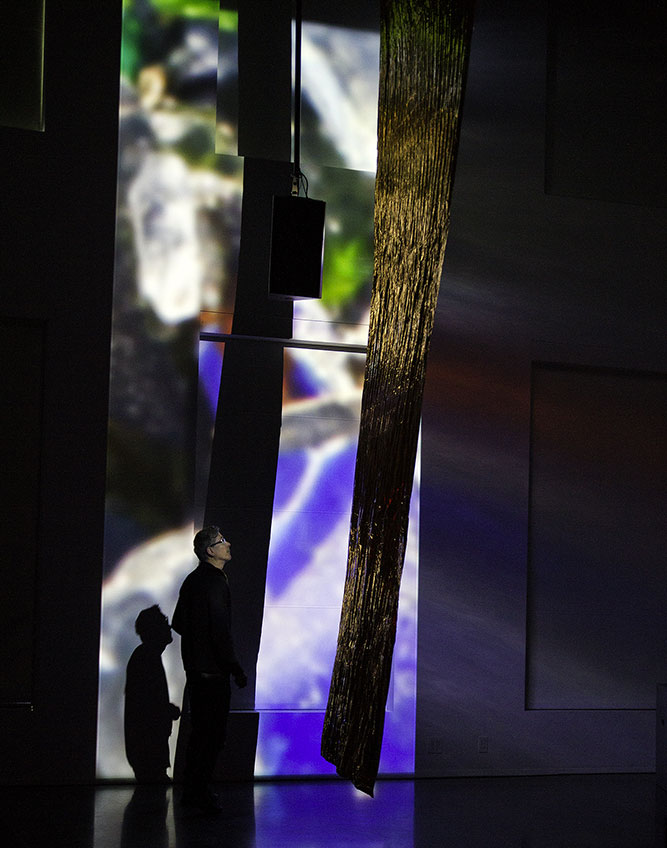
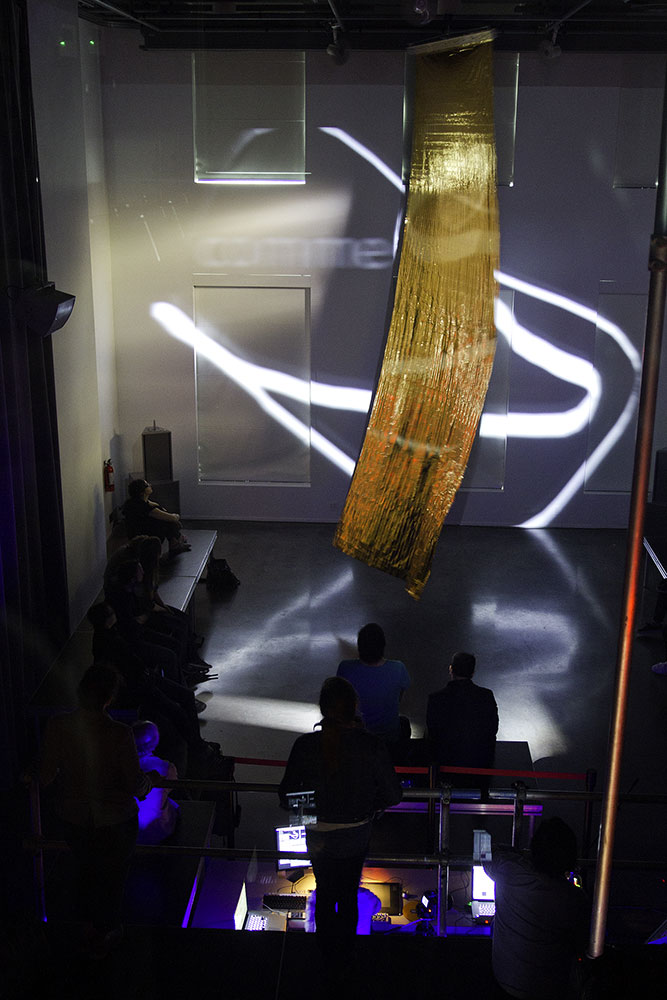
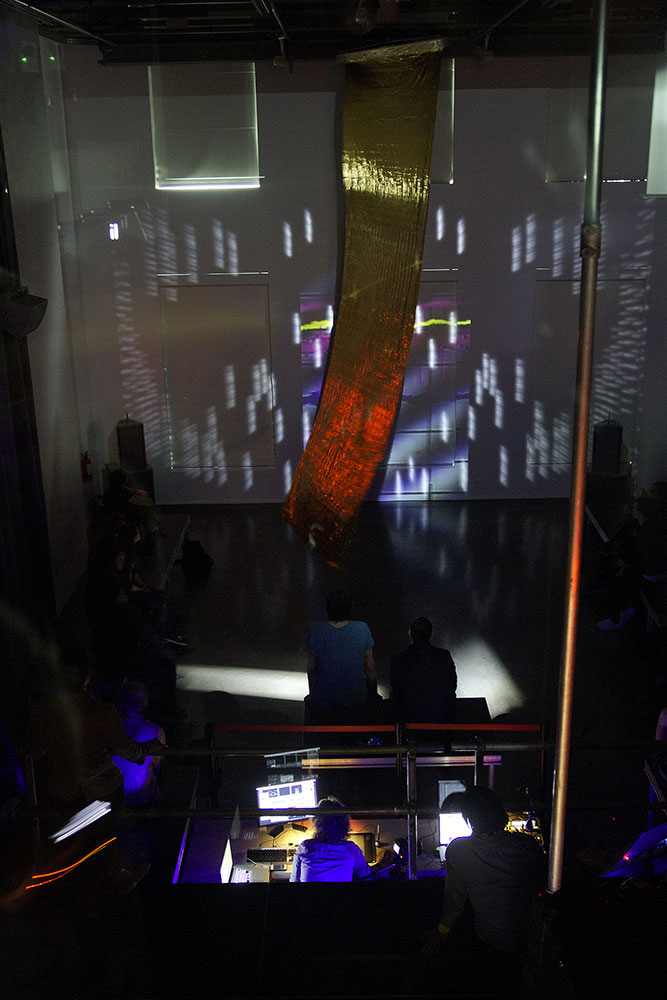
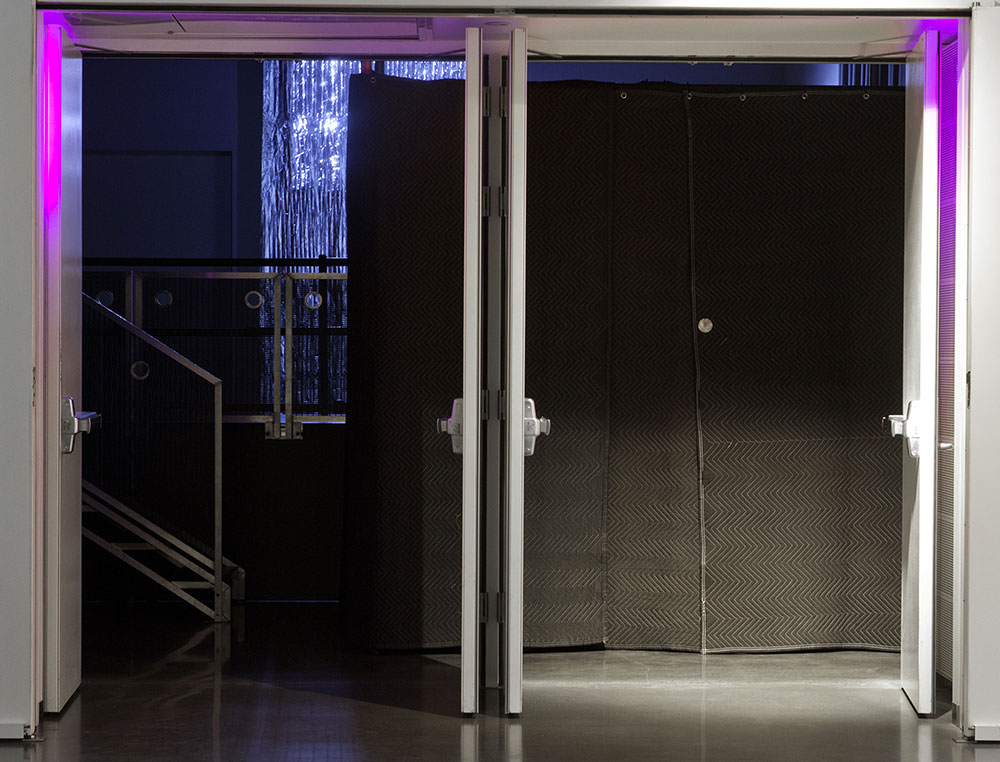
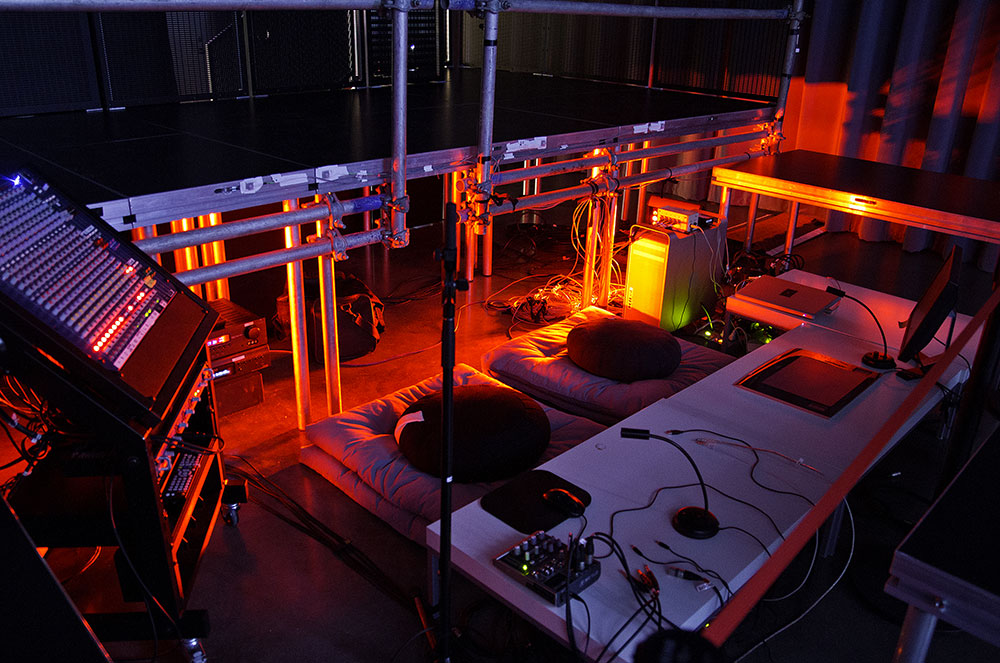
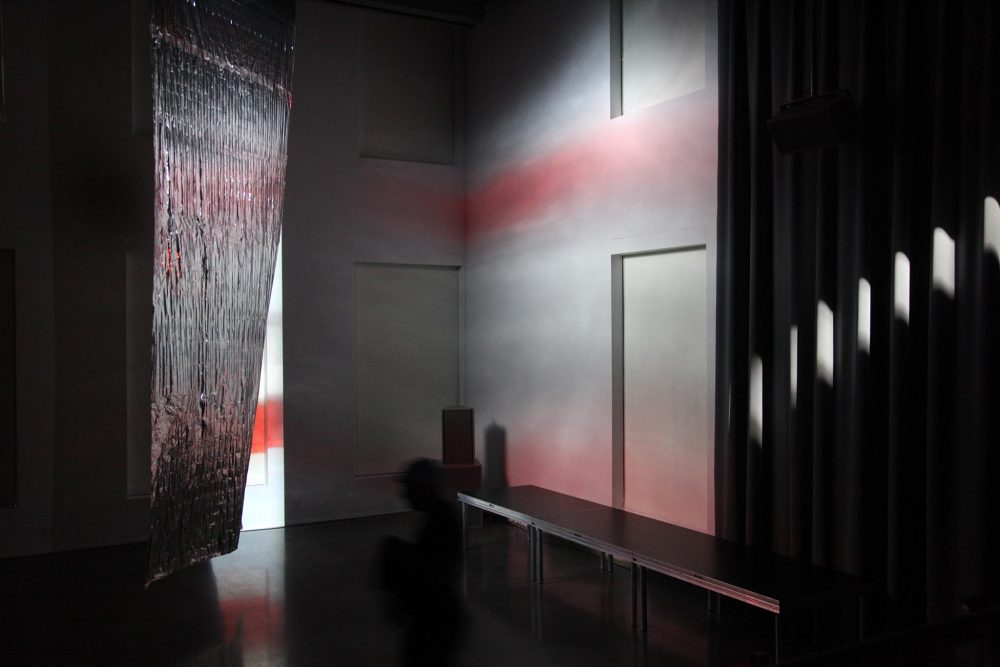
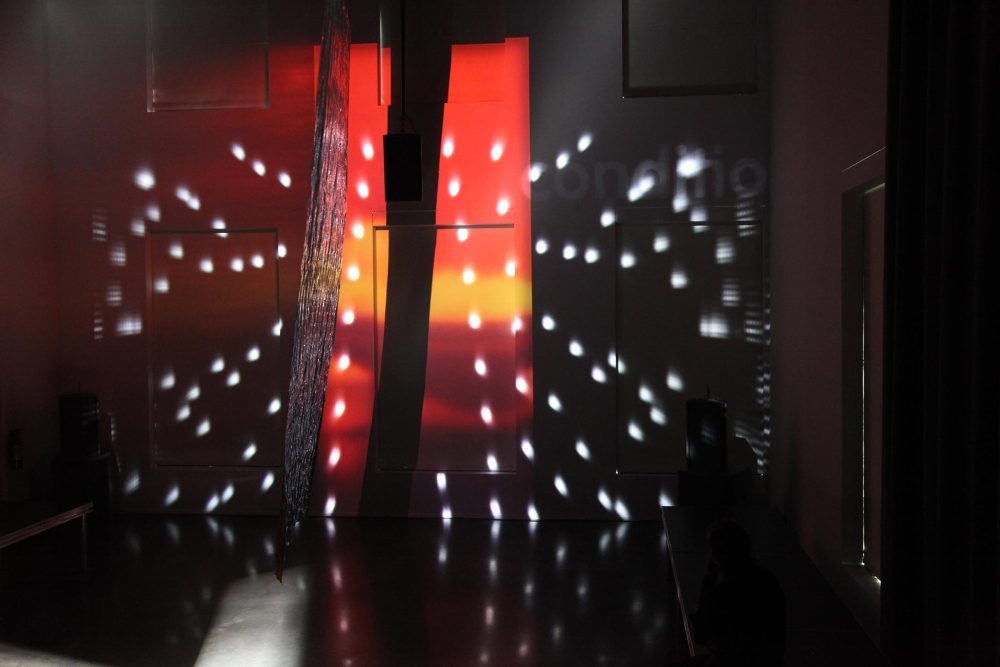
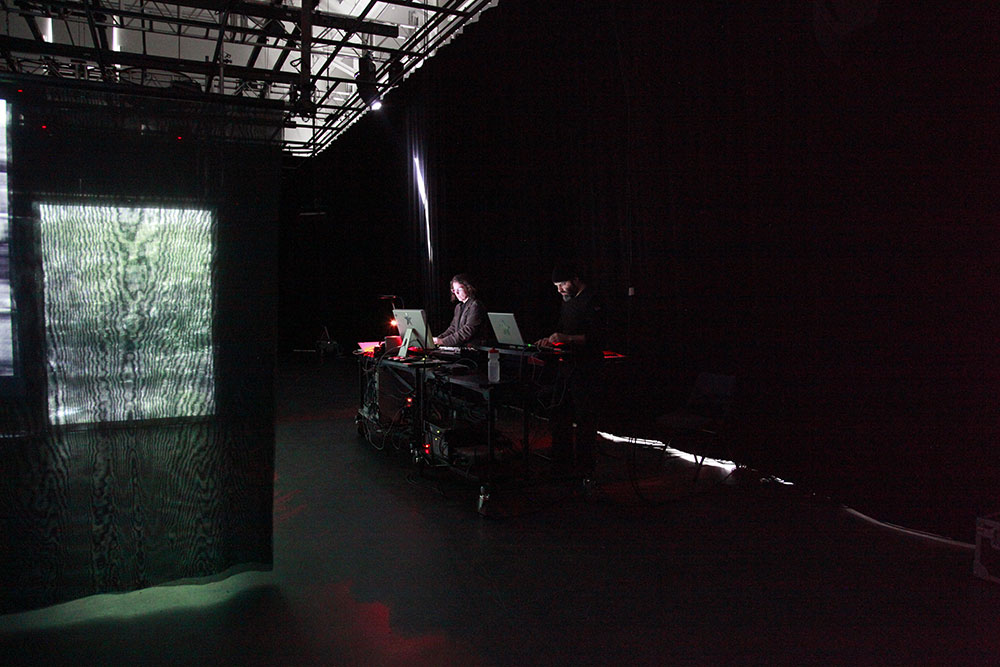
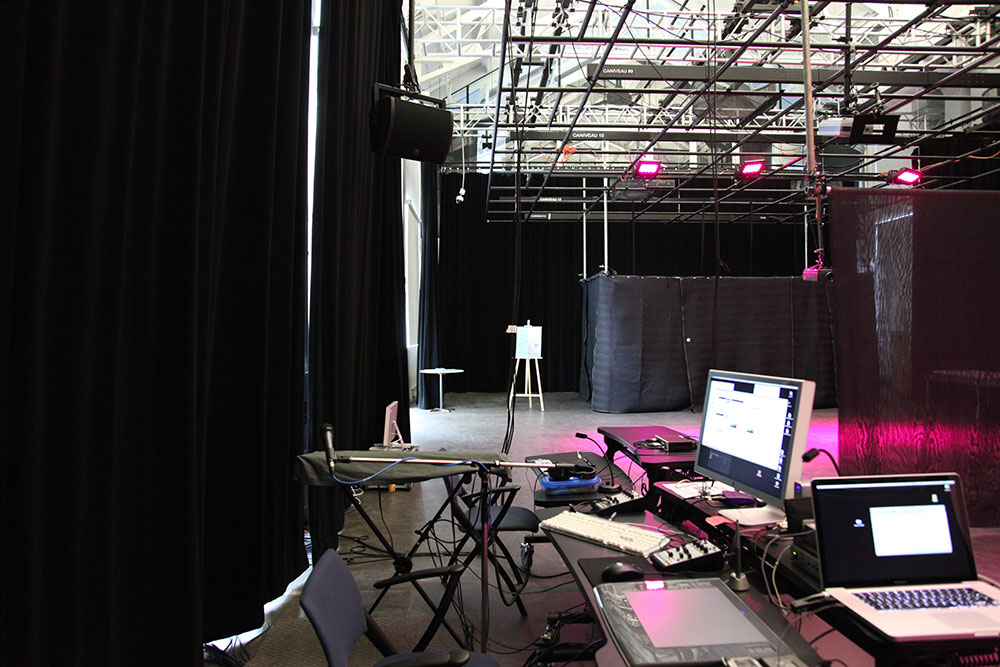
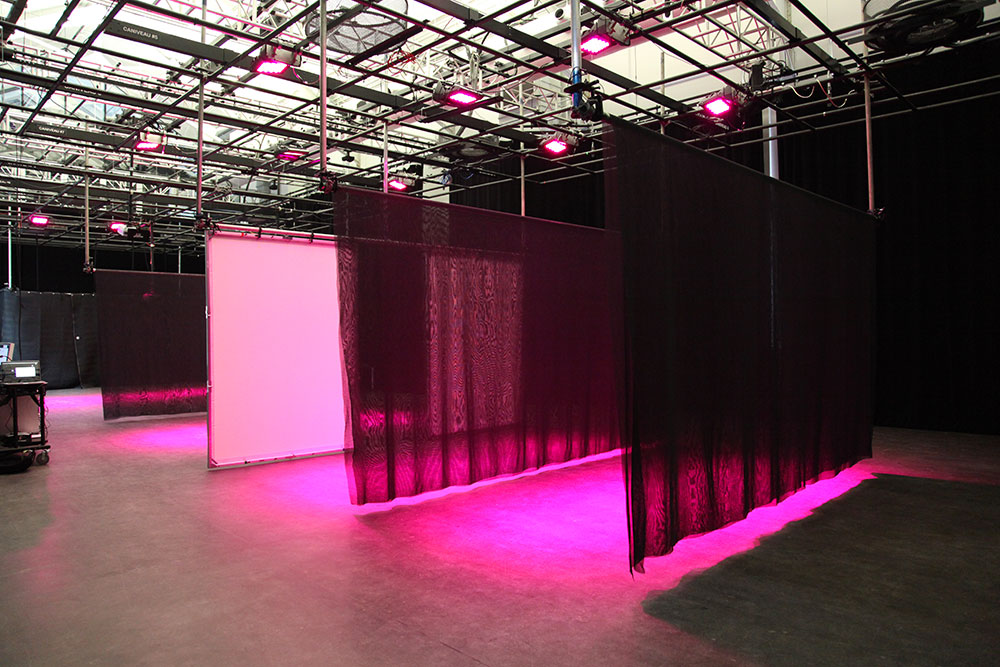
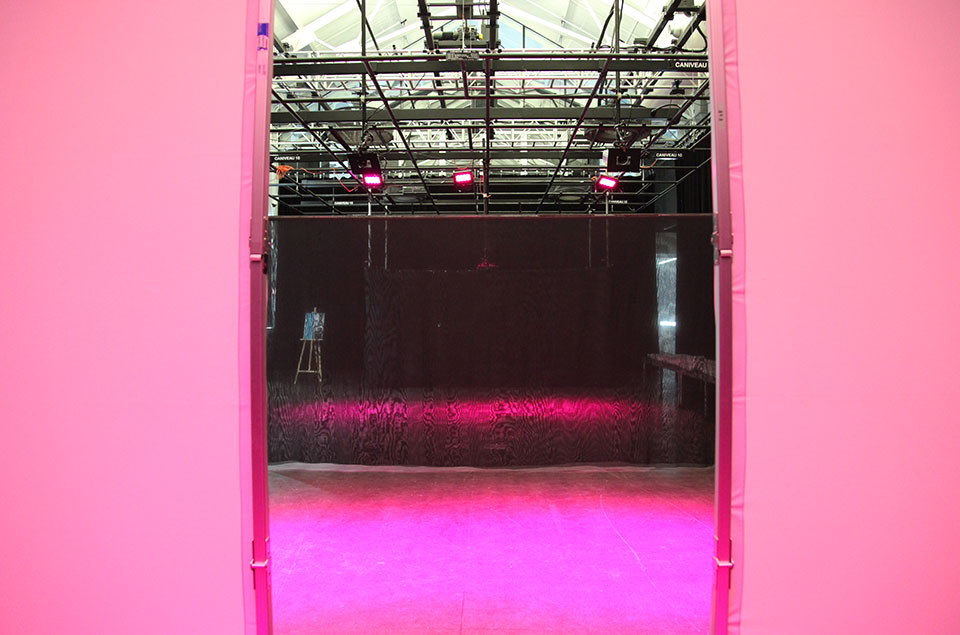
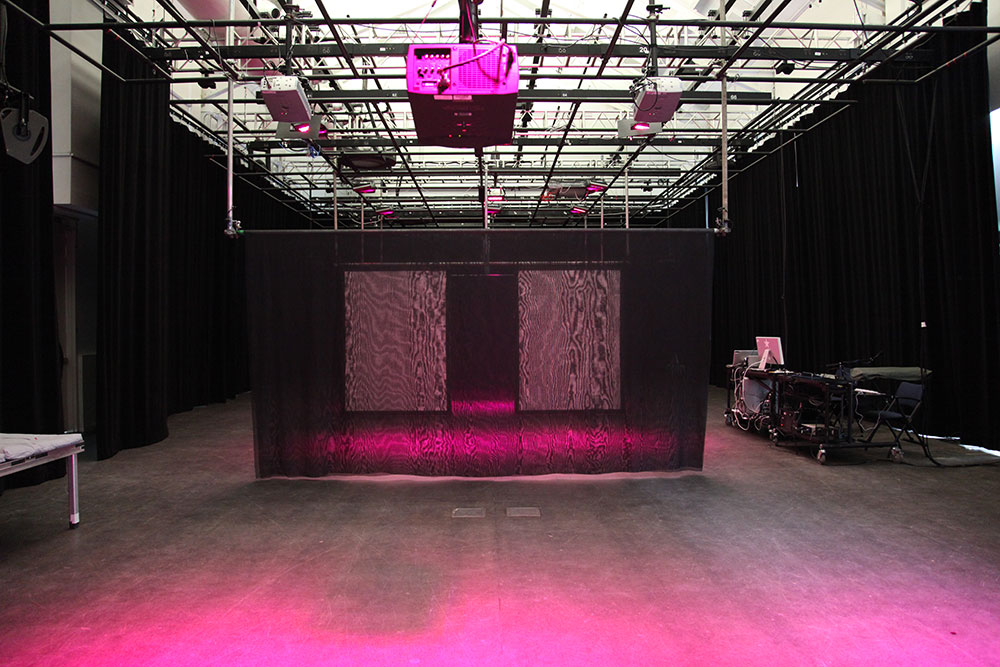
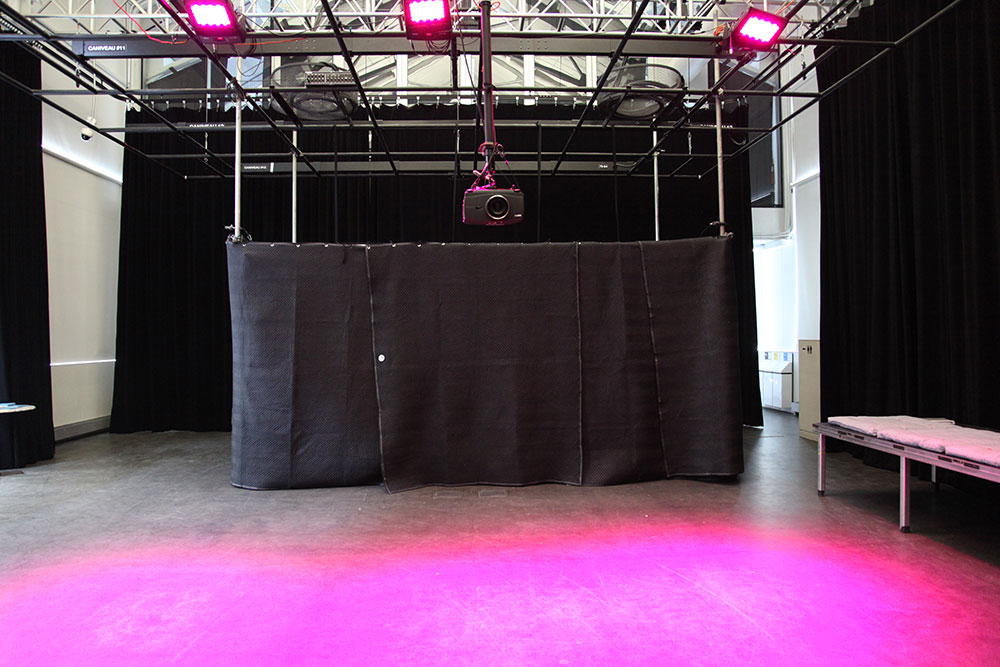
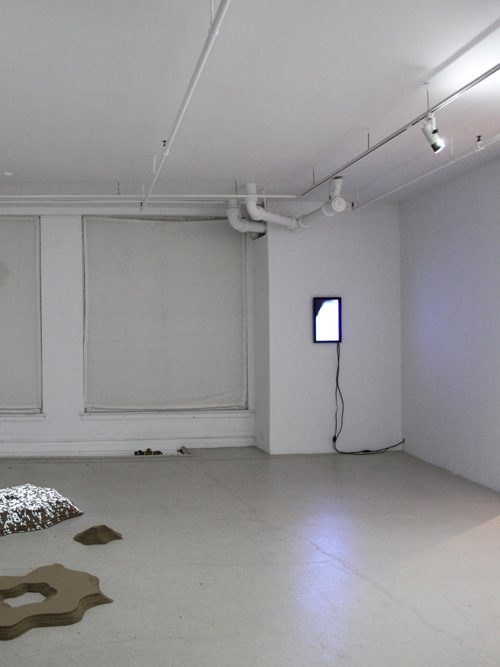
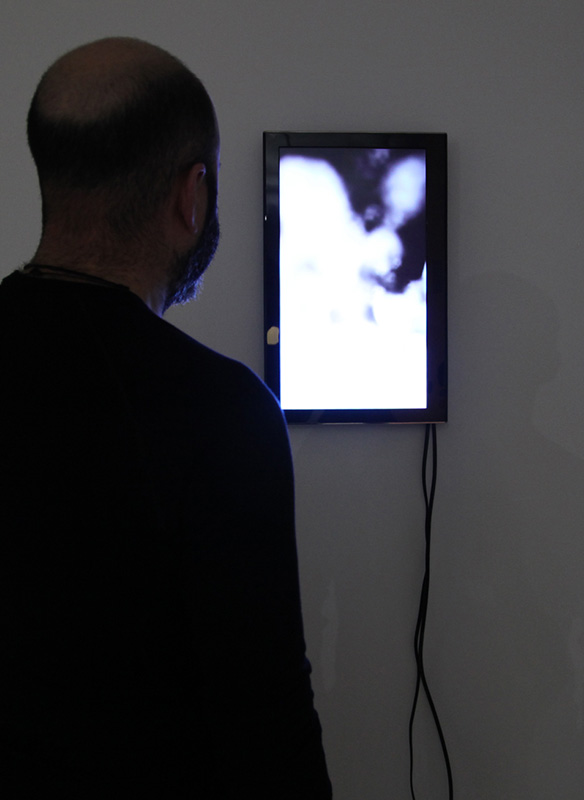
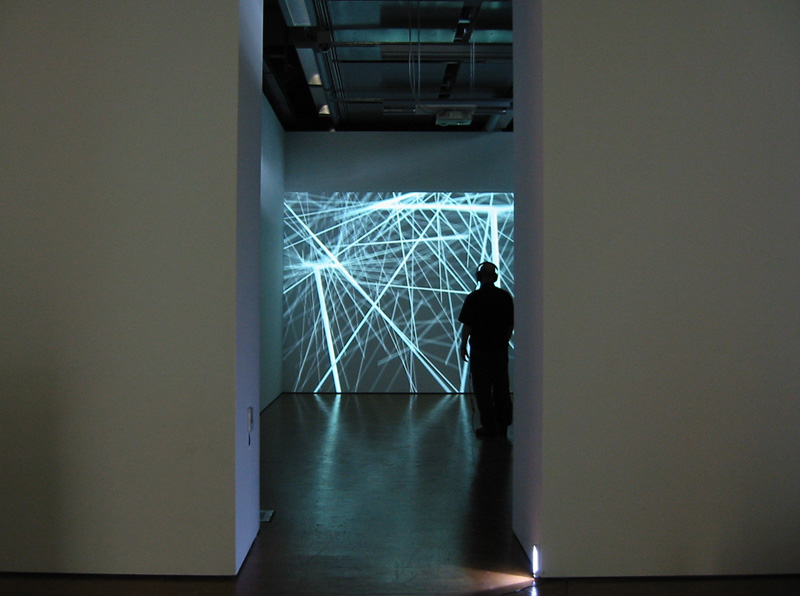
Intersidéral, 2017 (version 1). Installation lumineuse in situ. Version 1 : Commande d’oeuvre Manif d’art 8 – Biennale de Québec. Présentée dans le Grand Hall du pavillon Pierre Lassonde du Musée national des beaux-arts du Québec, du 17 février au 19 mars 2017.
Une coproduction Ælab et Manif d’art 8, la Biennale de Québec.
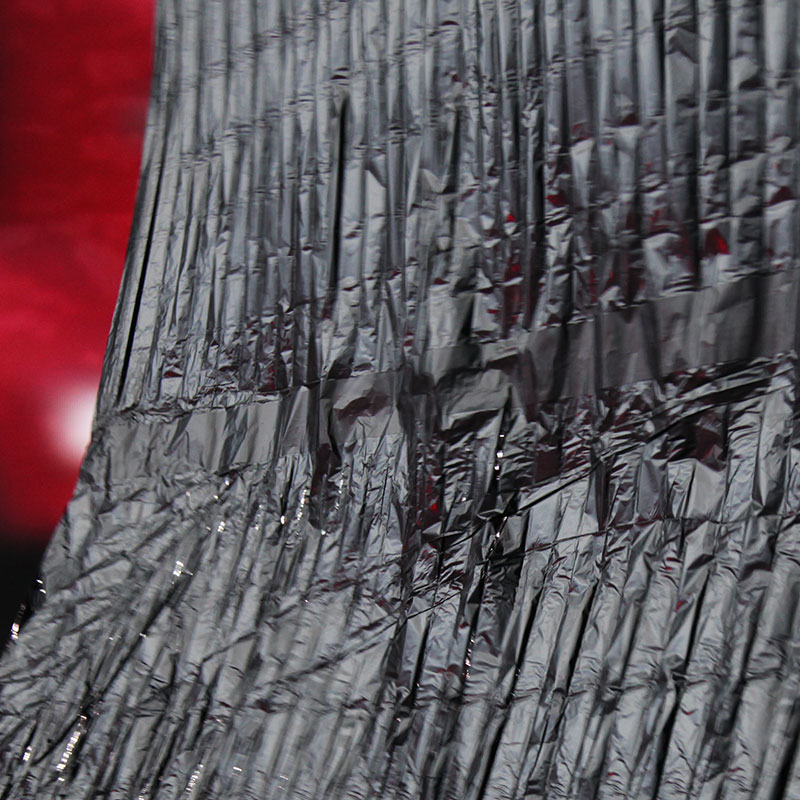
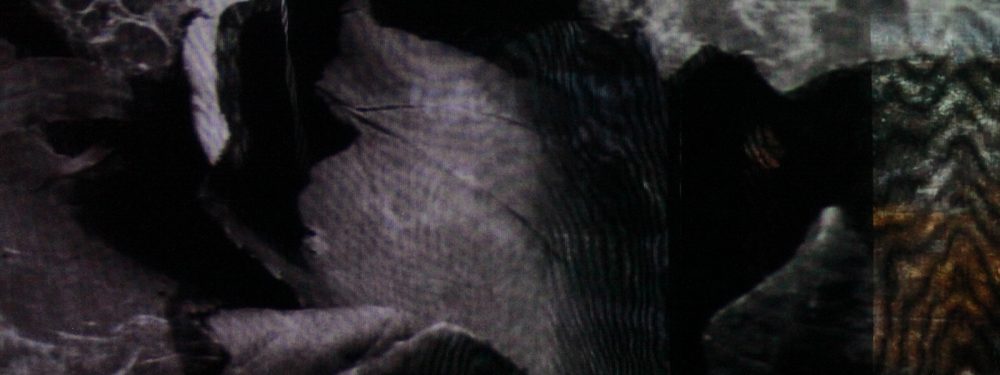
Grâce à un processus d’échantillonnage d’images de la nébuleuse Messier 5, le mouvement d’une ligne orbitale trace la luminosité des étoiles pour générer une captivante chorégraphie sans cesse renouvelée avec les lumières DEL. Celles-ci scintillent sur une membrane plissée réfléchissante, venant elle aussi de la recherche spatiale. Une expérience contemplative de lueurs dorées qui rythment des expériences nouvelles de l’espace.
Crédit image : ESA/Hubble et NASA. Guillaume Arseneault : artisan-programmeur Camille Courier de Méré : Assemblage de la membrane pour la Biennale Partenaires : Grupmuv, Hexagram-UQAM, FRQSC.
Merci À la Biennale : Claude Bélanger, Alexia Fabre, Anne-Sophie Blanchet, Bernard Lamarche, Line Ouellet, Justine Jacob-Roy, Steve Montambault, Guillaume Côté Roux, Ilana Pichon.
Projection architecturale avec composante sonore Photo couverture : Frédérique Ménard-Aubin
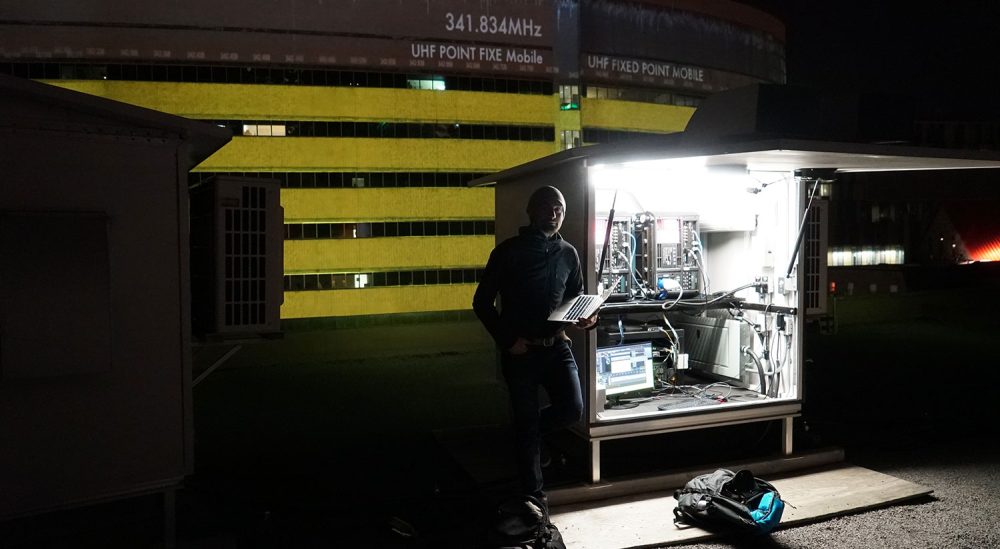
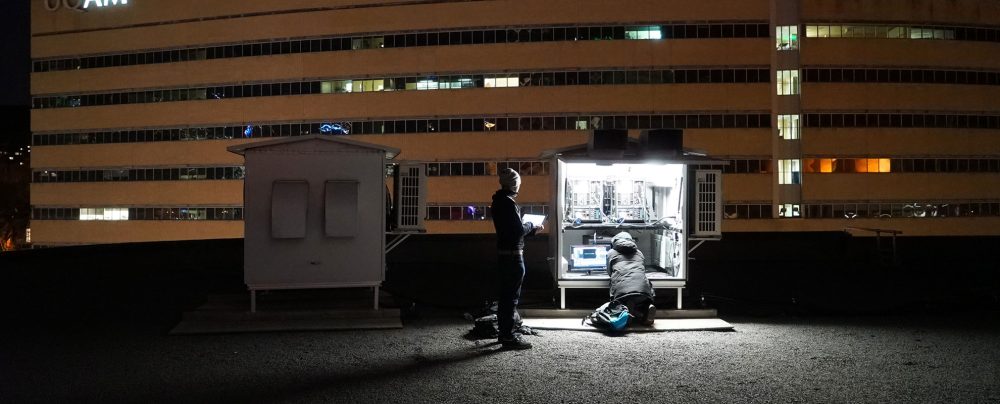
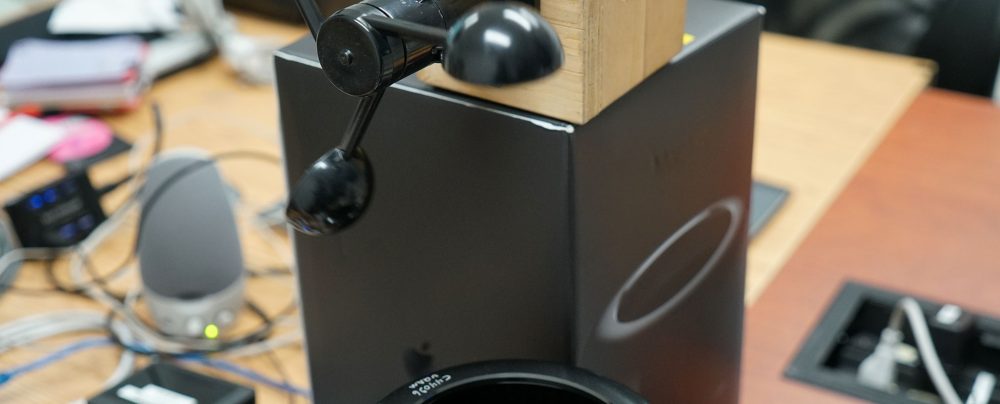
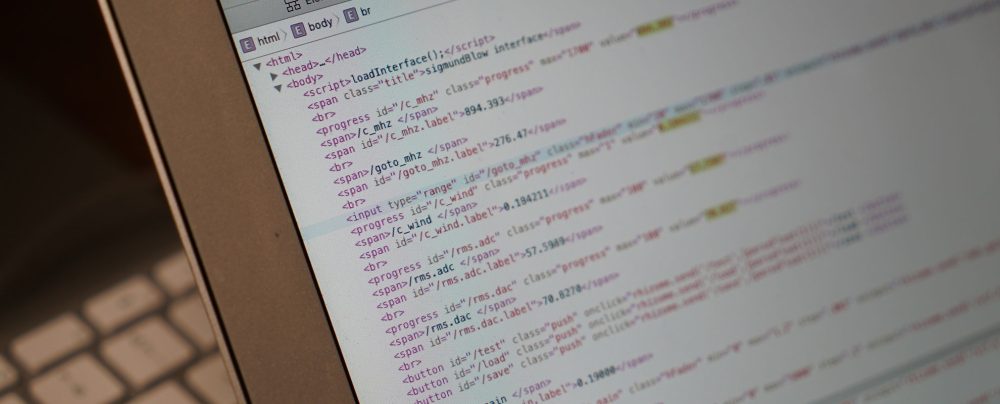
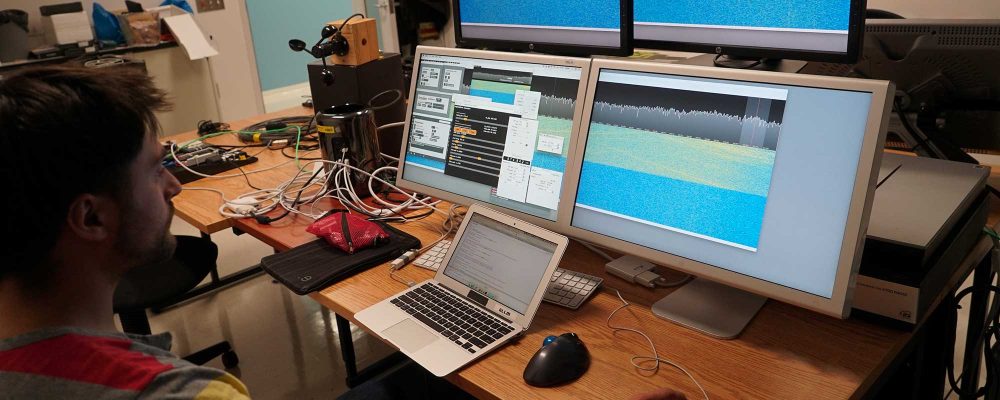
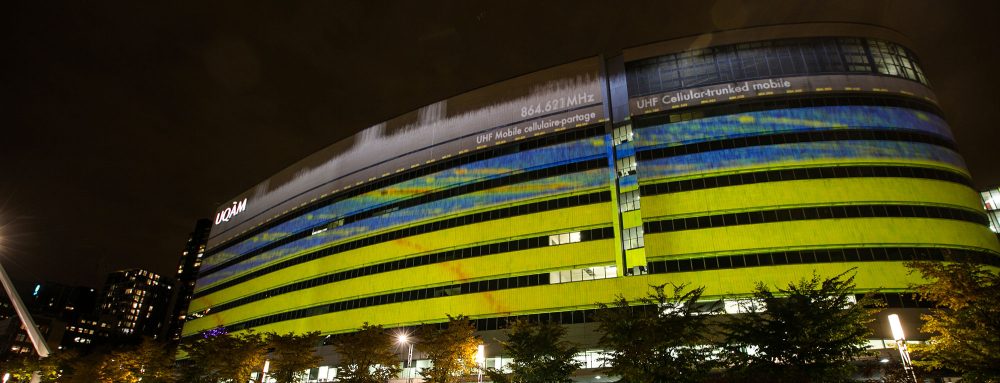
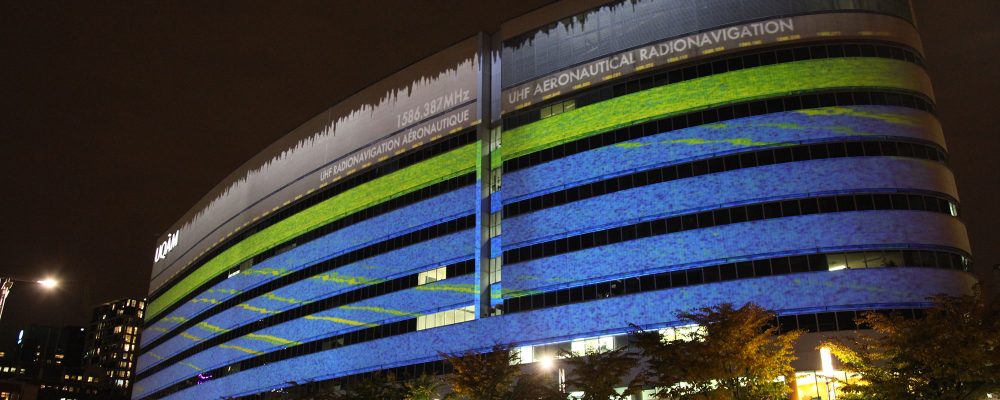
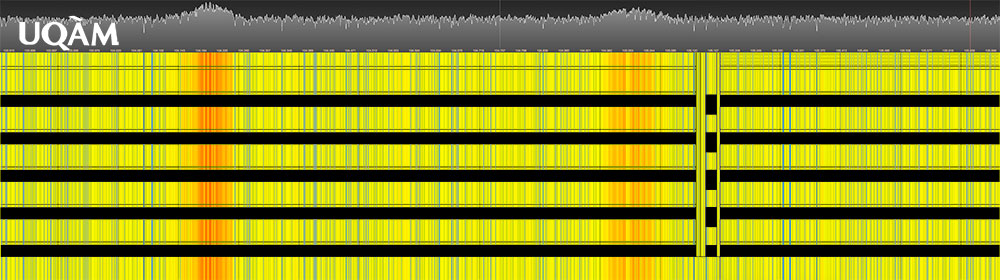
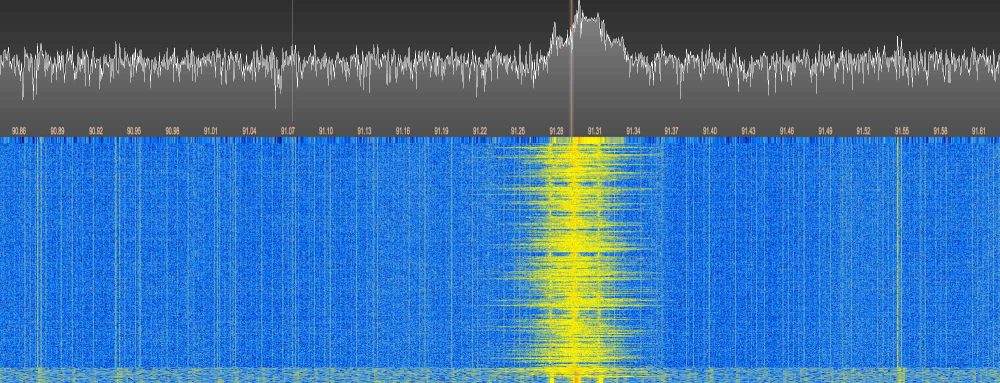
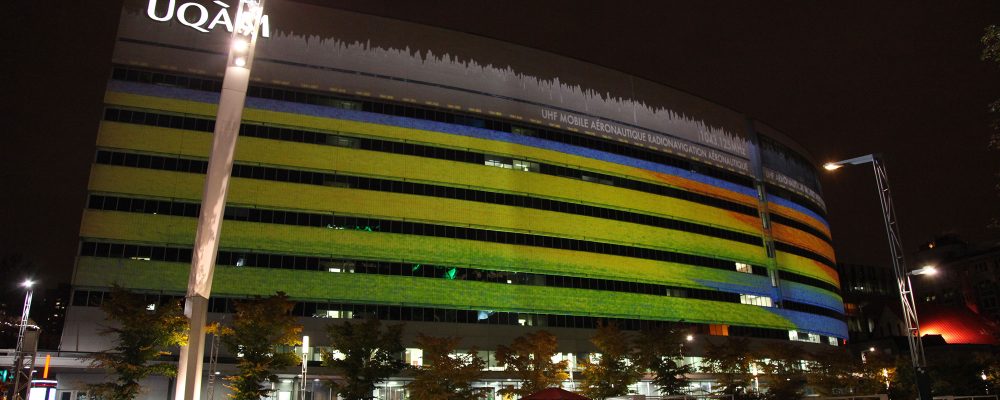
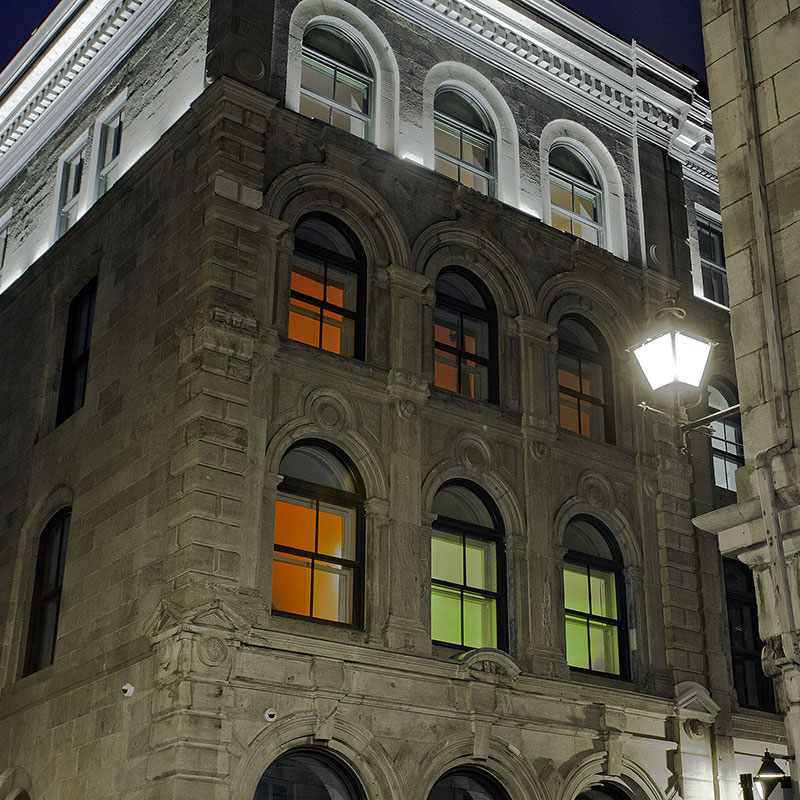
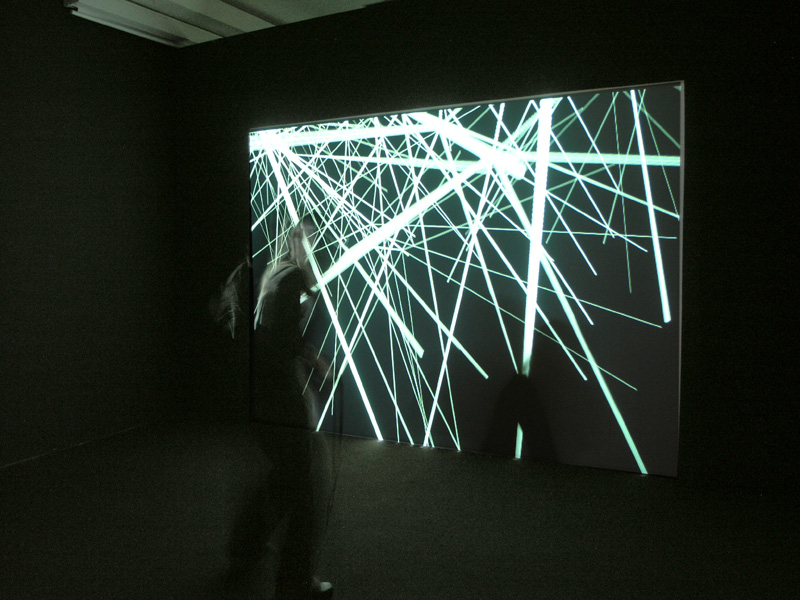
IRRADIER. IRRADIATE est une projection qui puise des fréquences électromagnétiques (EMF) invisibles et inaudibles parmi lesquelles vont et viennent quotidiennement les êtres vivants. Les visualisations EMF sont générées en direct, à l’aide d’un logiciel libre (Gqrx-SDR), d’un anémomètre et d’une antenne, pour rendre l’intensification et la densification des signaux de communication sans fil dans des cadres urbains. Avec son format monumental, ses couleurs minimalistes et ses lignes vibrantes, ce panorama de bruit-à-signal transmet aux citadins un sentiment d’immersion et les nouvelles formes de radiation non consenties comme modalités de pollution. Irradiées – exposées, traitées et illuminées – par et dans des machines, elles co-constituent alors des vibrations corporelles. Texte par Mél Hogan, Illinois Tech, Chicago
9 mai au 13 mai 2106 Lundi au vendredi : 20 h 30 – 01 h 00 Façade du pavillon Président-Kennedy de l’UQAM 201, avenue du Président-Kennedy
Partenaires Cette oeuvre est présentée grâce à l’appui technique et financier des organismes suivants: UQAM, Partenariat du Quartier des spectacles, Hexagram-UQAM, Grupmuv, Fonds québécois de recherche – Société et Culture (FRQSC).
IRRADIER.IRRADIATE est une projection architecturale de la place des Festivals, au Quartier des spectacles, générée à partir de données environnementales et des fréquences électromagnétiques. Grâce à un logiciel libre (Gqrx SDR), une antenne et un anémomètre, la façade du pavillon Président-Kennedy de l’UQAM se transforme en un immense récepteur radio où est projetée une ligne vibratile modulée en direct par la force du vent. Oeuvre minimaliste aux champs de couleurs primaires, ce projet est une mise en forme critique et poétique de la densification des signaux en milieu urbain numérique, où se côtoient communication, pollution et mouvements de l’air.
Ce projet prolonge la tétralogie d’oeuvres d’envergure produite entre 2008 et 2014 par la cellule de recherche artistique Ælab. Il propose une exploration nouvelle de la relation enchâssée entre nature, humains et technologies.
Gisèle Trudel est artiste en arts médiatiques et professeure à l’École des arts visuels et médiatiques de l’UQAM. Elle a été directrice d’Hexagram-UQAM et codirectrice du réseau Hexagram. Elle a fondé la cellule de recherche artistique Ælab avec Stéphane Claude en 1996, et cofondé, en 2008, le Laboratoire de recherche-création sur le dessin et l’image en mouvement Grupmuv. Son travail est régulièrement présenté à Montréal et à l’international.
Guillaume Arseneault est artiste numérique transmédiatique. Il complète une maîtrise en communication, concentration recherche-création en média expérimental, à l’UQAM. Il s’intéresse à la réinjection cinétique du corps en interactivité et hybride la technologie pour susciter réactions interpersonnelles et dialogues. Son travail a notamment été diffusé lors de l’édition 2015 du festival Chromatic.
Projet présenté dans le cadre du colloque Media Art Histories Re-Create 2015.
Façade du pavillon Président-Kennedy de l’UQAM 201 avenue du Président-Kennedy (entre Jeanne-Mance et St-Urbain) du jeudi 22 octobre au dimanche 8 novembre inclusivement les jeudis et dimanches 18 h 30 – 23 h les vendredis et samedis 18 h 30 – 02 h Dès le 5 novembre, la projection débutera à 17 h 30
Projet présenté en partenariat avec l’UQAM, le Partenariat du Quartier des spectacles, Hexagram-UQAM et le Grupmuv. Avec l’appui financier du Fonds de Recherche du Québec – Société et Culture (FRQSC).
PRESSE 22 octobre 2015 Irradier. Une nouvelle vidéoprojection architecturale s’intéresse aux ondes électromagnétiques. Article par Valérie Martin.
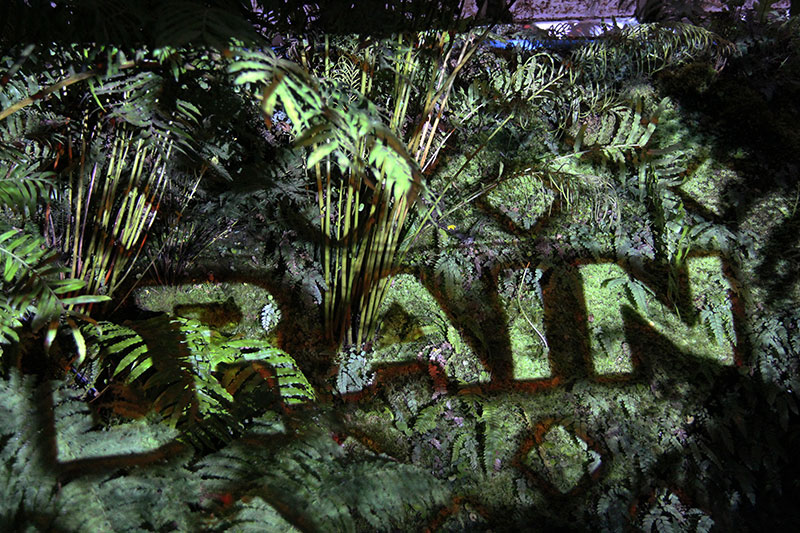
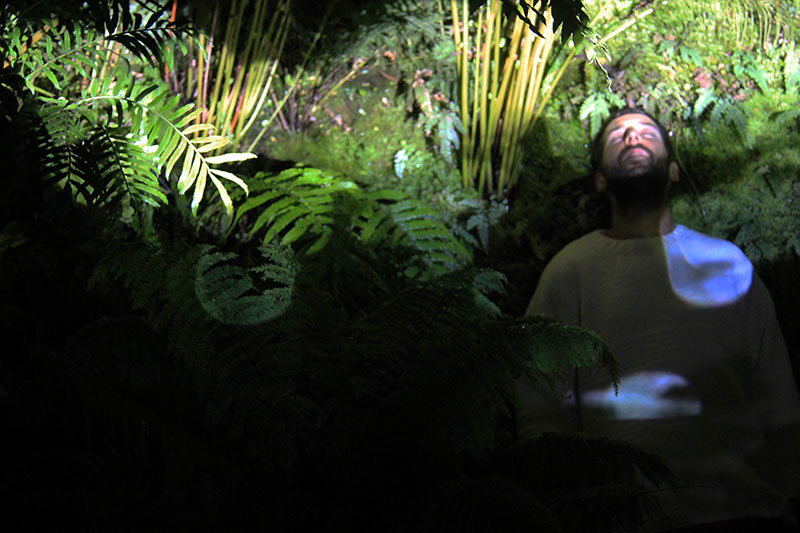
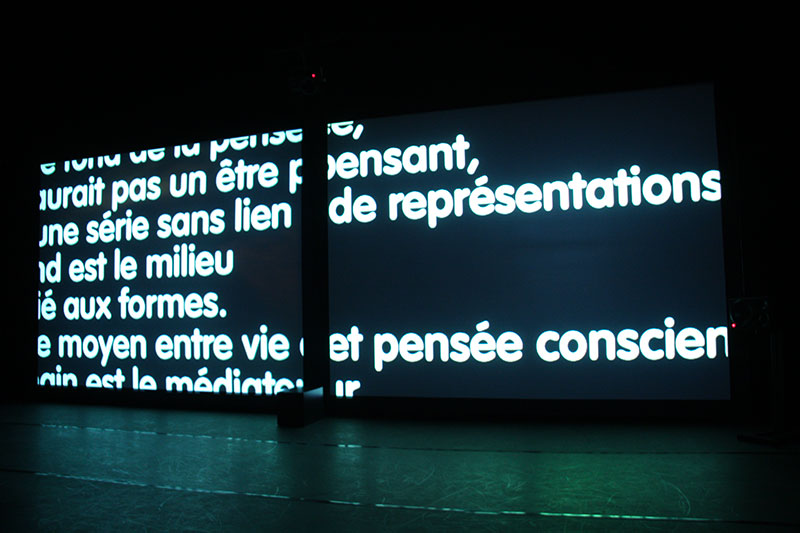
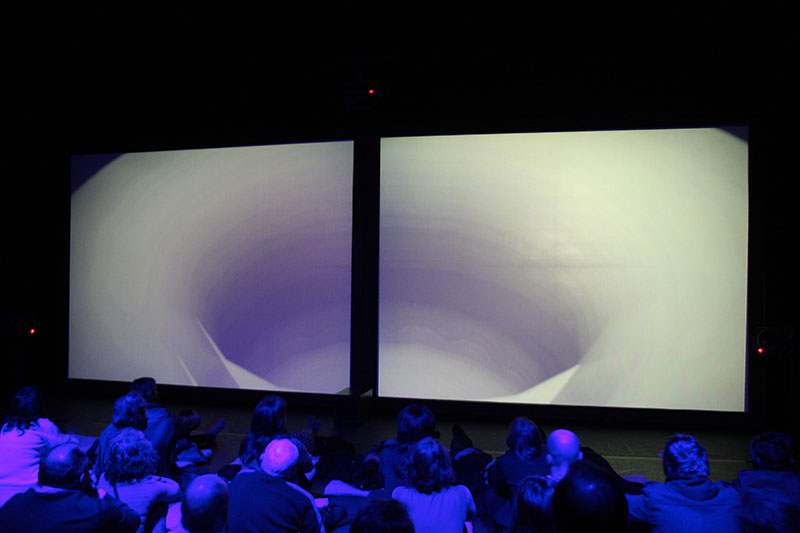
Process-oriented and informal in nature, the research and production of this work with immersive sound, moving image, drawing and light is informed by the realities of “gray waters” in various states of composition, decomposition and recomposition. The source material originates in the « Eco Machines » system, pioneered by biologist and ecologist Dr. John Todd situated situated at the rest area of Sharon, Vermont and the Station d’épuration des eaux usées, an industrial system for the city of Montreal. The project is extended with images and sounds from the deserts of southwestern USA.
The project finds its inspiration in the concept of the transduction as defined by French philosopher Gilbert Simondon (1928-1989), by which nature, information and technology co-evolve. The series was initially performed in an intimate setting, disrupting the greek root of the word ecology, eikos, which means « house ».
Credits Text excerpts _Gilbert Simondon Production Catherine Béliveau _additional camera, EcoMachines, Sharon, Vermont and production assistance, Fountain House production assistance and documentation Sophie Bellissent _initial production and research assistance Roberto Di Giacomantonio _zafuton design and production Nate Fredericks _bench flow data, Sharon, Vermont Marc Lavallée _PureData DMX Varichrome LED programming Florian Grond _MAX-MSP algorithmic ambisonic panner programming Pier Lefebvre _projection apparatus Jacques Perron _additional camera and documentation, Station d’épuration des eaux usées, Montréal Jean-Marc Ratté, Sophie Voyer _Station d’épuration des eaux usées, Montréal Shot on location at EcoMachines, Sharon, Vermont; Joshua Tree National Park, California; Station d’épuration des eaux usées, Montréal; Grand Canyon and Glen Canyon, Arizona.
Presentation at Flevoland, Thinking with Water conference JacquesPerron _documentation Simon Rolland _production assistance Sophie Bellissent, Nadia Seboussi _assistance
Equipment and software support from Hexagram-UQAM and Sennheiser Canada.
Presentations (in reverse chronological order) Fountain House Esplanade Clark, Montréal, Oct 9-10-11, 2014 in collaboration with raumlabor (Berlin) and Goethe-Institut Montreal, Biennale de Montréal EcoSapiens Residency, Fernery Room, Pukekura Park, Botanical Garden, New Plymouth, New Zealand Jan 2011 Thinking With Water Conference, Concordia University, Montreal, June 21 2010 Festival Temps d’Images Usine C, Montréal, 19-20-21 février 2009 Deep North, transmediale Haus der Kulturen der Welt, Berlin, Germany Jan 2009 Flevoland Montréal June 9, June 28, Aug 8 2008
Produced with the financial assistance of the Canada Council for the Arts, Media Arts and PAFARC-UQAM (Programme d’aide financière à la recherche et à la création de l’Université du Québec à Montréal).
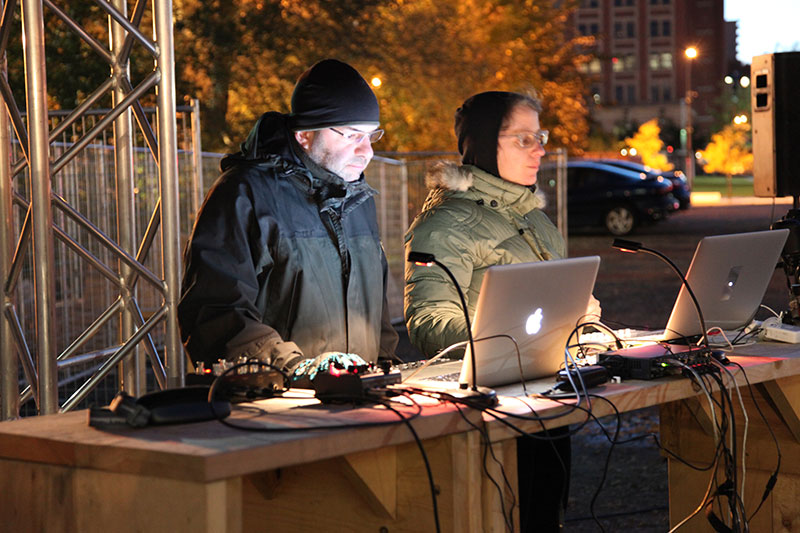
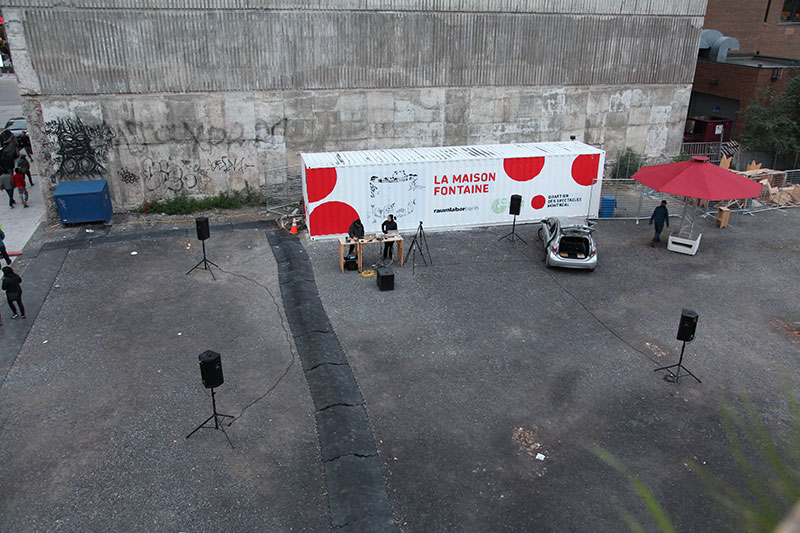
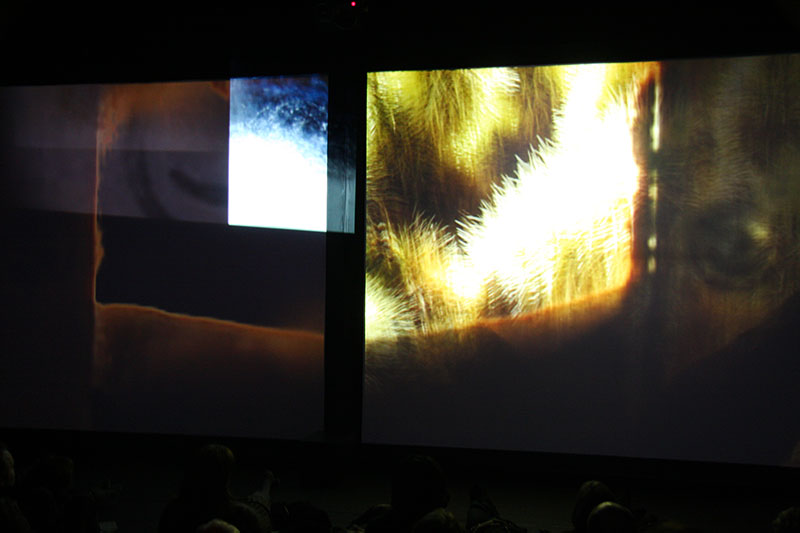
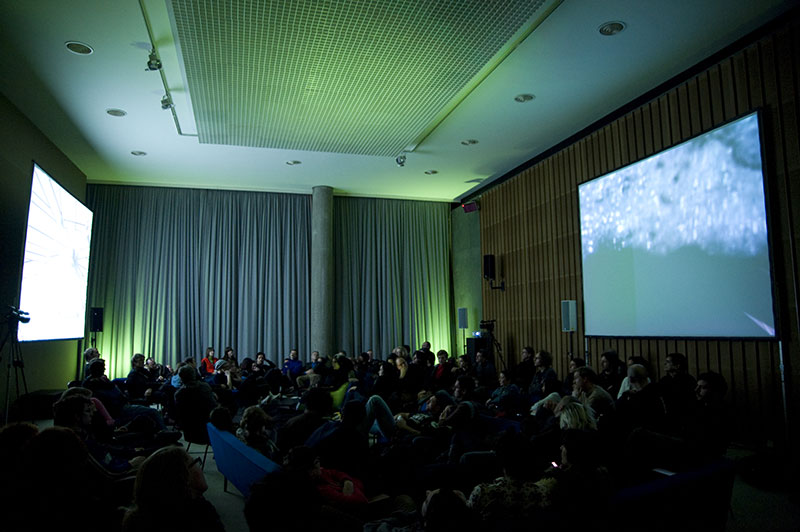
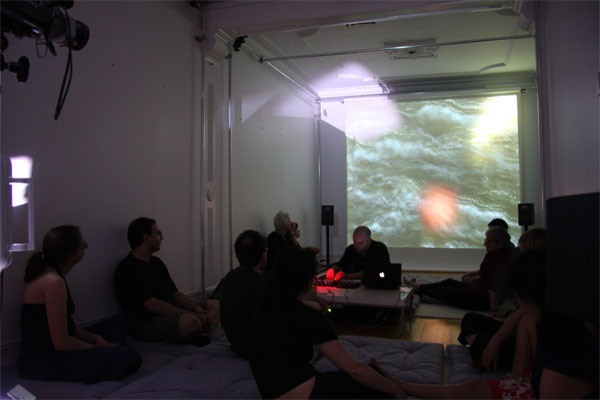
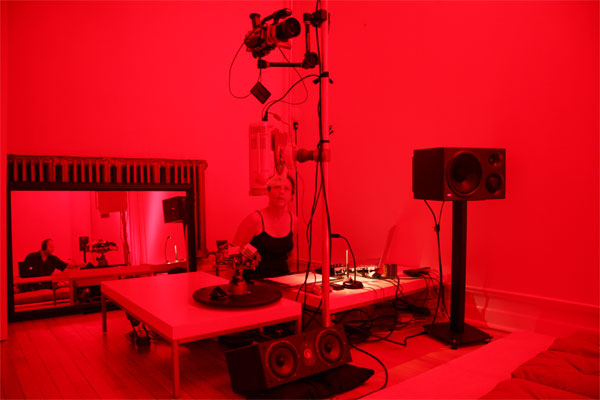
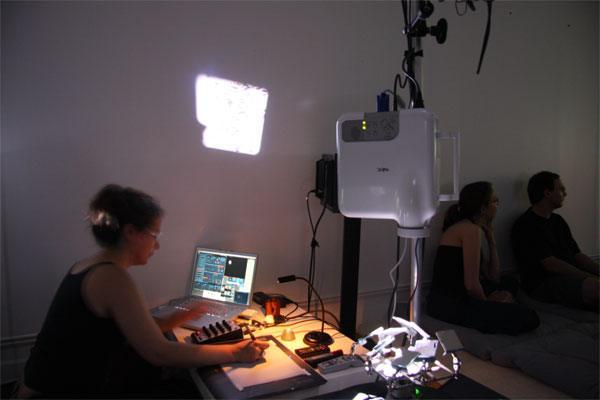
LSCDC à la maison Fontaine, octobre 2014, Montréal. Coproduction Goethe-Institut. Photo : Catherine Béliveau.
LSCDC à la maison Fontaine, octobre 2014, Montréal. Coproduction Goethe-Institut. Photo : Catherine Béliveau.
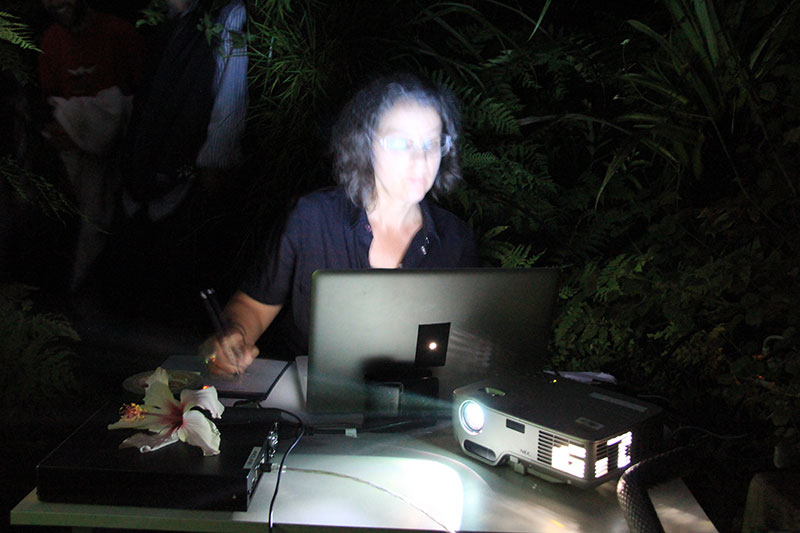
LSCDC au Pukekura Botanical Garden, New Plymouth, New Zealand, jan 2011. Photo : Keith Armstrong.
LSCDC au Pukekura Botanical Garden, New Plymouth, New Zealand, jan 2011. Photo : Keith Armstrong.
LSCDC au Pukekura Botanical Garden, New Plymouth, New Zealand, jan 2011. Photo : Keith Armstrong.
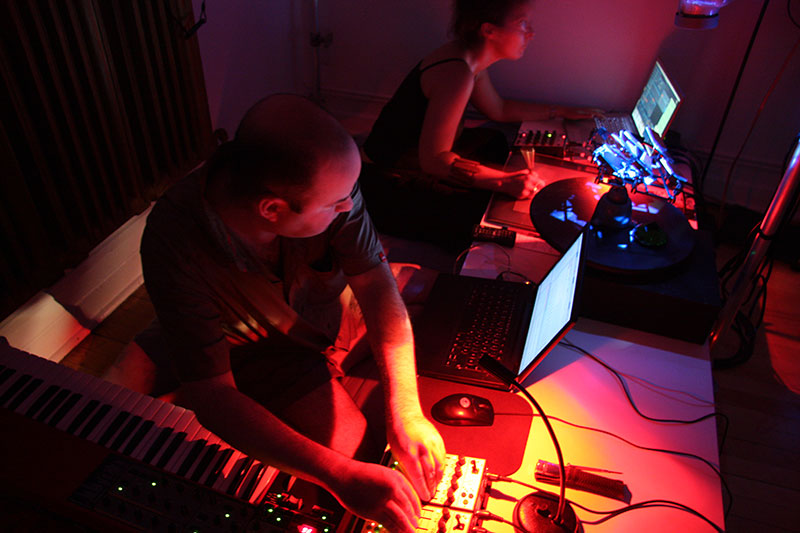
LSCDC au Festival Temps d’Images, Usine C, Montréal, février 2009. Photo : Jacques Perron.
LSCDC au Festival Temps d’Images, Usine C, Montréal, février 2009. Photo : Jacques Perron.
LSCDC au Festival Temps d’Images, Usine C, Montréal, février 2009. Photo : Jacques Perron.
LSCDC à Deep North, Transmediale, Haus der Kulturen der Welt, Berlin, Allemagne, 2009. Photo : Jonathan Gröeger.
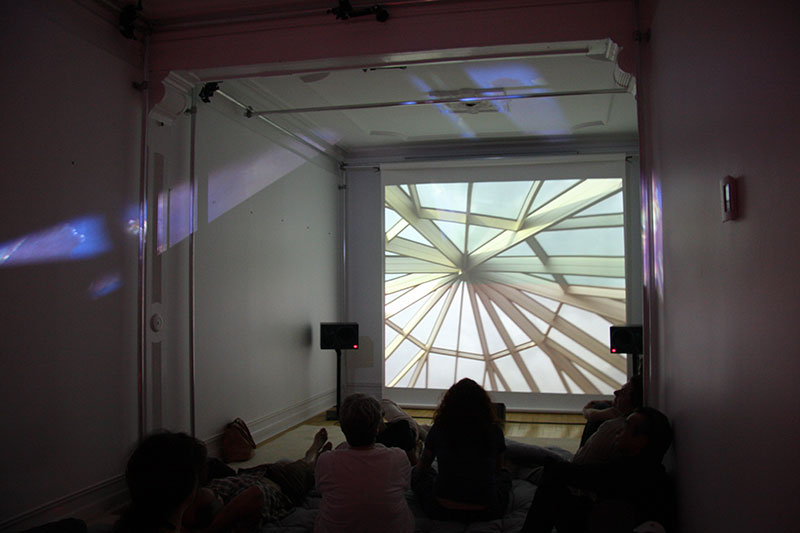
LSCDC à Flevoland, Montréal, 2008. Photo : Jacques Perron.
LSCDC à Flevoland, Montréal, 2008. Photo : Jacques Perron.
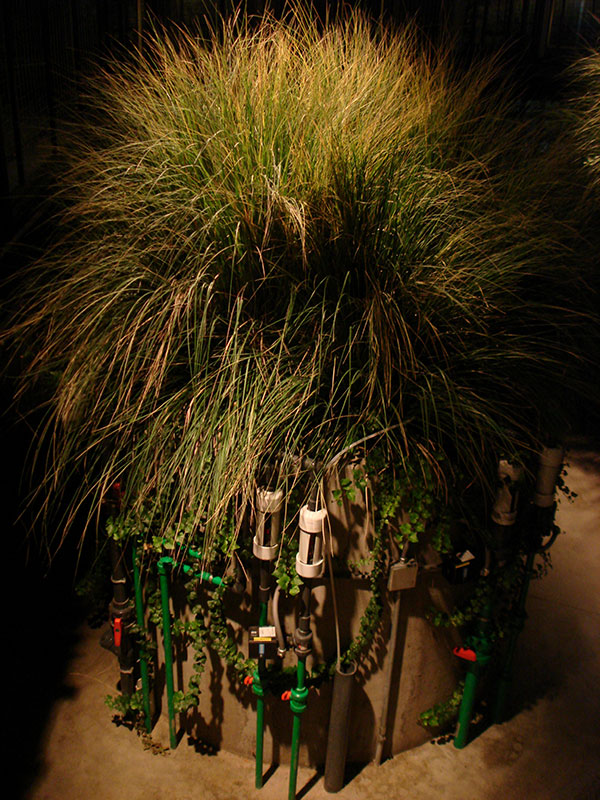
Stéphane Claude et Catherine Béliveau au Eco-Machines, Sharon North Welcome Centre, Vermont, 2007.
Eco-Machines, Sharon North Welcome Centre, Vermont, 2007.
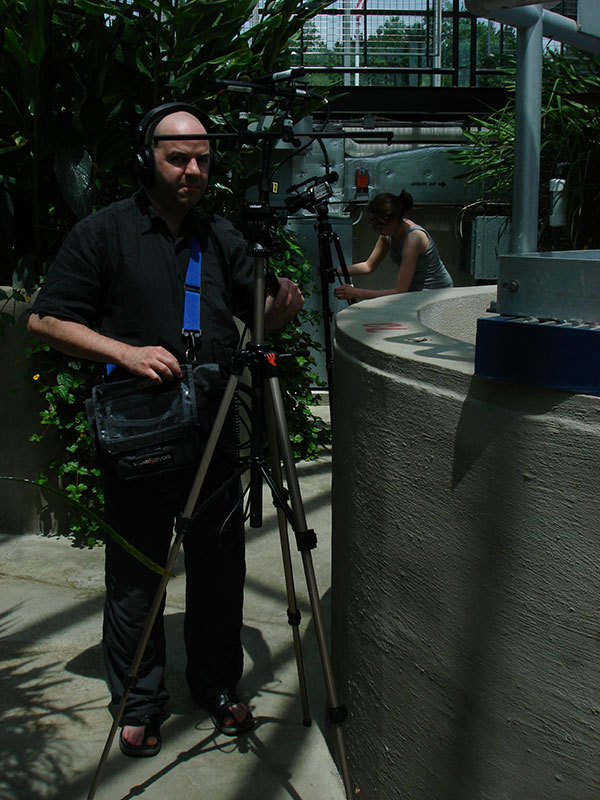
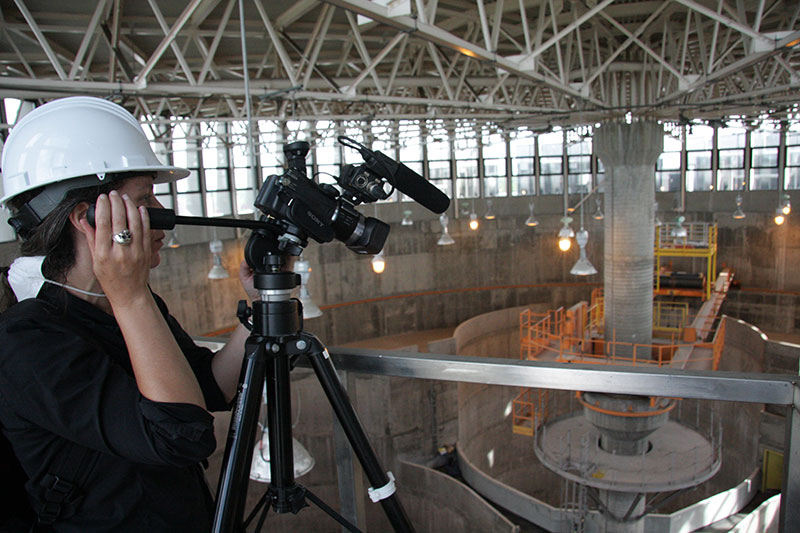
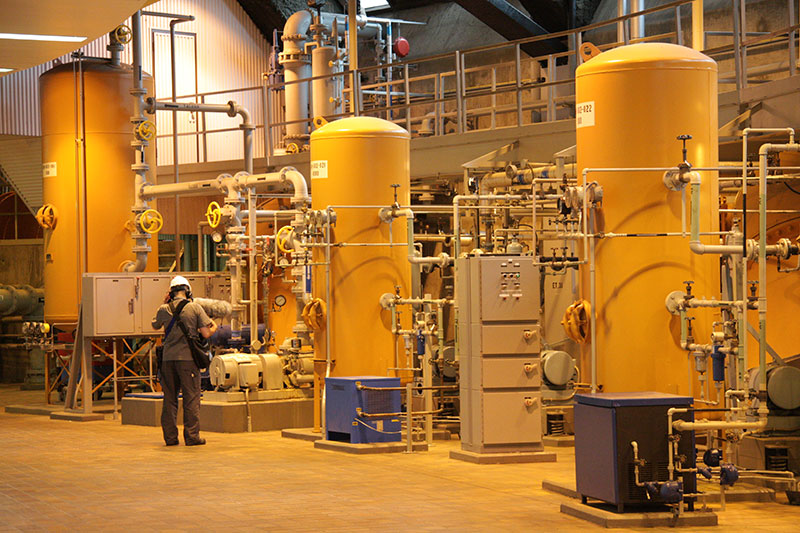
À la Station d’épuration des eaux usées, Montréal, 2008. Photo : Jacques Perron.
À la Station d’épuration des eaux usées, Montréal, 2008. Photo : Jacques Perron.
Permutational performative installation & night projection May 5-22, 2014 cover photo : Lorna Bauer
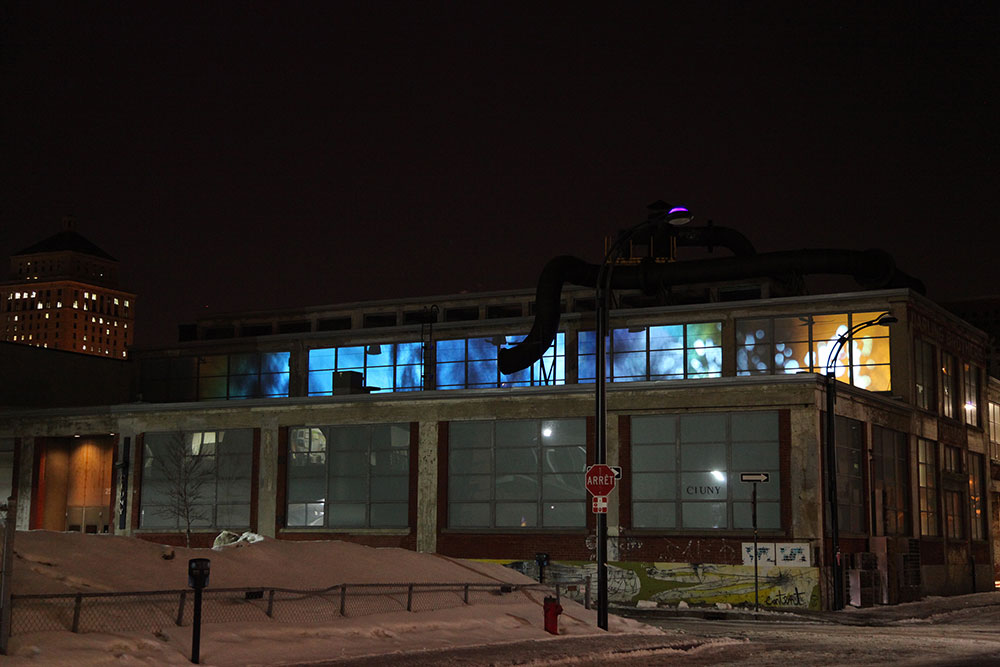
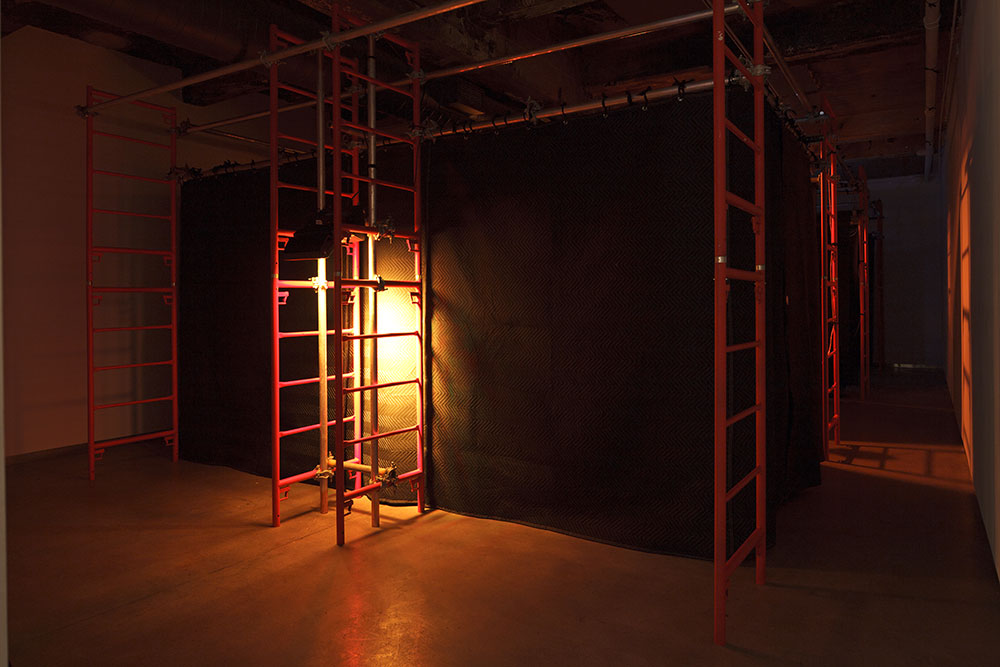
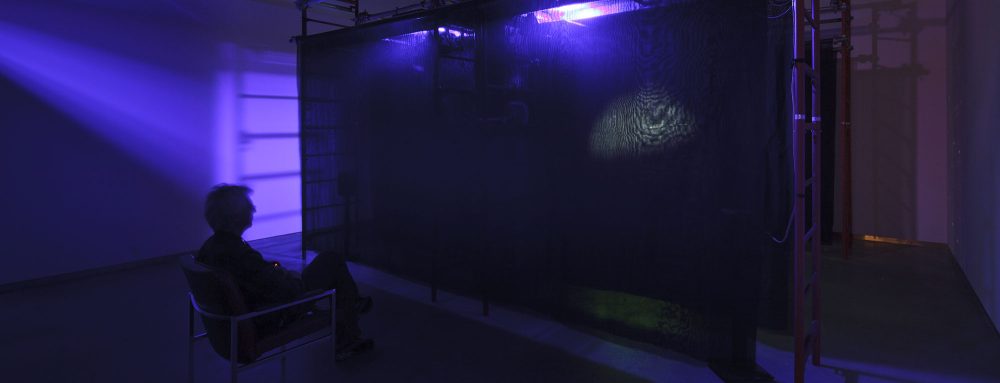
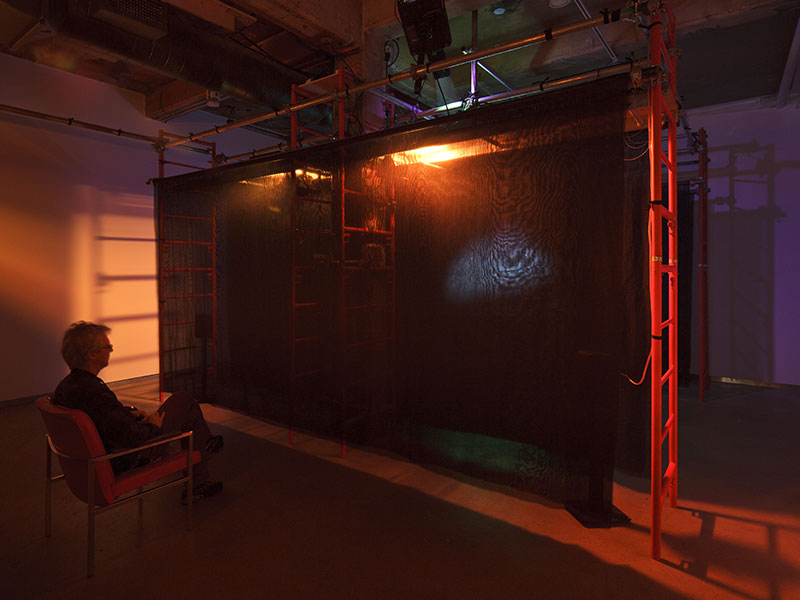
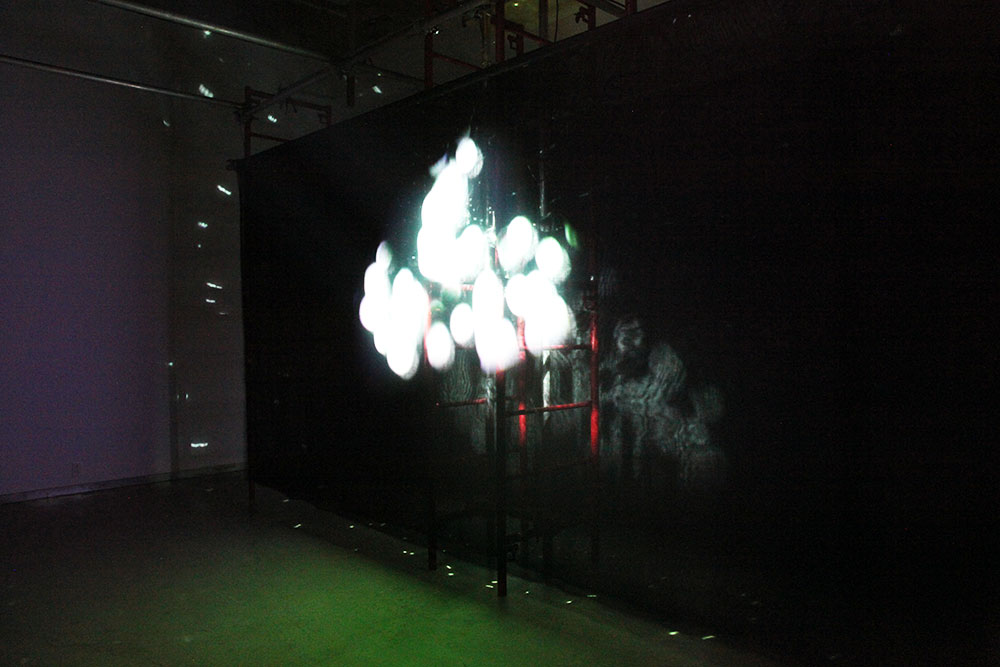
Milieux associés is a permutational and performative installation linking art, technology and residual matter. The installation and performances engage the public through a variety of physical environments distributed in zones. Consisting of video, a swirling membrane, proximity and movement sensors, digital drawing, tactile and immersive sound, it also spills out onto the street at night as an evening projection on the windows of the Phi Centre seen from Saint Paul Street. The work explores the relationship of humans to hidden and neglected materialities that still hold capacity for transformation.
Curated by Cheryl Sim Presented at the Phi Centre The installation will be on view Monday to Saturday, noon – 6 PM Projections will be viewable from the street Monday to Saturday, 9 PM – midnight Performances will take place Thursday to Saturday between 3-4 PM Exhibition opening, May 3, 3 PM Free admission This is a co-presentation of DHC/ART, Ælab, Grupmuv, Phi Centre and BIAN, as part of the International Digital Arts Biennial. Funding: Fonds québécois de recherche sur la société et la culture (FRQSC)
Credits Sensors and programming: Jim Bell / Technical Director: Jason Pomrenski / Production assistants: Johannie Séguin, Simon Rolland, Matthieu Gagnon Lamarre, Natalie Lafortune / Technical support: Hexagram-UQAM, Laboratoire nouveaux médias OBORO / Financial support: Fonds de recherche québécois sur la société et la culture (FRQSC)
Thank you Cheryl Sim, Phoebe Greenberg, Phi Center, Brian Massumi, Jimmy Lakatos, Laurent Lamarche, Yan Breuleux, Grupmuv, BFI-Lachenaie, Martin Pelletier, Andrea-Jane Cornell, Anne-Françoise Jacques, Daniel Courville, Philippe-Aubert Gauthier.
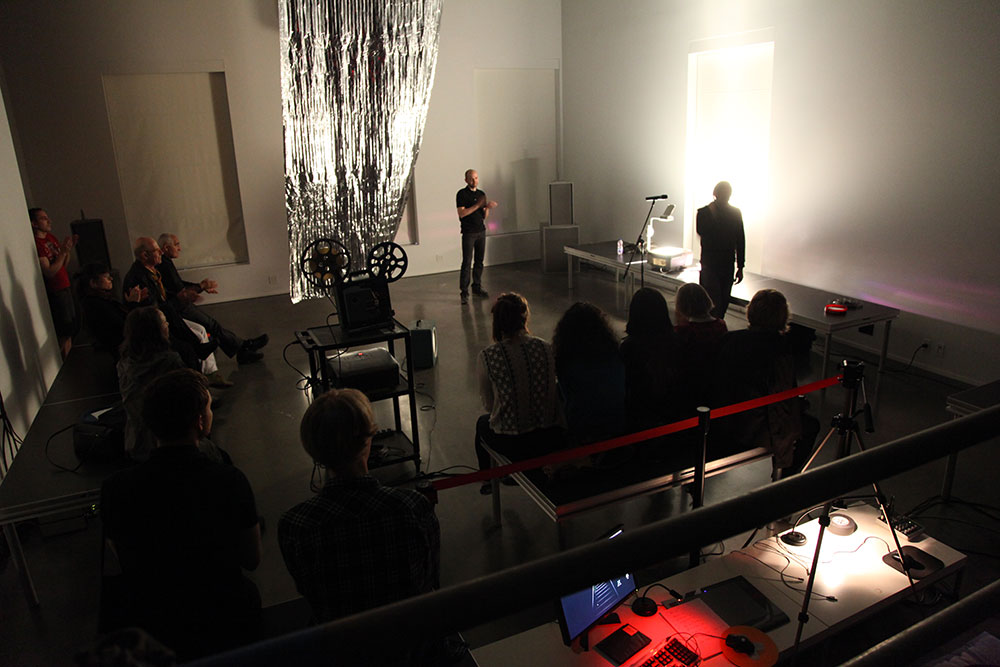
Sub-matter May 10 2014 Curated and presented by Florian Wüst (Berlin)
A special event presented as part of Ælab’s exhibition Milieux Associés.
Through a selection of experimental, documentary and industrial short films, film excerpts, audio pieces, and fragments of text, Florian Wüst will reflect on processes of transformation in relation to residue and waste, energy and subsistence.
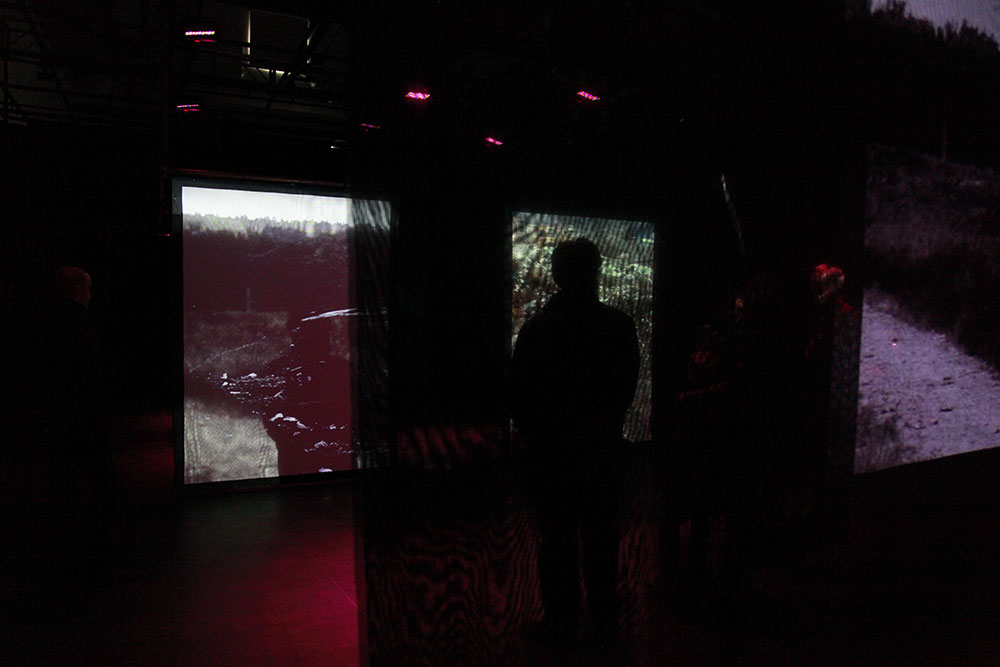
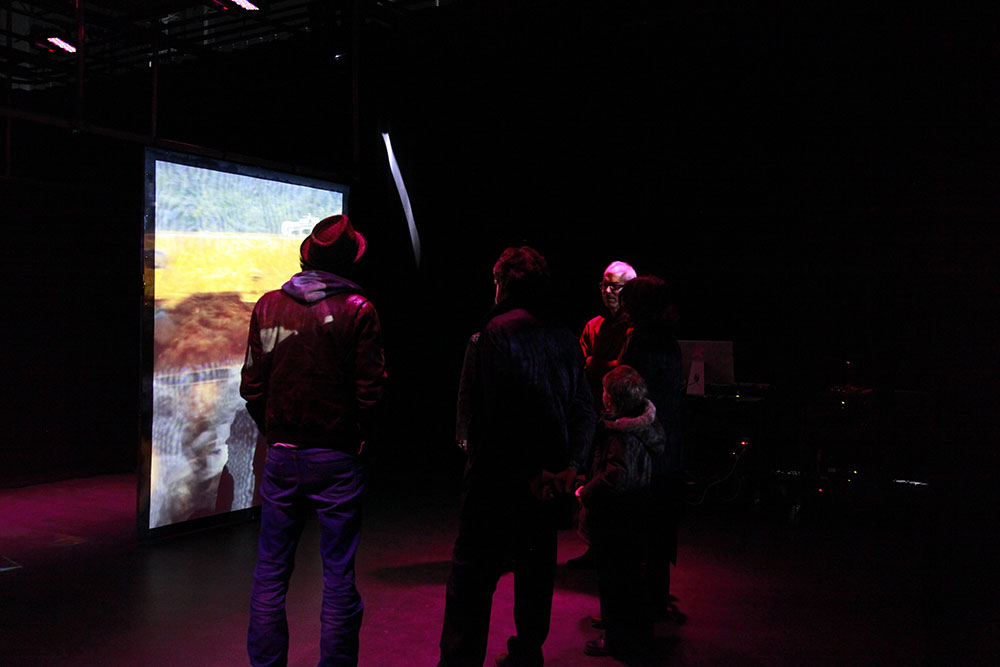
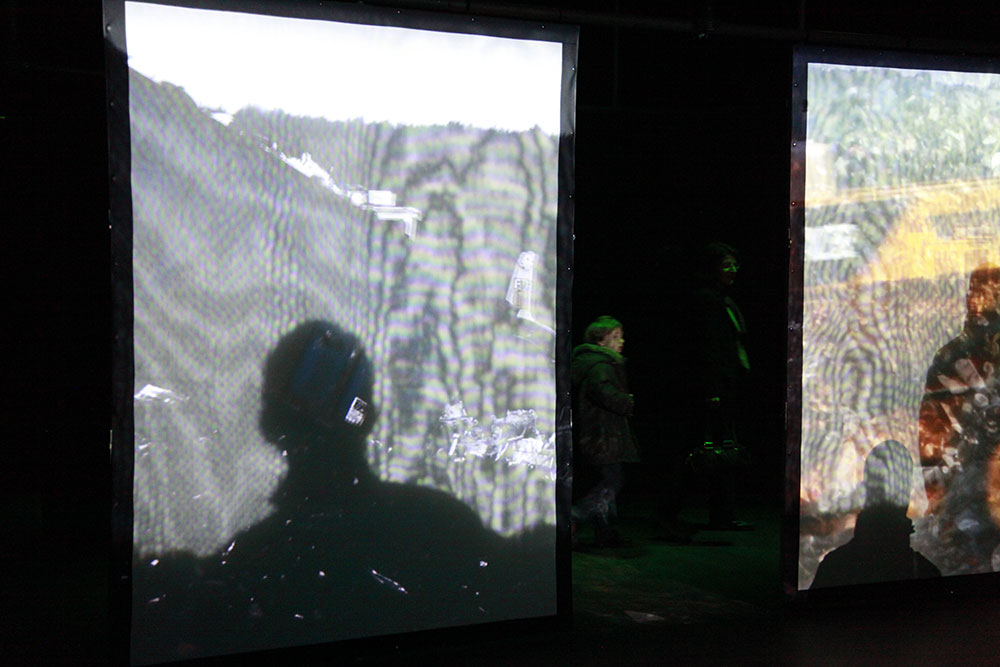
Le rapport à la composition de l’image vidéo en direct se poursuit dans ce nouveau projet sur les opérations du lieu d’enfouissement technique de déchets situé à Lachenaie, Québec. Seront tracées « des manières d’être dans des rapports entre le visible et l’invisible » (Rancière) par une fragmentation visuelle éphémère qui réfléchit aux stratifications entre objets déchus, actions humaines et milieux physiques.
Le dessin réagence des plans dans un espace avec écrans multiples, systèmes lumineux varichrome et varilite, et une variété de dispositifs de son immersif. Le stylet, la tablette graphique et le son activent la relation avec les milieux qui informent l’opération de transformation du déchet.
Crédits Collaborateurs : Jim Bell, Nancy Bussières, Philippe-Aubert Gauthier. Appui à la production : Catherine Béliveau, Natalie Lafortune, Laurent Lamarche, Keith McMullen, Martin Pelletier, Jacques Perron. Appui à la recherche : Gabriel L. Savage Accueil: Geneviève Godin, Geneviève Trudel, Catherine Lescarbeau Soutien technique : Hexagram-UQAM
vendredi 28 octobre et samedi 29 octobre 2011 : 16h à 20h Performances aux demi-heures Agora Hydro-Québec du Coeur des Sciences de l’UQAM 175, avenue du Président-Kennedy (Métro Place-des-Arts) Entrée libre
Présentée dans le cadre de la série d’événements Marqueurs de subduction organisée par le Grupmuv en octobre et novembre 2011 à Montréal
Stéphane Claude remercie le Conseil des arts du Canada et le Conseil des arts et des lettres du Québec. Gisèle Trudel remercie le FQRSC, le Programme d’aide financière à la recherche-création de l’UQAM et BFI-Lachenaie.
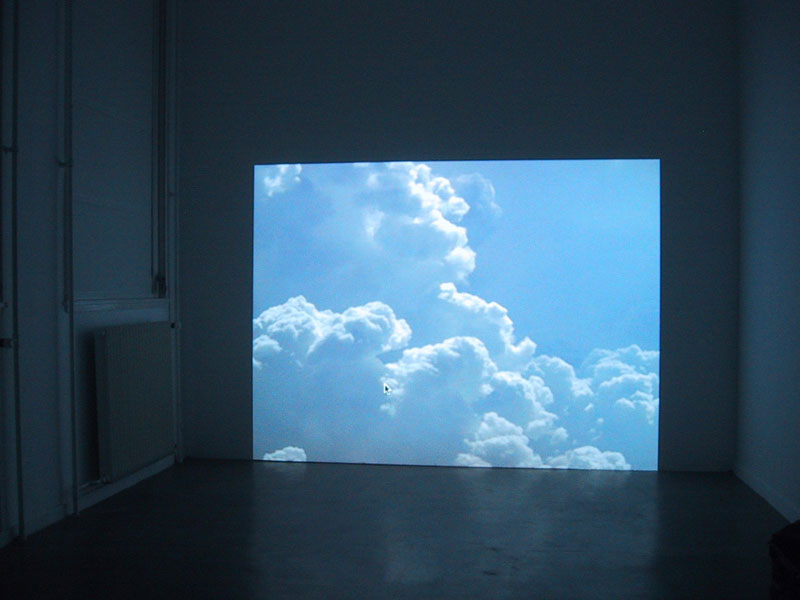
animation de particules 3D 1 minute 03 secondes 2011
À toutes les formes vivantes qui ont disparu depuis le 11 mars 2011. À leur souvenir qui se transformera aussi.
Marqueurs de subduction Exposition collective internationale avec Ælab, Michel Boulanger, Thomas Corriveau, Katja Davar, Andrée-Anne Dupuis Bourret et Florian Wüst
Le dessin en mouvement s’inscrit dans cette exposition en tant qu’indice d’un phénomène souterrain et puissant, révélant de manière singulière ce que les activités humaines transforment dans le paysage. À l’image de ces frictions et collisions qui bouleversent la croûte terrestre, ces marqueurs nous interpellent au niveau de la relation de l’humain avec son environnement naturel.
Organisée par le Grupmuv, laboratoire de recherche-création en dessin et image en mouvemant 15 octobre au 19 novembre 2011 Galerie B-312 372, rue Sainte-Catherine Ouest, espace 403, Montréal Mardi au samedi 12h – 17h www.galerieb-312.qc.ca
Avec l’appui du Fonds québécois de recherche sur la société et la culture (FRQSC)
L’espace du milieu explores the reflexive emanations of the middle zone which supports life, between earth and sky. The middle (or centre or interval) operates multiples changes with what surrounds it. There also accumulates greenhouse gases, ionospheric manipulations of the weather, chemical and bacterial aerosols. The work is experiential, inflecting the vibrational activity of middle spaces, which include and exceed humans.
Credits and thank you Jim Bell, Nancy Bussières, Philippe-Aubert Gauthier, Florian Grond, Laurent Lamarche, Simon Rolland, Daniel Courville, Natalie Lafortune, Catherine Lamontagne-Drolet, Keith McMullen, Christian Miron and Martin Pelletier. With the support of Hexagram-UQAM, Grupmuv and OBORO.
Presented at the Darling Foundry Montreal In situ project in 3 parts February 16 – April 10, 2011 Part 1 : production residency in the small gallery, February 16 to March 9. Part 2 : multiprojection at night on the transluscent windows on Prince Street. February 26 to March 5, 6pm to midnight. Launched during Nuit Blanche, February 26, 5pm to 5am. Part 3 : installation in the small gallery, March 11 to April 10. Opening March 10. Artist talk April 7.
Project produced with the financial assistance of the Canada Council for the Arts, the Conseil des arts et des lettres du Québec, the Programme d’aide financière à la recherche-création de l’UQAM (PAFARC) and the Fonds de recherche québécois société et culture (FQRSC).
Photos : Guy L’Heureux, Jacques Perron et Gisèle Trudel
Documentary, 12 min, color, stereo Original English version with French subtitles
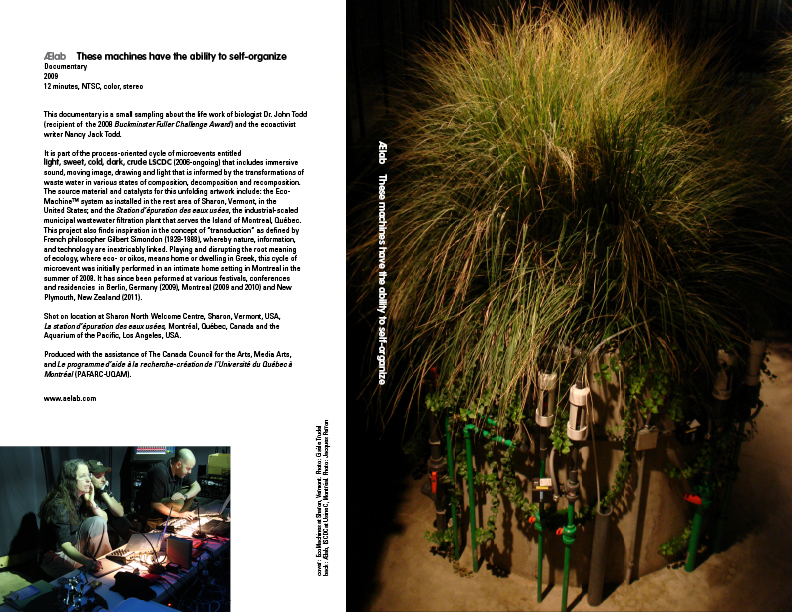
This documentary is a small sampling about the life work of biologist Dr. John Todd (recipient of the 2008 Buckminster Fuller Challenge Award) and the ecoactivist writer Nancy Jack Todd.
It is part of the process-oriented cycle of microevents entitled light sweet cold dark crude LSCDC (2006-ongoing) that includes immersive sound, moving image, drawing and light that is informed by the transformations of waste water in various states of composition, decomposition and recomposition.
Credits Documentary segment, interviews with Nancy Jack Todd and John Todd Jacques Perron _interview camera (video, photo) Stéphane Claude_interview sound Gisèle Trudel _interview, editing Catherine Béliveau _English transcription Jacques Perron _French translation
Presented in Berlin, Germany (2009) Montreal (2009 and 2010) Govett-Brewster Gallery, New Plymouth, New Zealand (2011) EcoBio Festival, Prague, Czech Republic (2011)
Produced with the financial assistance of the Canada Council for the Arts, Media Arts and PAFARC-UQAM (Programme d’aide financière à la recherche et à la création de l’Université du Québec à Montréal).
Permutational media installation with 4 sensors : light, temperature, frequency of movement, proximity
“Even matter called inorganic, believed to be dead, responds to irritants and gives unmistakable evidence of a living principle within. Everything that exists, organic or inorganic, animated or inert, is susceptible to stimulus from the outside.” – Nikola Tesla
Originating in visual research* from the project DATA, this installation investigates the translation of magnetic phenomena of image visualisation at nano and micro levels. The intuitive understanding that Tesla had of the potential of zero point energy, the idea of taping into the ambiant medium as a source of energy which is self-regulated and self-sustained, is initially evoked through a cantilever tip (as used by the AFM — Atomic Force Microscope), a point of contact unto a micro flowing surface, a never-ending exchange of magnetic/voltage coordinates. The invisible becomes readable as the « needle » meets the random deviations of matter.
With the collaboration of Carey Dodge _MAX/MSP programming Mathieu St-Arnaud _MAX/Jitter programming Andrew Watson _MAX/sensor programming Roméo Gongora _production assistance Christian Miron _sensor display design
*Micro/nano imagery produced in a previous project/residency at the Nanolab, Chemistry Departement, McGill University, with Dr. Vicki Meli and Dr. Bruce Lennox, with financial assistance from the Daniel Langlois Foundation for art, science and technology.
Produced specifically for Resonance. The Electromagnetic Bodies Project. Curated by Nina Czegledy and Louise Provencher European tour: July 2005_September 2006
OBORO (Canada) ZKM (Germany) Conde Duque Medialab (Spain) TENT _V2 (Holland) Ludwig Museum (Hungary) Maison européenne de la photographie (France)
Produced with the financial assistance of PAFARC-UQAM (Programme d’aide financière à la recherche et à la création de l’Université du Québec à Montréal)