Catégorie : installation sonore

  • dark room (2011)

    Photos : Toni Hafkenscheid

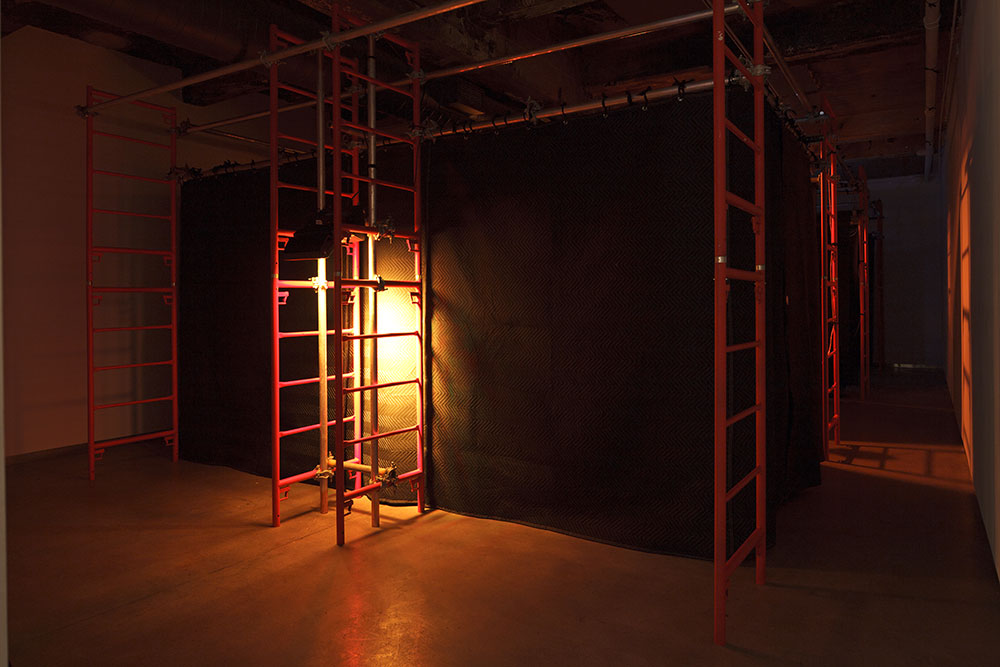
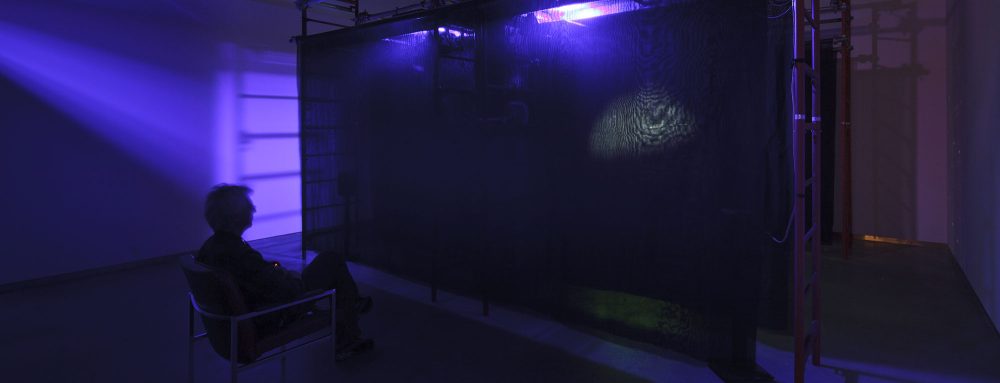
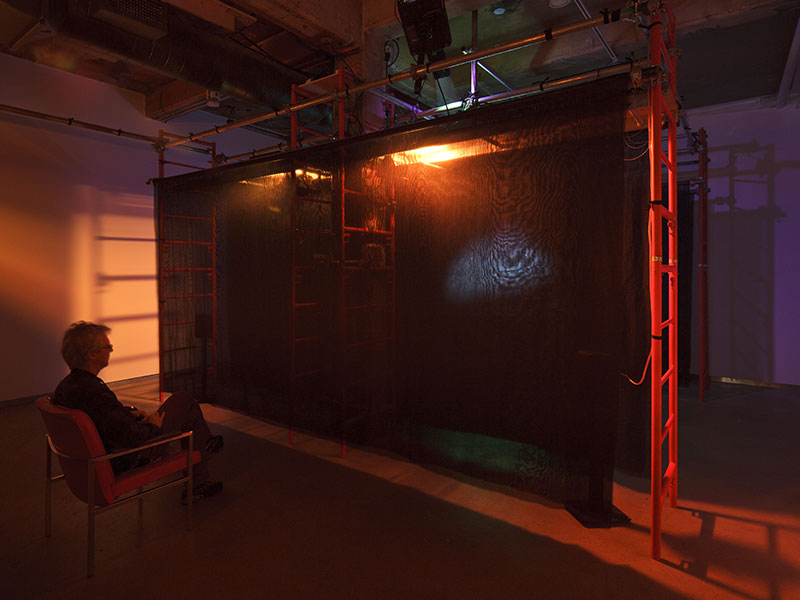
    Dark Room
    Tactile sound installation
    2011

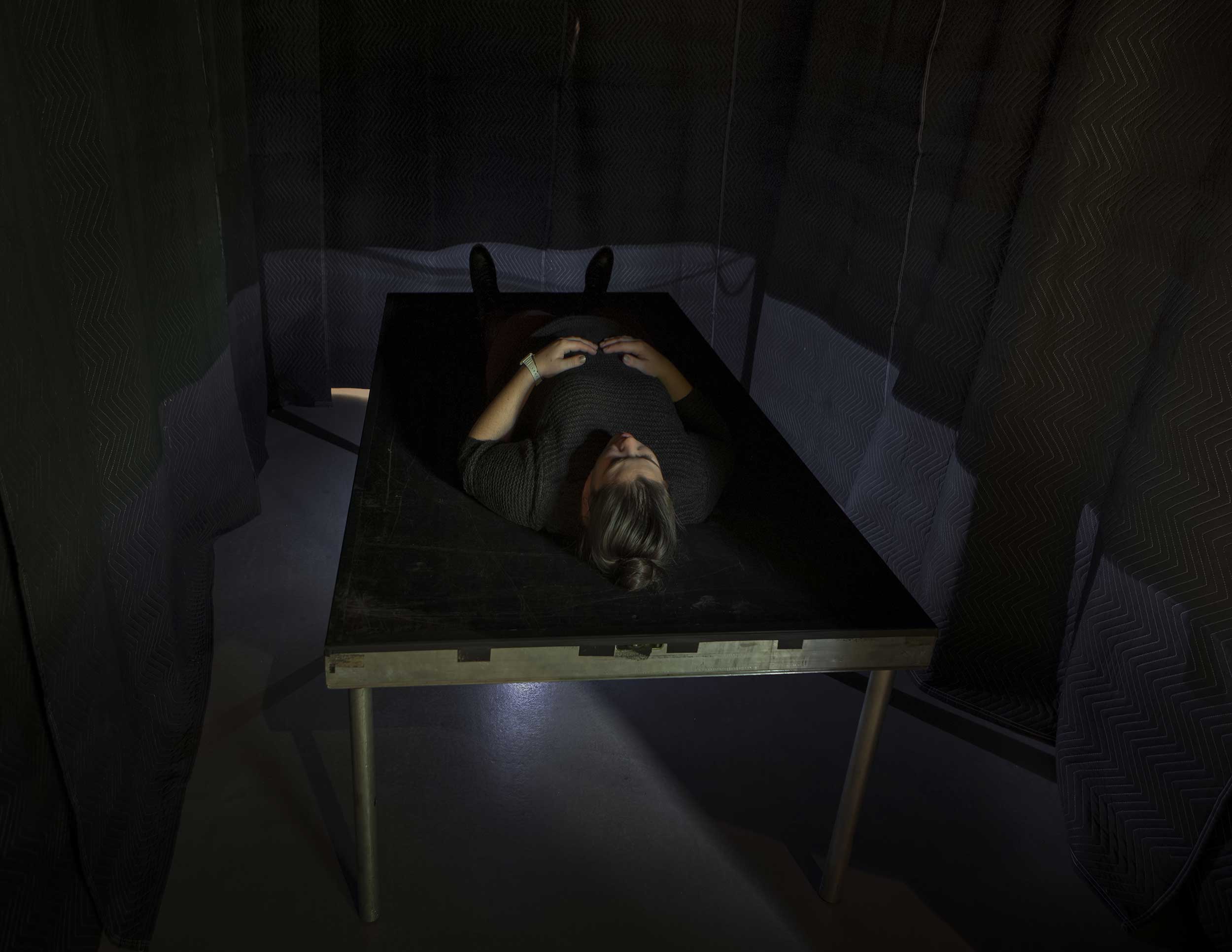
    A dark room designed for blackness, tactile sound, the bones, muscles and nerve network in the body. It’s a way to get in contact with inner & outer space, death and the sensuous. The room is an installation where people interact with spatial cues and intimacy while lying down on an elevated platform. This work is concerned with direct and swift transduction of the sound program to different sensorial zones of the body, mechanical transmission without airborne audio transmission. A sound massage from the chthonic.

    Included in SPLICE group exhibition

    SPLICE: At the Intersection of Art and Medicine presents a scientific gaze at the human body by showcasing traditional anatomical art, complemented and challenged by contemporary artworks. A large-scale public showing of anatomical images by Maria Wishart, Eila Hopper-Ross, Nancy Joy, Dorothy Foster Chubb, Elizabeth Blackstock and Margaret Drummond, selected from the extensive collection of Biomedical Communications, University of Toronto Mississauga and the Division of Anatomy, Faculty of Medicine, is included in the show. These artists utilized their traditional knowledge of art and science to achieve a balance between realistic rendering and an artistic vision of the human body. Lately, contemporary artists have been initiating a fresh discourse by experimenting with a wide range of representations. Today the body is frequently politicized and digitized in order to manipulate, dissect and provoke. Through the work of these artists SPLICE: At the Intersection of Art and Medicine addresses how understanding the complexity of the human anatomy requires both a scientific approach and aesthetic interpretation.
    – Nina Czegledy, Curator

    Pratt Manhattan Gallery
    New York
    Sept 20-Nov 19
    2013

    Blackwood Galleries
    Toronto
    October 24 – December 1
    2012
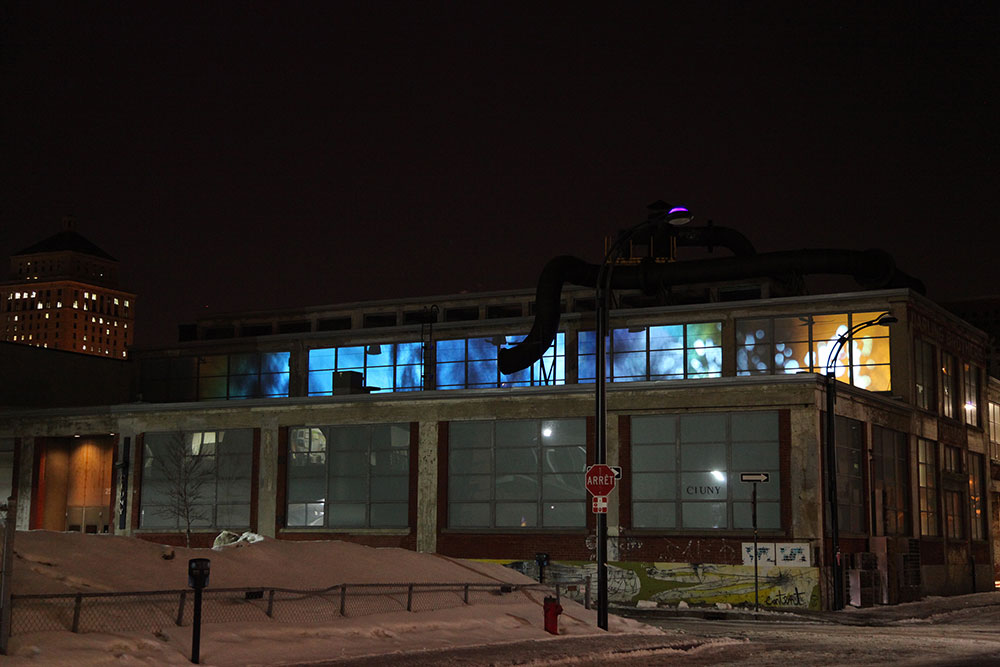
  • l’espace du milieu (2011)

    Permutational installation and night projection

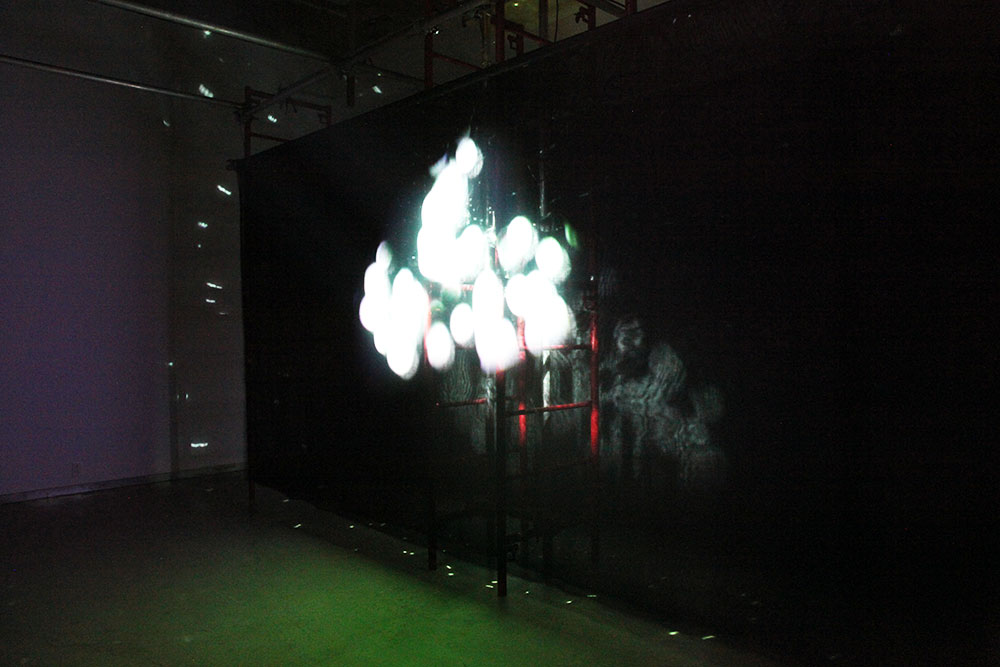
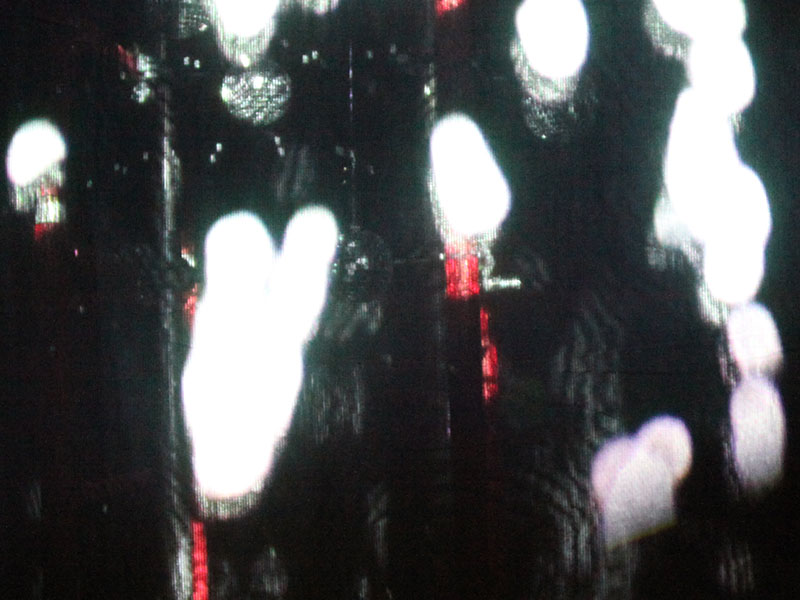
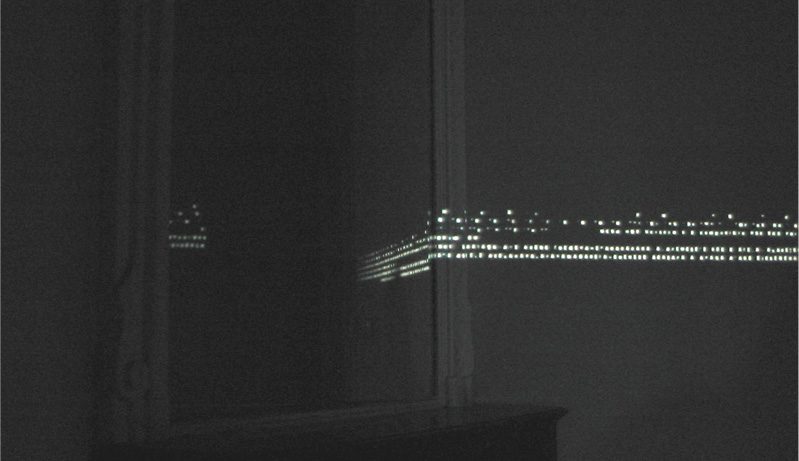
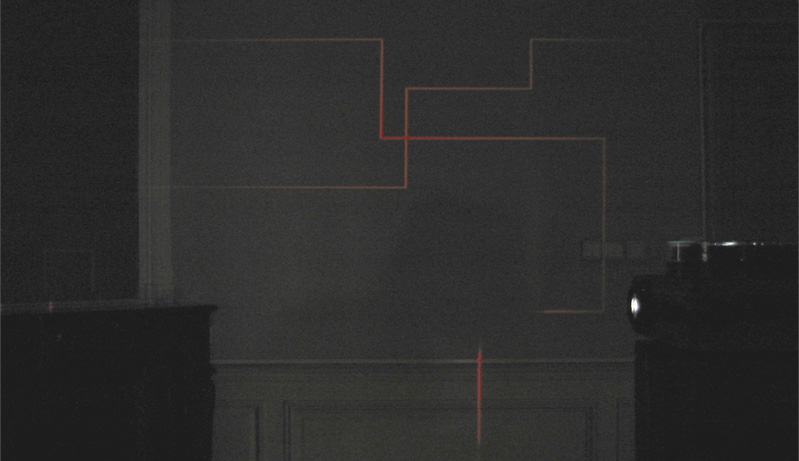
    L’espace du milieu explores the reflexive emanations of the middle zone which supports life, between earth and sky. The middle (or centre or interval) operates multiples changes with what surrounds it.
    There also accumulates greenhouse gases, ionospheric manipulations of the weather, chemical and bacterial aerosols. The work is experiential, inflecting the vibrational activity of middle spaces, which include and exceed humans.

    Credits and thank you
    Jim Bell, Nancy Bussières, Philippe-Aubert Gauthier, Florian Grond, Laurent Lamarche, Simon Rolland, Daniel Courville, Natalie Lafortune, Catherine Lamontagne-Drolet, Keith McMullen, Christian Miron and Martin Pelletier.
    With the support of Hexagram-UQAM, Grupmuv and OBORO.

    Presented at the Darling Foundry
    Montreal
    In situ project in 3 parts
    February 16 – April 10, 2011
    Part 1 : production residency in the small gallery, February 16 to March 9.
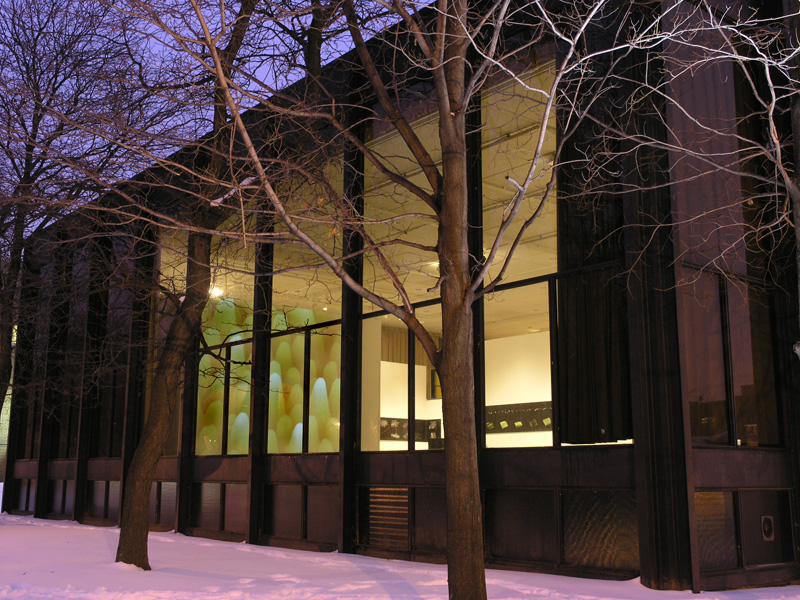
    Part 2 : multiprojection at night on the transluscent windows on Prince Street.
    February 26 to March 5, 6pm to midnight.
    Launched during Nuit Blanche, February 26, 5pm to 5am.
    Part 3 : installation in the small gallery, March 11 to April 10.
    Opening March 10.
    Artist talk April 7.

    Project produced with the financial assistance of the Canada Council for the Arts, the Conseil des arts et des lettres du Québec, the Programme d’aide financière à la recherche-création de l’UQAM (PAFARC) and the Fonds de recherche québécois société et culture (FQRSC).

    Photos : Guy L’Heureux, Jacques Perron et Gisèle Trudel

  • data (2003-2009)

    Photo cover : Paul Litherland

    media installations

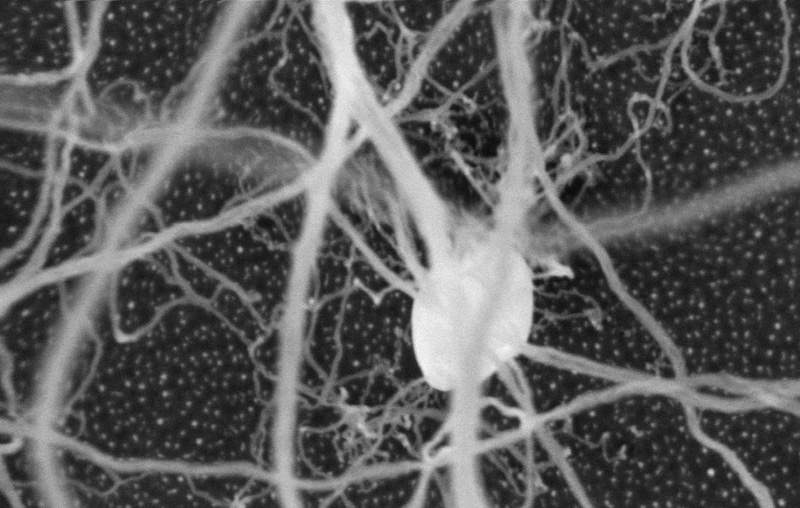
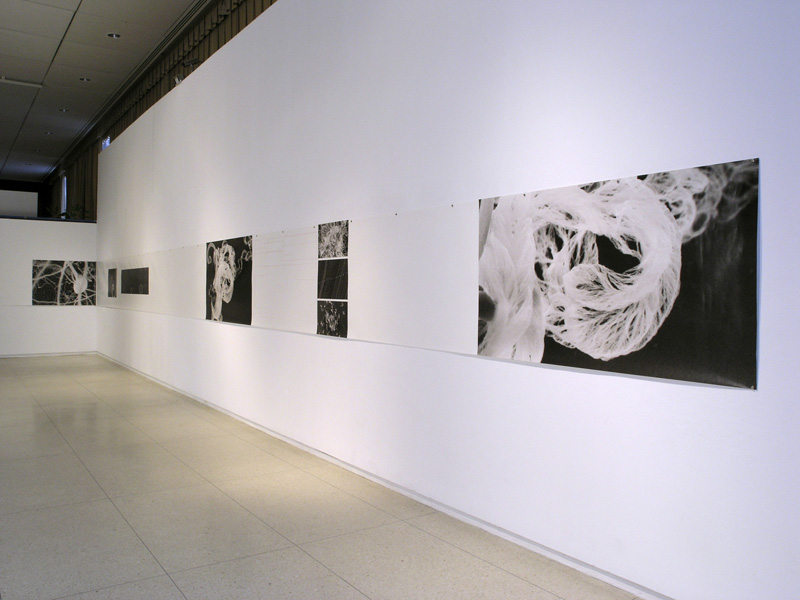
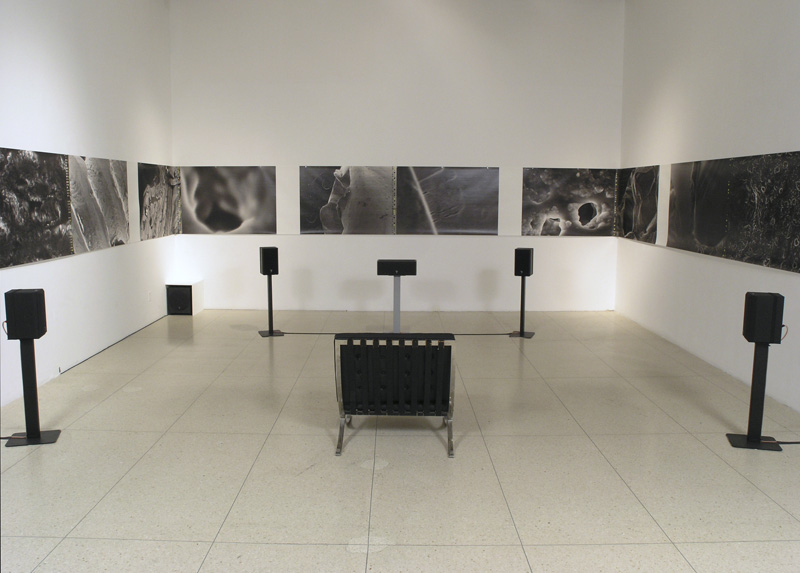
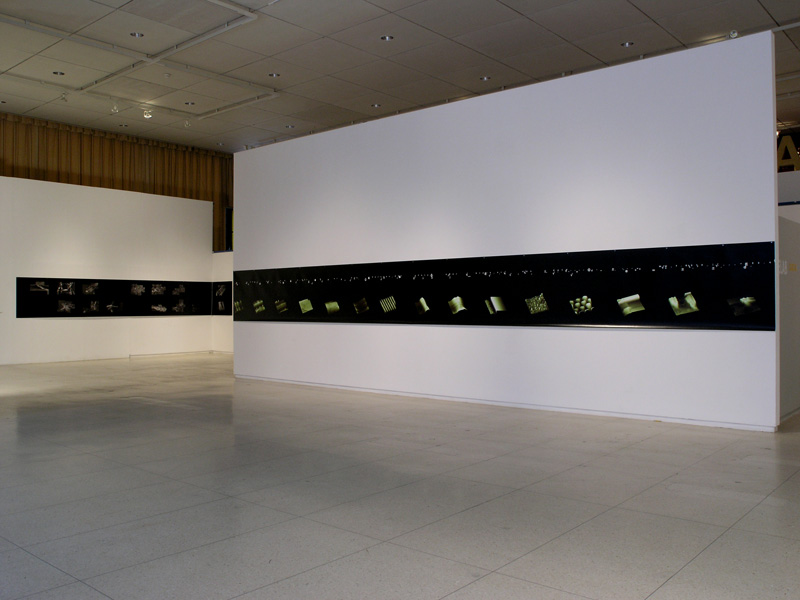
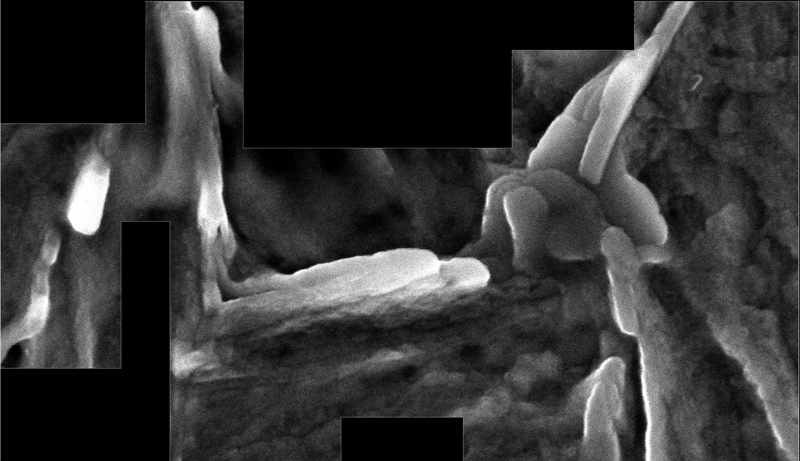
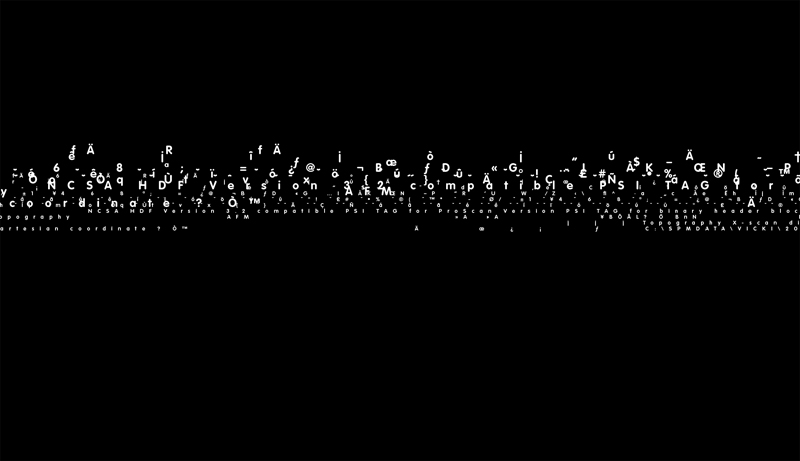
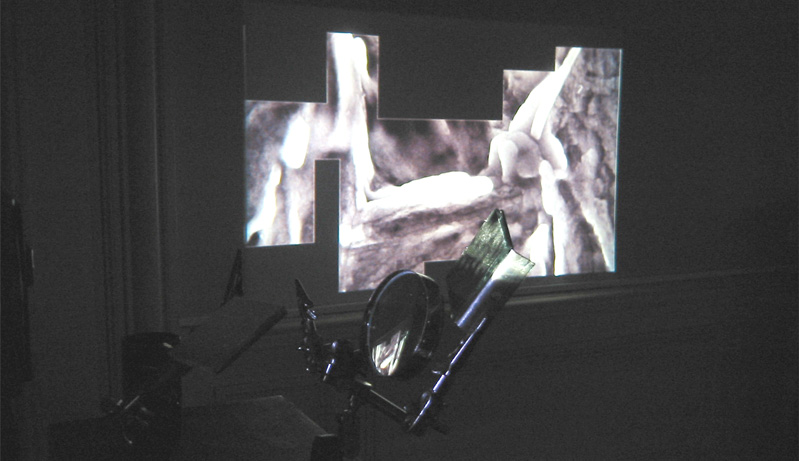
    DATA is research on the “forces” of the image at different scales of perception, produced through an artist residency with  Dr. Vicki Meli at the Nanolab of McGill University’s Chemistry Department (Dr. Bruce Lennox, Chair and Director).

    A relationship blossomed over the 8-month period (July 2003-Feb 2004) with both scientists, which led us to discuss issues around imaging, education, ethics, ecology, and the relationship between art and science.

    We were able to work with various digital micro and nano imaging technologies, the SEM (Scanning Electron Microscope), the AFM (Atomic Force Microscope) and the STM (Scanning Tunneling Microscope), view physical samples and subsequently record them as 2D files, 3D mappings of surfaces and live video output.

    Funding from The Daniel Langlois Foundation for art, science and technology.

    Presentation venues
    National Gallery of Sofia, Bulgaria Sept-Oct 2003, group exhibition Radical:Vaguely, Rossitza Daskalova, curator.
    Solo exhibition, Saidye Bronfman Centre for the Arts, curated by Sylvie Gilbert, Dec 2004-Jan 2005.
    DATA, video, Gala evening, ACFAS, Salle Pierre-Mercure, Montréal, 10 May 2004
    DATA: Transfers, oeuvre Web, Horizon Zéro, numéro 14 RÊVER, Banff new media institute, Banff 24 April 2004
    InterAccess, group exhibition SCALE, curated by Camille Turner, June 2006.
 Presented by Subtle Technologies 2006
    Millenium Museum, group exhibition INSIDE, curated by Sylvie Parent, Beijing, China, July 2006.
 Presented by Groupe Molior
    Maison des artistes, Winnipeg, Manitoba. Groupe exhibition REGARDS curated by Kevin Kelly, March-May 2007
    Paço das Artes, group exhibition INSIDE, curated by Sylvie Parent, Sao Paulo, Brazil, May-July 2008.
 Presented by Groupe Molior
    Exposition collective, Le 25e printemps d’OBORO, 18 avril – 2 mai 2009

    Solo exhibition, Saidye Bronfman Centre for the Arts, curated by Sylvie Gilbert, Dec 2004-Jan 2005. Photos : Paul Litherland.

    National Gallery of Sofia, Bulgaria Sept-Oct 2003, group exhibition Radical:Vaguely, Rossitza Daskalova, curator

  • la chambre d’essais (2002)

    A project by Atelier insitu architects

    in collaboration with
    Ælab, sound design
    Axel Morgenthaler, light design

    Presentation venue
    Canadian Centre for Architecture, April/Sept 2002

    Photo: Michel Legendre